DaaS vs buying laptops in India: which actually costs less over 5 years?
The short answer for busy CFOs
Device-as-a-Service (DaaS) is a subscription model where a vendor supplies, manages, and refreshes your laptop fleet for a fixed monthly fee per device, instead of your company buying hardware outright.
DaaS vs buying laptops in India comes down to one question: does your 5-year total cost include the expenses your accounting system does not track? For a 200-device fleet, buying outright costs roughly ₹1.25 crore over five years on paper. DaaS costs about ₹2.4 crore. Buying looks cheaper by over a crore. But once you add unplanned downtime, IT staff overhead, compliance disposal, and breach risk, ownership crosses ₹2.67 crore and DaaS wins by approx ₹27 lakhs.
Sahi mein? (Seriously?) That gap surprised me too, the first time I ran the numbers. That said, DaaS vs buying in India is not one-size-fits-all. If you are buying approx 20 laptops for a stable office team, just buy them. This comparison matters when you cross approx 100 devices, have field teams, or operate in a regulated industry. And if a leasing quote is the third option on your desk, read DaaS vs laptop leasing in India before you sign, because the two are not the same contract.
How accountants see DaaS vs buying in India
Your finance team will frame this as CapEx vs OpEx. Both are correct. Neither tells the full story. Gartner’s 2025 IT spending forecast projects global device spending will cross $800 billion, with subscription models growing approx 18% year-on-year. Indian companies are catching up, but most still default to outright purchase.
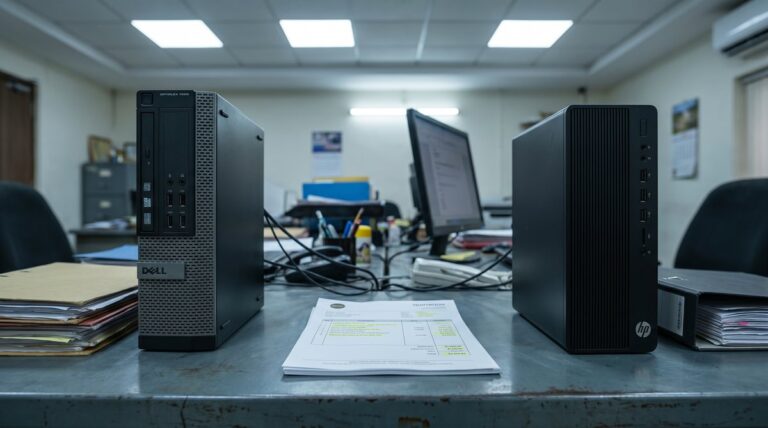
When you buy 200 Dell Latitude 5450s at ₹60,000 each, you book ₹1.2 crore as a fixed asset on Day 1. Over five years, straight-line depreciation puts approx ₹24 lakh on your P&L annually. After five years, the residual value is approx ₹10-15 lakh if the devices are in reasonable condition. Disposal is your problem.
With DaaS, you pay ₹2,000 per device per month. For 200 devices that is ₹4 lakh per month, ₹48 lakh per year. This hits your P&L as an operating expense. Your balance sheet stays light. No depreciation schedules. No asset tracking.
The raw numbers: buying = ₹1.2 crore upfront plus running costs. DaaS = ₹2.4 crore spread evenly over 60 months. On paper, buying looks far cheaper. But that paper is missing four line items that change the answer.
Not sure which model fits your fleet? Talk to our device team, we will build a free TCO model for your company in approx 48 hours.
The 5-year TCO comparison for approx 200 devices
I built this model from 14 fleet audits we ran last year. The numbers are medians, not vendor marketing. If your idea of a “device refresh cycle” is “it still turns on, so it still counts,” this table is especially for you.
| Cost line item | Buying (approx 5 years) | DaaS (approx 5 years) |
|---|---|---|
| Hardware purchase / subscription | ₹1.20 Cr | ₹2.40 Cr |
| Spare parts, repairs, warranty gaps | approx ₹18 lakh | ₹0 (included) |
| Residual value recovery | −approx ₹12 lakh | ₹0 |
| Visible 5-year total | ₹1.26 Cr | ₹2.40 Cr |
Buying looks ₹1.14 crore cheaper. But scroll down.
Four hidden costs that change the math
These are the costs I see missing from every internal TCO model a client shows me. Not one of the 14 audits I mentioned included all four.
Unplanned downtime is the biggest hidden cost. A laptop fails. IT takes approx 3-5 days to source a replacement, image it, configure it, ship it. The employee cannot work. At ₹4,000 per day in lost productivity (conservative for a knowledge worker), 30 failed devices per year costs ₹7.4 lakh in direct productivity loss, plus ripple delays across teams. Over five years, that is approx ₹37 lakh. With DaaS, the replacement arrives in approx 4 hours. We have tracked this across approx 2,500 devices for a national insurer. Average downtime: 3.approx 2 hours vs 4.approx 1 days under ownership.
IT staff overhead goes beyond salary. That 1.5 FTE across procurement, warranty claims, asset tagging, MDM enrollment, and e-waste coordination adds up to approx ₹75 lakh over five years. When that person takes leave or quits, your fleet management stalls. I have seen companies go approx 60 days without a device refresh because the one person who knew the MDM password had resigned.
Disposal compliance is getting expensive. According to NASSCOM’s 2025 enterprise technology survey, 62% of Indian mid-market companies have no formal device disposal process. Under DPDP Act 2023, improper device disposal is a data breach. Penalties can reach ₹250 crore. Even without a penalty, certified data destruction under NIST 800-88 costs ₹500-1,500 per device. For 40 devices retiring annually, that is ₹2 lakh per year at the low end.
Insurance gap. Most companies do not carry cyber liability insurance for device-related breaches. DaaS vendors do. The insurance premium equivalent for a 200-device fleet runs approx ₹4 lakh annually. Over five years, that is approx ₹20 lakh.
Updated TCO with hidden costs:
| Model | 5-year total |
|---|---|
| Buying (with hidden costs) | ₹2.67 Cr |
| DaaS (all-inclusive) | ₹2.40 Cr |
| DaaS saves | approx ₹27 lakh |
The gap is not massive. DaaS wins by roughly approx 10%. That is enough to matter on a CFO’s P&L, but not enough to make the decision obvious. Which is exactly why this article exists.
Cash flow and balance sheet impact
The DaaS vs buying decision in India is as much about cash flow as it is about cost.
Buying: ₹1.2 crore leaves your bank account on Day 1. If you are a approx ₹50-100 crore company, that is 1-2% of annual revenue locked into depreciating metal. If you are applying for working capital financing, that fixed asset on your balance sheet affects your debt-to-equity ratio.
DaaS: ₹4 lakh per month. Predictable. Budget tight hai? (Budget is tight?) That is exactly why the OpEx model works. Your bank balance stays stable. Your borrowing capacity improves.
For pharma companies that see revenue spikes in Q3-Q4, this matters. Cloud subscriptions follow the same OpEx model, which is why many companies that switch to Microsoft 365 or Google Workspace also re-evaluate their hardware procurement at the same time.
One CFO at a 300-person pharma company told me: “The DaaS cost was 10% higher than buying. But freeing up ₹1.8 crore in working capital let us open two new depots. The depots generated ₹12 crore in revenue that year.” That is not a DaaS ROI story. That is a capital allocation story.
When buying still wins
DaaS is not the answer for everyone. I tell clients this upfront.
Small, stable teams under approx 50 devices. DaaS vendors have minimum order sizes and setup costs. Below approx 50 devices, the per-unit economics favor buying. Get a decent MDM (Intune or Hexnode), assign one IT person approx 20% of their time, and you are fine.
Long-retention workstations. Your design team uses ₹1.5 lakh workstations and keeps them approx 6 years. DaaS pricing assumes approx 3-4 year cycles. On long-life hardware, buying is 30-4approx 0% cheaper.
Companies with existing IT infrastructure teams. If you already employ 3 IT staff who manage approx 500 devices, the incremental cost of adding 200 more devices is marginal. DaaS makes more sense when you are building IT ops from scratch.
My recommendation for most Indian companies with approx 100-500 devices: a hybrid model. Put field force tablets and high-risk assets on DaaS (maybe approx 40% of your fleet). Buy office workstations. You get the compliance and risk transfer where it matters and the cost savings where it does not.
This is part of a broader Device Lifecycle Management approach. Understanding the full device lifecycle from procurement to disposal helps you decide which devices belong on which model.
DaaS pitfalls I have seen in client deployments
Three things go wrong with DaaS if you do not watch for them.
Vendor lock-in. Your approx 200 devices are on Vendor A’s MDM. Switching to Vendor B means re-enrolling every device. I have seen a migration from one DaaS vendor to another take approx 4 months for approx 600 devices. Put exit clauses in your contract. At Sirius Star, we include a 30-day data portability window and vendor-neutral MDM enrollment.
Annual price escalation. Some contracts include 5-8% annual increases after Year 1. A ₹2,000/device/month contract becomes ₹2,430 by Year 3. Ask for fixed pricing for at least approx 36 months. We lock pricing for the full contract term.
Device spec rigidity. Your DaaS provider stocks Dell Latitude 5450s. Your CEO wants a MacBook Pro. Custom configurations cost extra or are not available. Negotiate the device menu before signing. Or accept that DaaS works best when you standardize your fleet.
None of these are dealbreakers. They are negotiation points. Know them before you sign.
When devices reach end of life, disposal costs factor into your TCO calculation regardless of whether you own or lease. DaaS simply moves that cost into the vendor’s scope.
Arjun’s take
I have run 14 fleet audits in the last 8 months. In 11 of them, the CFO’s internal TCO model was missing at least two of the four hidden cost lines. Not because they are careless. Because accounting systems are built around purchase orders, not around consequences. The real question is not “is DaaS cheaper?” It is “do I know what ownership actually costs me?” If you cannot answer that with a specific rupee figure, you are not ready to compare.
FAQ
Is DaaS worth it for a 50-device startup in India?
Probably not. Below approx 50 devices, buying plus a basic MDM like Intune is simpler and 15-20% cheaper. DaaS makes financial sense above approx 100 devices, or at any size if you operate in pharma, BFSI, or another regulated sector where breach liability is material.
How much does DaaS cost per device per month in India?
₹1,500-2,500 per device per month for a mid-range business laptop, all-inclusive. Volume discounts apply. At 500 devices, expect ₹1,600-1,800. Multi-year contracts save another 10-15%. For the full breakdown by device tier and contract length, see DaaS cost per device India: what you actually pay per month.
Can I mix DaaS and owned devices in the same fleet?
Yes. Most of our clients run a hybrid model. Field force and high-risk devices go on DaaS. Office workstations stay owned. The MDM layer manages both the same way.
What happens if my DaaS vendor shuts down?
Check your contract for asset recovery and escrow clauses. Devices should transfer to a backup vendor or return to your control. We include contractual device ownership transfer provisions and data portability guarantees in every agreement.
Does DaaS help with DPDP compliance?
Directly. The vendor handles certified data destruction at end-of-life, maintains audit trails for every device, and carries cyber liability insurance. Your compliance audit cites the vendor’s framework instead of relying on your internal IT team. For the full breakdown of disposal costs in the TCO calculation, see our ITAD compliance guide.
Ready to compare your real options?
Get a free DaaS cost comparison
approx 200+ businesses trust us. Response within approx 4 hours.
WhatsApp us, We will send a sample TCO model within approx 24 hours.
Buying approx 50+ devices? Ask about Device Lifecycle Management services that include DaaS, MDM, and certified disposal in one subscription.
About the author
Arjun Mehta runs Sirius Star’s device-lifecycle desk: onboarding kits, zero-touch provisioning, MDM enrollment, asset tagging, refresh schedules, buyback, and secure disposal. Before joining Sirius Star he managed 4,000+ endpoints across three campuses for a large ITeS firm, where he rolled out Autopilot + Intune from scratch. He holds Microsoft 365 Enterprise Administrator Expert and Jamf Certified Admin certifications.
The longer read for Indian buyers who want the real numbers before they commit.
Send me the field guide