
Controlling print cost with uniFLOW: a Chennai NBFC postmortem
The invoice from the print vendor never lied. It just kept getting bigger.
I was sitting with Ravi, the CFO of a mid-sized NBFC on the Chennai OMR belt, when he pushed the tablet across the desk. His print spend line had drifted from about INR 1.9 lakh a month at the start of the year to INR 3.4 lakh by August. Same 340 staff. Same six MFDs. Head count hadn’t moved. The vendor swore nothing had changed.
“Riya,” he said, “either someone is running a photo studio out of the second floor, or I’m being had.”
He wasn’t being had. He was being ignored. The honest version of this story is that controlling print cost with uniFLOW works, but only after you accept a few uncomfortable truths about how a busy Indian office treats a printer.
Where the money actually went
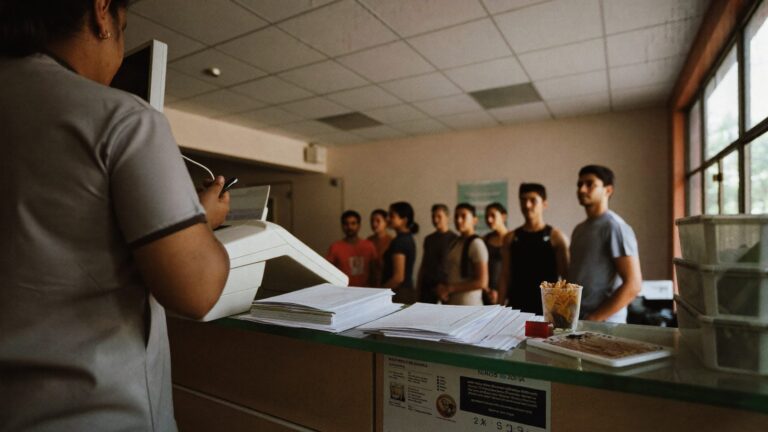
Before we wired anything, we spent one week watching. Old habit. You don’t fix the print bill by reading the spec sheet of the software you’re about to sell. You fix it by standing near the tray at 3:00 PM on a Wednesday and seeing what people do.
Three patterns showed up. None of them surprised anyone who has worked in a real office.
Uncollected prints. The two colour MFDs on the collections floor had 180 to 220 pages a day sitting in their finishers by evening. Some were reprints because the queue felt slow. Some belonged to people who had left for a client meeting. Some were printed by mistake. All of them counted on the vendor invoice. The cleaning staff scooped them into recycling at 8:00 PM with the practised sadness of people who have watched paper waste for years.
Colour drift. The office had a rule: colour only for external documents and pitches. It was on a laminated card taped to the wall. And it was, in the polite phrasing of the head of admin, “guidance.” One sales colleague was printing the entire Deloitte quarterly report on colour every month.
Personal jugaad. Every office has this and no CFO wants to hear it. Wedding cards. School forms. Insurance photocopies. Individually harmless. Cumulatively about 6 to 8 percent of monthly volume, and tilted toward colour because that’s what makes the wedding card look nice. Ravi knew. He also knew that a punitive lockdown would make him unpopular with 340 people who otherwise liked working there.
He didn’t want a police station. He wanted a meter.
What we actually wired uniFLOW to do
The pitch decks make uniFLOW sound like a spaceship. On the floor, it’s four levers, and Ravi’s team only cared about three of them at first.
Follow-Me pull print. This is the one that pays for the software on its own. A user prints from her laptop. Nothing comes out yet. She walks to any Canon MFD, taps her ID card at the reader, and releases the job she still needs. Jobs that never get released expire in 24 hours and quietly die. No paper. No cost.
That single change did roughly half the work. Month one, the finisher trays at 8:00 PM had 40 to 60 orphan pages instead of 180 to 220. At about INR 4.20 per page mono and INR 22 per page colour, that was already INR 45,000 to 60,000 a month back in the CFO’s pocket before we touched anything else.
Rules and routing. This is where uniFLOW earns its keep with a CFO who wants opinions in the software, not on a laminated card. We wrote three rules and stopped there, because rule sprawl is its own tax.
- Any print job over 20 pages routes to the mono production printer, not the desktop MFDs. Nobody prints a 47-page pitch on a colour desktop by accident any more.
- Colour is default off. If a user wants colour, she picks it. This one small friction cut colour volume by about 38 percent in month two.
- External documents (PDFs saved to the “External” SharePoint library) keep colour on by default. The rule reads the source path. The sales team stops complaining.
Cost centres. Every user maps to a department, every department maps to a GL code, every page lands on the right budget line. Ravi got a monthly PDF he could forward to the department heads. The collections head, quietly the biggest offender, cut his floor’s mono volume by 22 percent in one week of seeing his own report. Nobody had to shout. The number did the shouting.
The fourth lever, budgeting and top-ups, we left off. Ravi didn’t want a pre-paid mobile plan for prints. He wanted the meter, not the toll gate.
The Entra role-sync landmine
Nothing in this project went wrong in the software. Everything that went wrong went wrong at the boundary between uniFLOW Online and the tenant’s Microsoft Entra ID.
Day two of go-live, the finance team could scan. Perfectly. They could tap their card, choose scan-to-mail, and the PDF landed in their inbox faster than the older setup. Print release, on the other hand, showed an empty queue.
The jobs were there. Universal Print had them. The MFD panel just showed nothing to release for those users. Meanwhile the operations floor, provisioned in a different Entra group, released prints fine.
The whizz-tech write-up from December 2025 describes this pattern exactly. Scan and print don’t share the same entitlement checks. If your Entra provisioning scope or group mapping drifts, the print-release role can end up incomplete while the scan role stays intact. In our case the group mapping had been narrowed two weeks earlier for an unrelated compliance job, and the print role hadn’t caught up.
Three days of it. Three days of finance staff walking back to their desks empty-handed. Day four, we mapped the corrected group to the print policy, forced a sync, done. The uncomfortable admission: if we had rolled out to all 340 people on the same weekend, the Monday escalation would have been ugly. Floor-by-floor saved us. Not the software.
The related landmine, which we saw once and fixed once, was the 5-minute latency when Universal Print hands off to uniFLOW Online. A Copytechnet thread flags exactly this behaviour. If you deploy Universal Print in front of uniFLOW without a printer-direct fallback, users assume the queue is broken and hit Ctrl-P twice more. That’s how you produce 3x the print jobs and confuse your own reporting for a week.
Month one to month six, in rupees
The number the CFO cares about is the invoice. Here is what actually happened at this NBFC. Same 340 staff, same six MFDs, same collections floor.
| Month | Total print spend | Colour share | Orphan pages/day | What changed |
|---|---|---|---|---|
| Month 0 (before) | INR 3.4 lakh | 34% | 180 to 220 | Baseline. Vendor swore nothing changed. |
| Month 1 | INR 2.6 lakh | 28% | 40 to 60 | Follow-Me pull print live. |
| Month 2 | INR 2.35 lakh | 21% | 30 to 45 | Rules and routing live. Colour default off. |
| Month 3 | INR 2.1 lakh | 18% | 25 to 35 | Cost centre reports going to department heads. |
| Month 6 | INR 2.0 lakh | 15% | 20 to 30 | Stable. Habits changed. Nobody complained. |
INR 3.4 lakh down to INR 2.0 lakh a month. A saving of about INR 1.4 lakh a month, roughly INR 16.8 lakh over a full year. The uniFLOW licence and the deployment paid back inside four months. Ravi still checks the print line every month. He no longer sighs when he does.
What uniFLOW will not fix
Here’s the honest bit. If your office has the wrong shape, uniFLOW is expensive furniture.
Very small offices. Under about 40 to 50 seats, the licence maths gets sad. You are usually better off buying a copier or desktop laser combination and running a simpler PIN release.
Mixed brand fleets. uniFLOW is happiest with a Canon fleet. Non-Canon MFDs work via embedded clients, but the deployment gets fiddlier and the finance report loses fidelity. If your estate is half Ricoh, half Canon, and you aren’t consolidating, compare PaperCut on your exact device list too.
Governance you never planned to enforce. If nobody in finance wants a monthly cost centre report, and nobody in admin wants to talk to a repeat offender, uniFLOW becomes a receipt printer for waste you were always going to accept. The tool doesn’t have opinions. The people using it do.
An all-inclusive supplies contract. If your vendor bundles toner, paper, and service for a flat rate, uniFLOW still helps you understand behaviour, but the savings hit differently. Renegotiate the contract shape before assuming the licence pays back in four months.
The cost per page, not the sticker price, is where the actual money lives. uniFLOW makes cost per page visible. It doesn’t reduce it. That’s a separate conversation with the OEM and a proper consumables schedule.
How we’d sequence it
Not a spec sheet. Just the order that saves you the most pain on an Indian office floor. One week of watching before you touch any software: sit near the finisher tray at 8:00 PM, ask the cleaning staff what they scoop. Card readers on every MFD before day one. Follow-Me first, rules second, cost centres third, budgets last if at all. Roll out one floor at a time so the Entra sync story above becomes an inconvenience, not a Monday-morning crisis. And send the first cost centre report to department heads privately. No public shaming. Just a PDF that says “here’s what your floor printed and what it cost.” People fix themselves when they see the number.
FAQ
Does uniFLOW work with non-Canon MFDs? Yes, via embedded clients. Accounting fidelity is highest on Canon fleets. If your estate is mixed and staying mixed, compare PaperCut on your device list.
Does the DPDP Act change anything for print logs? Yes. Print, scan and copy logs contain personal data. Set a retention window matching your data-protection policy, and document why any log is kept longer.
Online or on-premise? Online for most India offices under 500 seats and multi-site setups. On-premise if you have a hard data-residency requirement or MFDs that can’t reach the internet reliably. Hybrid works for phased migration.
Fastest win if I can do only one thing? Follow-Me pull print. Orphan pages fall immediately, security gets fixed, and users just have to tap a card.
The one line to remember
Print isn’t a technology problem in most Indian offices. It’s a visibility problem with a technology fix. uniFLOW gives your CFO a monthly number he can trust and your admin team a lever they can pull without becoming the office villain. That’s the trick.
If you want a second pair of eyes on your print estate, we do a free audit. No slide deck, no card, no sales call. We look at your vendor invoices, your device list, your Entra setup, and give you an honest read on whether uniFLOW pays back for you or whether a simpler tool is the right call. Some offices don’t need it. We’ll say so if that’s you.
See the Canon business printers page for the fleet options, then come back to the audit form.
P.S. Riya here. The Chennai NBFC in this piece is a real client. We shipped a version of this rollout for a Pune insurance BPO last month and the number that surprised the CFO wasn’t the savings, it was the graph of when people print. Turns out 41 percent of the entire month’s volume happens on the last two working days. If your business closes month-end on paper, the meter finds that first. It’s the kind of thing you never see until you can see it. That’s the whole point.
The longer read for Indian buyers who want the real numbers before they commit.
Send me the field guide