Brother business printers: the Friday a Coimbatore lab stopped feeding its inkjets
“Madam, printer is showing red again.”
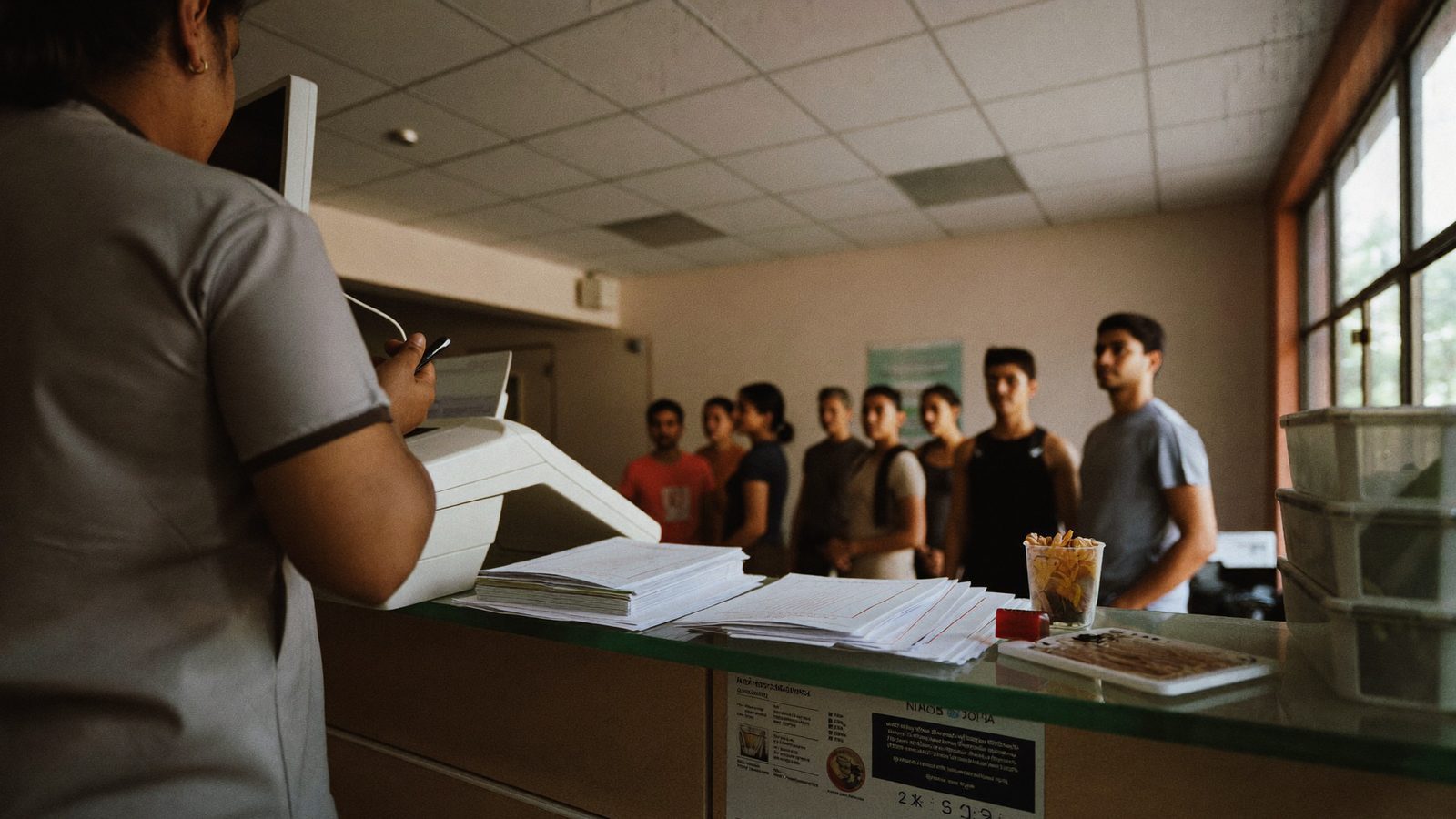
9:40 on a Friday. The collection counter at the lab’s main branch had a queue out to the lift. Two phlebotomists, one billing screen, and a desktop inkjet flashing a low-ink warning it had been flashing since Wednesday. I had come in for a quiet fleet review. I got a live demonstration instead.
The receptionist, Latha, did the thing every front desk in India does. She shook the cartridge. She wiped a contact with her dupatta. She fed one more sheet and prayed. The report printed in stripes. A senior citizen waiting for a thyroid panel got a page he could not read. Latha apologised, reprinted on the back-office machine, and walked it over. Three minutes per patient. Multiply that by a Friday.
The 9:40 jam was not the problem
Here is what I keep telling lab owners. The jam is the symptom. The disease is a machine bought for a home office doing the work of a clinic.
That inkjet was rated for maybe a few hundred pages a month. The branch was pushing four thousand. Reports, bills, GST invoices, consent forms, the odd insurance pre-authorisation. A cartridge that should last weeks was getting changed every nine or ten days. Nobody had added up the cartridges. They just kept appearing on the petty-cash slip, thanda little numbers that never looked like a fleet decision.
I have seen this exact Friday play out in four labs. The owner blames the staff, the staff blame the printer, and the printer is simply the wrong tool sitting on the wrong desk. Arre, of course it jammed. You asked a scooter to pull a goods lorry.
What the cartridge bill was really costing
We sat with eight months of petty cash and the AMC log. Once you stop looking at the sticker price and start looking at the page, the picture changes fast.
Cost per page is the number that runs a print floor. A cartridge inkjet under heavy load was costing this lab roughly three to four rupees a mono page once you counted ink, wasted misprints, and the staff minutes lost to reprints. A mono laser does the same page for well under a rupee. On four thousand pages a month, across three branches, that gap is real money by the time a financial year closes. Going into 2026, toner prices have held while cartridge refills crept up, which only widened the gap.
Here is the comparison we put in front of the owner.
| Machine on the desk | Approx mono cost per page | Rated monthly load | Right desk for it |
|---|---|---|---|
| Old desktop inkjet (cartridge) | INR 3 to 4 | A few hundred | None. Retire it. |
| Ink-tank A4 colour | Lower, colour-heavy | Medium | Occasional colour, marketing |
| Brother mono laser MFD | Under INR 1 | High, sustained | Report and billing desks |
| Brother label printer | Label media | Continuous | Sample-collection counter |
Why brother business printers keep earning the workhorse slot
I came into this lab assuming an ink-tank would win. Cheap colour, refillable, popular. The volume data argued otherwise. A diagnostics lab does not need colour. It needs the same crisp mono page, four thousand times a month, at 8 in the morning when the OPD reports are due.
That is the job a mono laser was built for. Toner instead of liquid ink, so nothing dries out over a long weekend. A higher rated duty cycle, so the machine is not sitting at its ceiling on day one. A faster first page out, which matters more than people think when a patient is standing at the counter. The official Brother business printer range is built around this kind of sustained office load, and that is why it keeps landing on lab and clinic desks.
The full Brother business printers India lineup runs from compact mono MFDs for a single desk to higher-volume workgroup units, plus the label printers that matter for a sample counter. We map the model to the desk, not the other way round.
How we rebuilt the print floor
The fix was not heroic. It was boring, and boring is what you want from a printer.
Two Brother mono laser MFDs went on the report and billing desks at the main branch. A smaller mono MFD went to each of the two satellite collection points. A Brother label printer replaced the hand-stuck stickers at the sample counter, which had been the other quiet disaster nobody flagged. We standardised toner across the fleet, so the store cupboard holds one cartridge type. One spare on the shelf now covers every machine.
If you want the wider view of how we size a print fleet for an Indian office, we have written it up around printers for business and walked through a similar refresh in our Epson and Brother cost-per-page argument from a Pune firm. Same maths, different room.
17+ years in IT, 200+ Indian businesses. Response within 24 working hours. No card, no contract.
The patient-report problem nobody had priced
Now the line that changed the room. That striped thyroid report did not just waste a page. It nearly went into the wrong envelope.
A diagnostics report carries health data. Under Indian law that is sensitive personal data, and a lab becomes a data fiduciary the moment it prints one. The framework published by MeitY under the DPDP Act sets penalties that run up to INR 250 crore for serious failures to protect personal data. A report left face-up on a shared tray, or handed to the wrong patient, is the kind of small slip that turns into a big one.
So we did two more things. We turned on pull-printing on the Brother MFDs, where a report releases only when the staff member taps a code at the machine. No more reports sitting in the output tray for the next person in the queue to read. And we put the printers on a segmented part of the network, because a networked printer is an attack surface like any other. CERT-In, the national cyber agency, has flagged exactly this in its advisories on office devices. You can read its guidance at CERT-In, and the control maps cleanly onto the document-handling clauses of ISO 27001 that the lab’s hospital partners had started asking about. For labs that want the full picture, our DPDP compliance package covers the document side of this.
What the lab signed, and the result
Eight weeks in, Latha stopped shaking cartridges. The reprint pile at the counter is gone. The store cupboard holds one toner type. The Friday queue still happens, because a Friday is a Friday, but it moves now.
The owner’s line was the one I always wait for. “It just prints now. Why did we wait so long.” We have done this for clinics and labs across Tamil Nadu, and the answer is always the same. Nobody waits on purpose. The cartridge bill hides in petty cash until someone adds it up. Bas, that is the whole trap.
Where Brother fits, and where it does not
I will be honest about the edges, because a vendor who only sells you upside is selling you a renewal trap.
If your office prints heavy colour brochures every day, a mono laser is the wrong answer and an ink-tank or a colour laser earns its place. If you print a few dozen pages a week, almost anything works and you should buy on warranty rather than cost per page. Brother earns the workhorse slot when the load is high, mono, and daily. That is most clinics, labs, accounting desks, and back offices. For a sense of where other brands land, our Canon business printers page covers the colour and scan-heavy use cases.
Key takeaways
- Buy on cost per page and rated monthly load, not the sticker price. A home inkjet on a clinic desk is the most expensive printer you own.
- Mono laser toner beats cartridge ink on any high-volume mono desk. Nothing dries out over a long weekend.
- Printed patient or customer records are personal data. Pull-printing and a segmented network are cheap controls against an expensive breach.
- Standardise toner across the fleet so the store cupboard holds one cartridge type.
Start with a print-fleet audit
You do not need a new printer to start. You need the cartridge bill, the monthly page count per desk, and an honest look at which machine is doing work it was never rated for. We will cost it with you and tell you which desks to leave alone. Yaar, half the time the cheapest move is keeping two machines and retiring one.
Sirius Star Enterprise Technologies. Print fleet sizing with the cartridge maths attached.
FAQ
Are Brother mono laser printers cheaper to run than ink-tank for a clinic?
For high-volume mono work, yes. A mono laser holds a lower cost per page and the toner does not dry out between busy days. Ink-tank wins only when you need a lot of colour.
Can a Brother MFD do secure printing for patient reports?
Yes. The business MFDs support pull-printing, where a job releases only when the right person authenticates at the machine. That keeps reports out of a shared output tray.
How many printers does a three-branch lab actually need?
Fewer than most own. We usually consolidate to one workhorse MFD per active desk plus a label printer at each collection counter, and retire the home-grade machines.
P.S. Riya here. The OptiPlex at our own reception has run untouched since 2022, and a printer should disappear into the work the same way. If you are staring at a petty-cash slip full of cartridge entries, that is your sign. Send me the page count per desk and the last three months of ink spend. I will tell you, with no vendor in the room, which printers to keep and which one to retire. That single email has saved labs more than any new machine I have sold them.
Ready for a print fleet your front desk stops fighting?
Sirius Star Enterprise Technologies. 200+ Indian businesses. No card, no contract, no sales call to start.
The longer read for Indian buyers who want the real numbers before they commit.
Send me the field guide