How to buy laptops in bulk in India without overpaying
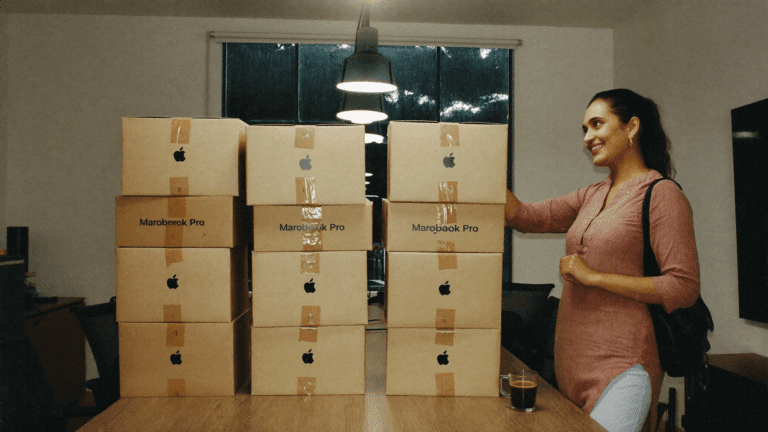
To buy laptops in bulk in India without overpaying, ignore the headline list price and negotiate four numbers instead: reseller trade margin, warranty bundle, freight + onsite SLA, and refresh-aligned residual value. On a 100-machine PO, getting those four right typically saves approx ₹6 to 12 lakh versus the first quote you receive. The OEM you pick matters less than the procurement discipline.
This is not a brand recommendation post. We have placed approx 12,000 business laptops across Dell, Lenovo, and HP for Indian clients in pharma, BFSI, manufacturing, and ITeS over the last six years. The advice below comes from those POs, those warranty claim files, and the conversations we wish more buyers were having before they sign.
The first quote is not the price when you buy laptops in bulk
When you ask three resellers to quote a 100-unit business laptop spec, the spread between the highest and lowest quote is usually 7 to 11 percent on identical configurations. That is approx ₹6,500 per machine on a mid-range build. On 100 units, that is the entire reason you should never sign the first quote you get, no matter how good the relationship is.
The reseller margin you cannot see on the PO is where the negotiation lives. A national-account reseller on Dell typically has 9 to 14 percent of trade margin authority for fleets above 50 units, with another 3 to 5 percent available from the OEM as a deal-registered discount if your spec hits the right tier. Lenovo and HP work the same way, with slightly different band names. None of that margin shows up when you only ask one reseller to quote.
You will not get the full margin handed over. You don’t need it. Capturing half of it, consistently, is what separates buyers who buy laptops in bulk twice a year from buyers who do it once and feel cheated.
What “overpaying” actually means in an Indian bulk laptop PO
Most buyers think overpaying means paying a higher sticker price than another company would. That is the smallest of six leakage points. The full list, in roughly the order they bite:
| Leakage point | Typical overpay (per unit, mid-range) | Fix |
|---|---|---|
| Reseller margin not negotiated | approx ₹4,000 to 6,500 | Three quotes per OEM, same spec, same delivery date |
| Wrong warranty tier bought up-front | approx ₹3,500 to 5,500 | Buy 3-year onsite at PO; extend only if refresh slips |
| Freight + onsite SLA bundled blindly | approx ₹1,200 to 2,400 | Itemise SLA by delivery city, accept tier-2 markup explicitly |
| Spec inflation (RAM, SSD, GPU you don’t need) | approx ₹3,000 to 8,000 | Spec to the role, not to the most demanding user |
| Refresh date misaligned with resale curve | approx ₹2,500 to 4,500 | 48-month refresh on Latitude / EliteBook, 36 on E-series |
| Extended warranty forfeit at refresh | approx ₹4,000 to 6,000 | Match warranty term to actual refresh term |
Add it up. On a 100-machine PO, the difference between a disciplined buyer and an undisciplined one is approx ₹18 to 32 lakh over four years. Not on day one, not in one line item, but spread across the deal. The CFO will not see it as a single number; you have to.
The 7-step playbook to buy laptops in bulk without overpaying
This works for Dell, Lenovo, HP, and any future bulk PO you place. We have run a version of this with approx 60 procurement teams. The order matters.
Step 1: Spec the role, not the wishlist. Write down each team that will receive a laptop and the heaviest real workload they run. Finance and HR rarely need more than Core i5 + 16 GB + 512 GB SSD. Sales and admin live there too. Engineering, design, and analytics get the upgraded SKU; the rest do not. Spec inflation across a 200-machine PO is the silent killer. Every “let’s just give everyone 32 GB” decision adds approx ₹4,000 to 6,000 per unit for capability nobody uses. Seedha role-to-spec mapping is the single biggest line-item lever you have on the deal.
Step 2: Get three quotes per OEM, same spec, same delivery date. Don’t anchor on one reseller, even your favourite one. Same spec sheet, same target city list, same expected PO date. The spread will surprise you. We routinely see 6-9 percent gaps on identical configurations. Use the lowest quote as your floor, not your decision.
Step 3: Negotiate the warranty bundle separately. Resellers quote ProSupport, Premier Support, and HP CarePack as if they are part of the laptop. They are not. Ask for the rupee line. It usually runs ₹3,500 to ₹5,500 per machine for the 3-year onsite tier and another ₹4,000 to ₹6,000 for the premium extension. Decide if you actually need premium based on your delivery cities, not on the reseller’s pitch.
Step 4: Itemise freight, onsite SLA, and tier-2 city markup. “Pan-India delivery included” is one of the most expensive phrases on a PO. If 20 percent of your fleet ships to Indore, Coimbatore, Vizag, or Lucknow, the reseller is loading approx ₹1,200 to ₹2,400 per unit of city-tier markup into the base. Ask for the metro-only price and the tier-2 delta separately. Decide which is fair.
Step 5: Lock the refresh date in the PO. A laptop fleet has a residual value curve, and that curve is unforgiving. Latitude 5000 and EliteBook 800 hold approx 18 to 22 percent of original value at 48 months. ThinkPad E14 holds approx 14 to 17 percent at 36 months and falls sharply after. If you don’t write the refresh date down, the asset will outlive its productive life and you will pay for it twice (once on hidden TCO, once on lost resale). We covered the math when running laptops past refresh date starts costing real money.
Step 6: Match warranty term to refresh term. If your refresh is 48 months, buy 4-year warranty. If it’s 36, buy 3-year. Both OEMs forfeit the unused months. A 5-year ProSupport bundle on a 36-month fleet is approx ₹4,000 to ₹6,000 per unit you will never get back. Almost every buyer we audit has done this at least once. Don’t be that buyer the second time.
Step 7: Ask for deal registration and consider DaaS as a parallel quote. Both OEMs offer 3-5 percent off list for properly registered deals above approx 50 units; many resellers don’t push for it because it eats their margin. Ask anyway. And before you sign a CapEx PO at 50+ devices, get a parallel Device-as-a-Service quote from a specialist. The math is different from buying, and on certain refresh cadences DaaS is meaningfully cheaper than a bulk PO once warranty utilisation and residual recovery are loaded in.
What “good” looks like on the PO before you sign
After the seven steps, your final PO should have these four lines, each negotiated separately and each individually defensible to your CFO:
- Hardware line: sticker, deal-registered discount, reseller margin reduction, all on the page in rupees
- Warranty line: exact term, exact tier, exact rupee cost per machine, with the delta to base
- Freight + SLA line: metro vs tier-2 cities itemised, onsite hold-rate SLA noted
- Imaging + deployment line: gold-image setup, asset tagging, secure shipment, written out
If any of those four lines is wrapped into “all-in pricing” with no breakout, the reseller is hiding margin. Push back. We have never seen a reseller refuse to itemise once asked twice. The first ask is reflex; the second is genuine.
Where Dell, Lenovo, and HP each save you money
The three big OEMs are not interchangeable for bulk Indian POs, and the differences matter only when you know what you are optimising for. We covered the long form in our Dell vs Lenovo vs HP business buyer’s guide and the bulk-order math in detail in the Dell Latitude vs Lenovo ThinkPad bulk-order reality check. The short version: Latitude wins on tier-2 city SLA and resale value, ThinkPad wins on metro warranty performance and X1 Carbon at the executive tier, HP EliteBook is the underrated middle path with strong CarePack support in the south Indian corridor.
When you buy laptops in bulk, the brand you pick is mostly a function of which reseller has the best margin authority in your delivery cities. That is a procurement decision, not a brand decision. Don’t fight the channel; use it.
For the full Sirius Star B2B IT Hardware practice, including bulk laptop POs, peripherals, conference room kit, and Samsung tablets for field force, the parent page has the catalog.
When to skip the bulk PO entirely
There is a class of fleet for which the question “should I buy laptops in bulk?” is the wrong one. If your refresh discipline has slipped before, if your CFO is fighting CapEx swings, if your fleet is growing past 200 devices with no full-time IT person to manage it, the bulk PO decision is the wrong one to be optimising. The right question is whether to switch to Device-as-a-Service.
DaaS isn’t perfect for everyone. If you are buying 10 laptops once, just buy them. But at 50+ devices on a 36 to 48 month cycle, DaaS rolls warranty, refresh, asset disposal, and residual value into a single monthly line. The CFO gets predictable OpEx; the IT team gets out of warranty-claim chasing. Buying 50+ devices? Ask about Device-as-a-Service before you commit the PO.
This is the most common path we see for first-time bulk buyers who got burnt once. Don’t make the same mistake twice for the sake of “we already know how to buy laptops.”
Vikram’s take
I sit with approx 4 procurement teams a month who are placing their second PO to buy laptops in bulk, and approx half of them pay within 3 percent of what the first PO cost them. Not because prices haven’t moved, because the discipline didn’t change between rounds. The cheapest line item in the deal is the time you spend on Step 2 (three quotes) and Step 3 (warranty itemised). Skip those, and you are paisa-vasool on neither the hardware nor the service. Boss, the OEM is not your enemy here; the reseller is not either. The enemy is “we’ll sort it out at the next refresh.” It never gets sorted out.
FAQ
Q: What is the minimum order quantity to buy laptops in bulk in India at enterprise pricing?
A: Most Indian resellers unlock enterprise discount tiers starting at approx 25 units, with sharper breaks at 50, 100, and 250 units. A 100-unit PO typically lands 8 to 12 percent off list with named-account terms. Below 25 units, you are buying at SMB pricing and the reseller margin headroom is too thin to negotiate seriously.
Q: How much can I save by negotiating bulk laptop PO terms properly?
A: On a 100-machine PO at the mid-range tier, disciplined negotiation across reseller margin, warranty bundle, freight, and refresh-aligned residual typically saves approx ₹6 to 12 lakh versus the first quote on a 4-year horizon. The savings live in margin you can’t see, not in the sticker.
Q: Should I buy laptops in bulk or lease them on a DaaS contract?
A: For fleets at 50+ devices on a 36 to 48 month refresh cycle, run both numbers. Bulk purchase wins when refresh discipline is strong and CFO prefers asset on the balance sheet. DaaS wins when warranty utilisation, residual-value recovery, and refresh logistics are uncertain. We have placed approx ₹140 crore of devices both ways; neither is universally cheaper.
Q: How long should the warranty be when I buy laptops in bulk?
A: Match it to your actual refresh term, not to what the reseller pushes. If you will refresh at 48 months, buy 4-year onsite. If 36, buy 3-year. Both OEMs forfeit unused warranty months at decommissioning, so the over-buy typically costs approx ₹4,000 to ₹6,000 per unit you never recover.
Q: Which OEM is cheapest for bulk laptop orders in India?
A: There isn’t a single answer; the cheapest brand depends on which reseller in your channel has the strongest margin authority for your delivery cities. We have seen Dell win in tier-2 deployments, Lenovo win in metro-heavy fleets, and HP win in select south Indian corridors. Don’t pick the brand first; pick the reseller-brand combination that delivers the lowest sustained TCO.
Placing your next bulk laptop PO? Get three real quotes before you sign.
200+ Indian businesses trust Sirius Star for bulk hardware POs. Response within 24 working hours.
Get enterprise pricing on a bulk PO
External authority: IDC PC market tracker
About the author
Vikram Rao is the Enterprise Hardware Analyst at Sirius Star Enterprise Technologies, covering bulk laptop procurement, OEM channel economics, and 4-year TCO models for Indian mid-size companies. He has helped place approx 12,000 business laptops across Dell, Lenovo, HP, and Apple for clients in pharma, BFSI, manufacturing, and ITeS over the last six years.
Profile: /author/vikram-rao/
The longer read for Indian buyers who want the real numbers before they commit.
Send me the field guide