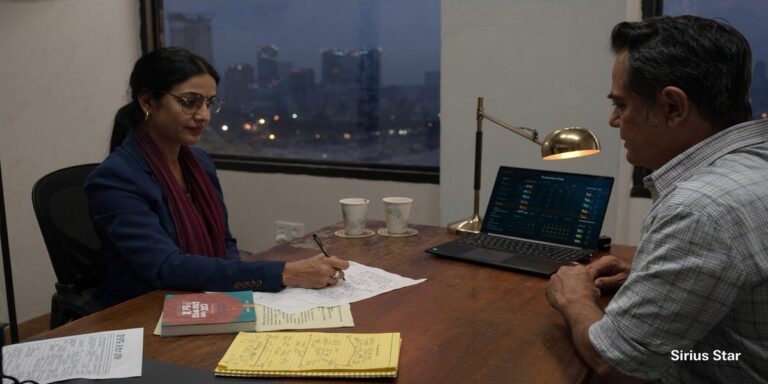
06:42 AM. The DPDP audit email arrived before my chai had cooled.
A Mumbai life-insurance IT head’s 9-hour Monday. The fears, the CFO pushback, the vendor call, the signed PO at 6:30 PM.

India’s DPDP Act, 2023 obligations bite from May 2027. The max penalty under Section 33 is Rs 250 crore. And the laptop that will fail your audit is sitting in somebody’s home right now.
If you read only one line of this story: an auditor’s email is a Monday-morning problem before it ever becomes a finance one. The IT head who answers it well already had her tools talking to each other before the email landed.
06:42 AM · Bandra EastThe email that did not wait for the chai
The cup was still too hot to drink. Ananya read the subject line twice anyway.
“Annual DPDP readiness review, evidence request for [your firm], schedule attached.”
She had been IT head for four years at a 280-employee life-insurance firm in Bandra. Mid-tier balance sheet. Forty-eight branch offices. About 320 endpoints, mostly Windows laptops, a few Macs in the design and actuarial teams. The previous Friday she had told her husband over dinner that the team was in a good place. Patches were current. The antivirus dashboard was green. The CFO had finally stopped asking why IT spend was not going down.
That confidence had been Friday. This was Monday.
She opened the auditor’s attachment with one hand, the other still wrapped around the cup. There were four request lines and one deadline.
Request 1: Inventory of every device touching customer personal data, with patch level and last contact time. Last 30 days.
Request 2: Evidence of consent capture on every web form that collects PII.
Request 3: Incident timeline for any data event in the last 12 months, including ones that did not become breaches.
Request 4: Endpoint policy enforcement showing USB lockdown, screen-record blocking, and copy-to-personal-cloud prevention on customer-data folders.
Submit by: next Friday, 11:59 PM.
Ananya put the cup down. The Section 33 cap is Rs 250 crore. Her balance sheet would be wiped twice before they hit that number. But the number wasn’t what scared her. Request 1 was. Her antivirus dashboard reported 287 endpoints. HR said the firm had 320 active employees with assigned laptops. So 33 laptops were missing from her dashboard. Pakka 33. She didn’t know which ones.
She checked her phone calendar. Vikram, the CFO, had a 30-minute slot at 11:30. She accepted it before she’d decided what to say.
09:15 AM · Office cafeteria, ground floorThe friend who said the obvious thing

Riya was already at the corner table when Ananya walked in. Riya headed compliance for the firm. They had joined the same week three years ago.
“Arre yaar, was that you who replied to the auditor at 7:08 AM saying you’d send the evidence pack? That was bold.”
“I had no choice. Anything else and he’d have escalated to legal.”
“Yaar, the problem isn’t the audit. The audit is a checklist. The problem is the 33 laptops you can’t see.”
Ananya took a long breath. That was exactly what was wrong. Only a friend outside your function says it that cleanly.
“And you know what Vikram will ask at 11:30. Why you spent two years saying the antivirus was fine, and now suddenly it’s not. He won’t say it that way. He’ll say it more politely. But that’s what he’ll mean.”
“The antivirus wasn’t lying. It just couldn’t see the laptops that had stopped phoning home. Work-from-home folks. Laptops where the agent crashed quietly after a Windows update. Those dropped off the dashboard. Nobody noticed because the rest stayed green.”
“Then tell him exactly that, yaar. Don’t soften it. He hates being managed.”
Ananya looked at her notepad. On the way down in the lift she’d written one line. “Need a console that sees every endpoint, including the ones that have gone quiet, so we can prove DPDP control was enforced.” Riya was right. She had to walk in with that sentence and a number.
11:30 AM · CFO Vikram’s office, fourth floorThe conversation that decided the rest of the week

Vikram was on his second coffee. The polished walnut table between them had two folders and a tablet. He let her start.
“The auditor’s email this morning has four lines. I can answer three of them today. The fourth one, endpoint policy enforcement, I can’t answer honestly without consolidating onto one platform. Our current antivirus reports 287 endpoints. HR says 320. So 33 are unaccounted for. If the auditor finds out and we say nothing, the question stops being about technology. It becomes about good faith.”
“Last quarter you said the antivirus was sufficient.”
“It was enough when the question was malware. Now the question is different. Can we prove every device that touches customer data has DPDP controls on it? For 33 of them, no. Their agents stopped reporting weeks ago. This is a coverage problem dressed up as a malware one.”
Vikram sat back. Ananya knew this look. It was the look he wore right before he asked the budget question.
“How much is another tool going to cost me?”
“It’s a replacement, not another tool. We’re paying for the current antivirus, a separate mobile MDM, an email security gateway, and a USB lockdown tool. Four invoices. Three vendors. Nothing talking to each other. If I consolidate to Bitdefender GravityZone, four functions sit in one console. One renewal. One report the auditor can actually read. Cost goes up about 18% in year one. Year two is roughly flat against the four-invoice total, because the existing licenses lapse.”
“And if the auditor escalates anyway?”
“IBM’s 2025 report puts India’s average breach cost at Rs 22 crore, the highest of any country IBM tracked. The Section 33 cap is Rs 250 crore. Either number is more than our entire IT spend across the next four years. The real question is timing. Can we do it before the auditor’s deadline?”
Vikram looked at the tablet. He didn’t say yes. He didn’t say no. He said the thing he says when he’s done arguing.
“Send me a one-page note by 6 PM with the consolidation logic and the year-one number. If it’s honest, I’ll sign it tonight.”
14:00 PM · Ananya’s desk, second floorThe phone call that took the rest of the afternoon

Karthik from Sirius Star called back twenty minutes after she sent the enquiry. He did not start with a pitch.
“Walk me through the four products you’re paying for right now. I’ll tell you which three Bitdefender GravityZone replaces. And which one we keep separate.”
She walked him through it. They were paying for a workstation antivirus. A separate mobile management for 90 company-owned phones. An email security gateway with anti-phishing. And a USB-control tool that nobody on her team really trusted any more.
“Bitdefender replaces three of those. The mobile management one is a judgment call. If your mobiles are mostly iPhones and you have Samsung Knox on the rest, you can park MDM aside for year one. Consolidate it in year two. For the audit deadline next Friday, the priority is three artefacts. The endpoint console. The inventory report. The policy enforcement evidence. Those are what the auditor is testing. We can deploy the agents across 320 endpoints in 10 to 14 working days. The console will produce the inventory report on the day the agents are all in.”
“What happens to the 33 endpoints I can’t find right now?”
“They’ll show up the moment they connect to the corporate network or the company VPN. The new agent ships via your MDM or as a soft push from email. The first time a laptop comes back online, it phones home. If a laptop stays dark for the full deployment window, that itself is audit-grade evidence. You show the auditor a list of devices not seen in 30+ days and the action you took. That’s more defensible than what you have right now, which is silence about them.”
She wrote that down on her notepad in capital letters. SILENCE IS WORSE THAN A KNOWN GAP.
“For the DLP angle, that copy-to-personal-cloud blocking the auditor is asking about. Bitdefender has it natively for the simpler cases. If you want stronger DLP because your actuarial team handles policy-holder data with PAN numbers and Aadhaar pointers, then our Secure Data Guard service wraps GravityZone with a heavier DLP layer. Today, given your deadline, I’d say start with GravityZone alone. Revisit DLP in 60 days when the audit is closed. Don’t boil the ocean this week.”
That last line was the one that decided it. Every other vendor she had spoken to over the years had tried to expand the scope. This one was trying to narrow it.
“I’ll send you the written quote in 24 working hours. Endpoint plus email plus USB control modules. 320 seats. Two-year term. One invoice. I’ll also send a deployment timeline you can show Vikram, so he sees the audit deadline is achievable. If your existing antivirus contract has a co-termination clause, I’ll note that too. We can usually align renewals to the new platform inside the same PO.”
She hung up. Seven pages of notes. The relief wasn’t from the product. Achha, the relief was that she finally had a vocabulary to walk back into Vikram’s office at 6 PM with.
18:30 PM · Ananya’s desk, second floorThe PO Vikram signed before going home

The one-page note went into Vikram’s inbox at 5:47 PM. The signed PO came back at 6:23 PM. He had added one sentence at the bottom of the email.
“Good. Send me the inventory report the day the agents finish deploying.”
Ananya leaned back in her chair. Her shoulders dropped about an inch. Outside, Bandra was in the soft evening light it gets between work and dinner. She hadn’t eaten lunch. She hadn’t really eaten breakfast either, if you didn’t count the chai.
She thought about the auditor’s four request lines. The first three were administrative. She had drafts going by 5 PM. The fourth one, endpoint policy enforcement, was now on a deployment schedule that landed before the audit deadline. Karthik had emailed the timeline at 6:09 PM. He had also called the email gateway vendor to start the co-termination paperwork without being asked.
The 33 missing endpoints were still missing. She didn’t know how many would come back online. But she had a plan, written down, with dates, and a vendor who hadn’t tried to oversell her at any point during the day.
She picked up the cup. The chai was, of course, thanda. Of course.
What this story teaches, mapped to a checklist
- The audit isn’t the problem. Coverage is. An antivirus dashboard that reports green on 287 endpoints when HR says you have 320 isn’t a tooling success. It’s a 33-laptop blind spot waiting to be named in an audit finding.
- Frame new spend as consolidation, not addition. CFOs sign consolidation. They argue with additions. The same Bitdefender GravityZone deployment can be sold to finance as “one renewal replacing four” instead of “another security tool.”
- Use verifiable numbers for the stake. IBM Cost of a Data Breach 2025 puts the India average at Rs 22 crore, up from Rs 19.5 crore the year before and the highest of any country IBM tracked. DPDP Section 33 caps at Rs 250 crore. These are MeitY and IBM citations, not vendor scare tactics. CFOs verify.
- Silence about a gap is worse than a documented gap. “We have 33 endpoints we can’t account for, and here’s the remediation plan with dates” beats “the dashboard is green” every time an auditor asks.
- The right vendor narrows scope under deadline pressure. A vendor who tries to expand into DLP, mobile, and email all at once during your audit-prep week hasn’t understood your week. Keep the scope tight to what the auditor is actually testing.
Questions Ananya wishes she had asked sooner
Q. How fast can an endpoint platform actually be deployed across 300+ devices in India?
10 to 14 working days for the standard rollout is realistic, assuming the firm has a working VPN or MDM channel to push the agent. Endpoints that aren’t connecting can still be remediated via soft email push. But accept that some won’t come back online during the deployment window. Documenting which ones is itself audit-grade evidence.
Q. Does Bitdefender GravityZone meet DPDP Act 2023 evidentiary requirements?
The console produces endpoint inventory, patch status, policy enforcement, and incident timelines out of the box. These are the four artefacts most Indian DPDP auditors are asking for in 2026. The Act itself doesn’t name a product. What it requires is “reasonable security safeguards” under Section 8. The evidence trail from a single console is far easier to defend than evidence stitched together from multiple disconnected tools.
Q. What happens to existing antivirus licenses when we switch?
If the existing contract has a co-termination clause, the renewal can usually be aligned to the new platform’s invoicing. If it doesn’t, the existing licenses run to their original end-date, and the firm pays for both for that overlap window. Sirius Star’s commercial team manages this paperwork as part of the procurement engagement.
Q. Should we wait to deploy DLP at the same time?
During an audit-prep window, no. Trying to boil the ocean delays the deployment your auditor is actually testing. Deploy endpoint first. Revisit DLP 60 days after the audit closes, when the team has bandwidth and the regulator’s findings are in writing. Secure Data Guard is the DLP wrap most Indian BFSI firms add in the year-two consolidation phase.
Q. How is Sirius Star different from buying directly from Bitdefender or another reseller?
Sirius Star is an Authorized Reseller and Channel Partner for Bitdefender and 50+ other brands. Sirius Star coordinates the multi-vendor procurement so the firm signs one PO across endpoint, email, MDM, and any other consolidations, not three separate vendor contracts. Most direct buyers spend more on the coordination overhead than on the per-seat licence delta.
Your DPDP audit is closer than your renewal calendar.
If your existing endpoint contract is up in the next 90 days, send us your current quote. We price-match the per-endpoint cost and add the Sirius Star wrap on top, so you keep your renewal cycle but stop overpaying on year three.
Get My Free DPDP Audit Readiness Check200+ businesses trust Sirius Star. Response within 24 working hours.
The longer read for Indian buyers who want the real numbers before they commit.
Send me the field guide