I ran 80 OptiPlex Micros and 30 Mac minis side-by-side for 18 months. Here is what I would pick now.
TL;DR
- We run 80 Dell OptiPlex Micros for admin, reception, branches, finance. We run 30 Apple Mac minis for design, video, and a few execs. Same Mumbai firm, same 18 months.
- OptiPlex wins on unit cost. Mac mini wins on tickets, working life, and the quiet way it disappears into the desk.
- If we consolidated tomorrow, I would not consolidate. The CFO is not happy with that answer. But the math is.
- Role-by-role split below. Earned comparison table at the end.
- For a full feature-by-feature breakdown see our long comparison at Dell OptiPlex vs Apple. This piece is the field report.
By Riya Iyer, Hardware Practice. 3 Jun 2026. About 7 min read.
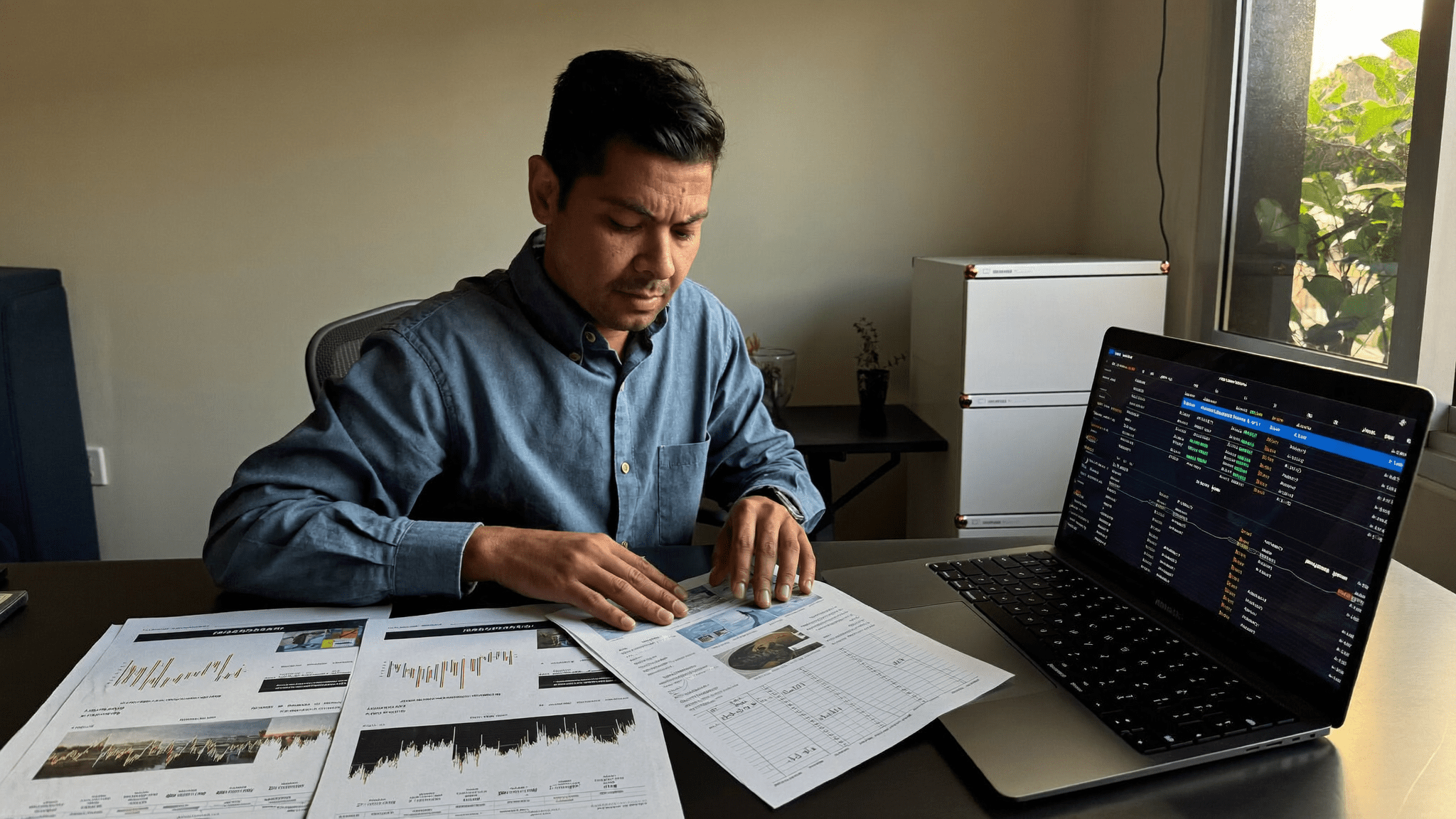
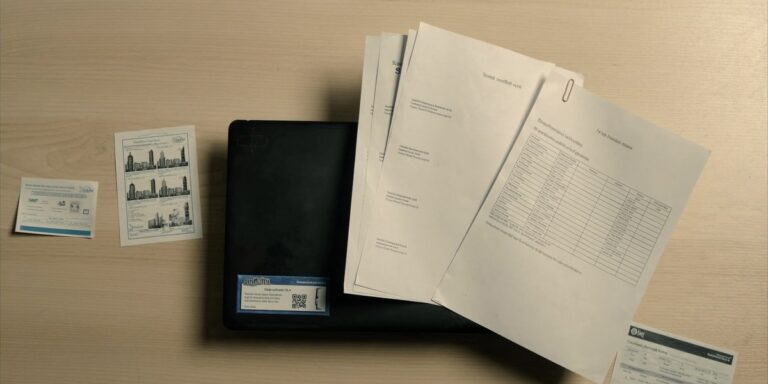
Year-end fleet review. Two quote PDFs. One quiet office floor. One uncomfortable question from the CFO.
The email landed at 4:47 on a Wednesday afternoon. Subject line: “Desktop fleet, one platform next year?”
CFO. Cc finance. Bcc nobody, because she does not waste a bcc.
Body, three sentences. “We spent thirty-eight lakhs across two desktop platforms last year. Procurement wants to consolidate. What is the right answer?”
I read it twice. Then I made a thanda coffee. Then I read it a third time.
We are a 240-person consulting and creative firm in lower Parel. We make pitch decks for some clients and brand films for others. Half the floor types in Excel all day. The other half spends six hours inside Adobe Creative Suite or DaVinci Resolve.
For three years I ran two desktop platforms, on purpose. 80 Dell OptiPlex Micros for admin, reception, branches, finance. 30 Apple Mac minis for design, video, and four executives who like the silence.
The CFO is right that this is unusual. Most firms our size pick one. The CFO is also right that we spent more than we needed to on the wrong platform somewhere. The question is which platform. And for which seats.
So I cleared the rest of the afternoon. I pulled the ticket logs. I pulled the AMC quotes. I pulled the year-2 service costs. And I went floor by floor.
This is what I found.
2026 update on the names.
Dell retired the OptiPlex brand in January 2025. The Micro you buy today sits under the Dell Pro desktop line. Same ultracompact box, same seat on the desk, new label. Where this article says OptiPlex Micro, read Dell Pro Micro.
Apple moved on too. The tested unit was an earlier Mac mini. The current one runs the M4 chip and starts at Rs 59,900 in India for 16GB and 256GB. Faster silicon, same shape. The seat-cost gap you are about to read did not close, because it never came from the chip. It came from the support model and the working life. Both still hold.
Floor one, the OptiPlex floor
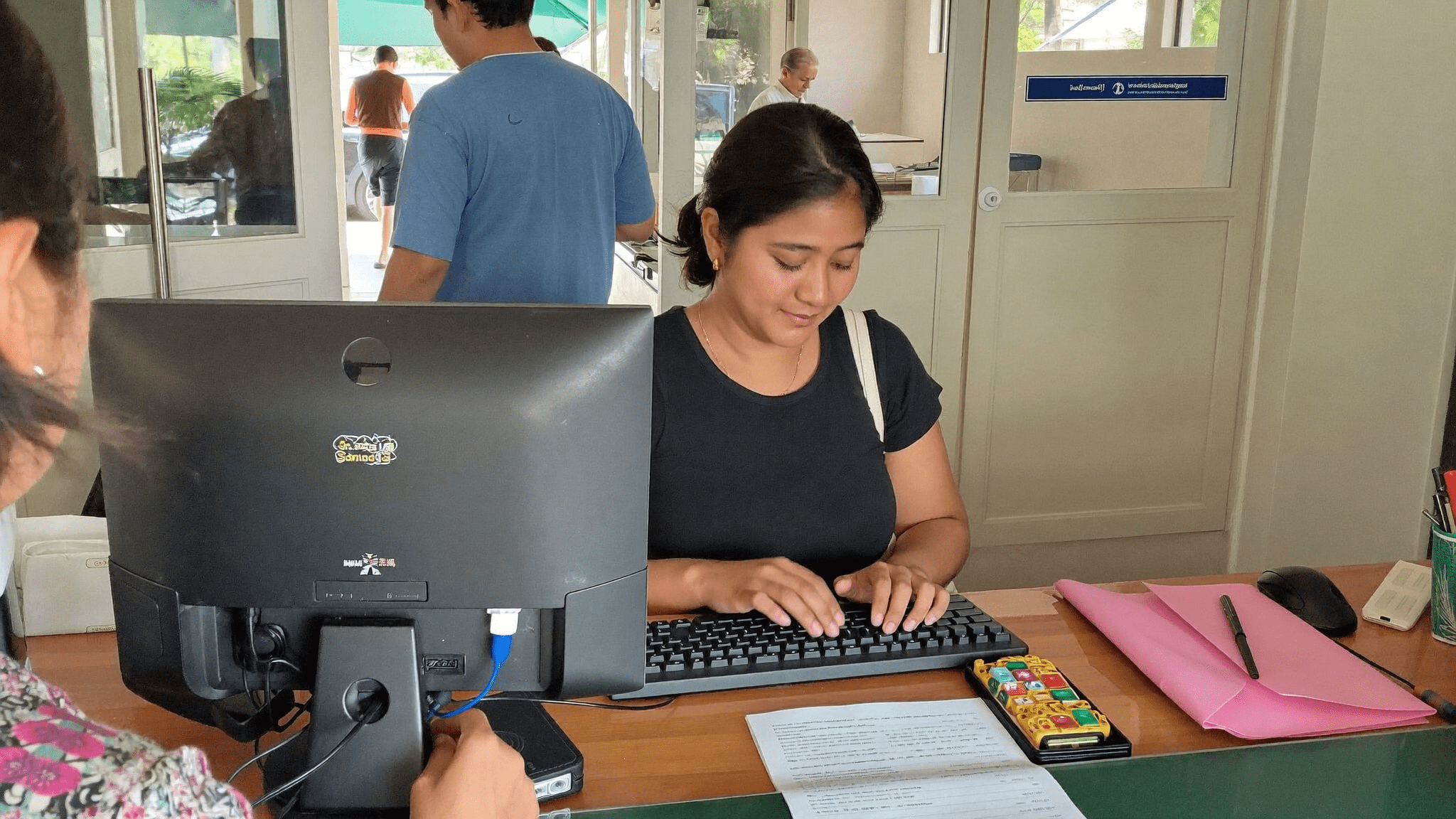
The OptiPlex Micro at reception is on its fourth year. Zero tickets. The receptionist does not know what brand it is.
The OptiPlex Micro at our front reception has been on the same desk since 2022. Same monitor. Same keyboard. Same person. Zero tickets in 18 months.
Our receptionist could not tell you the brand if you asked her. She thinks of it as “the box behind the screen”. That is the highest compliment a desktop can earn in admin work.
Walk past her down the corridor and you reach finance. 12 OptiPlex Micros. Mostly OptiPlex 3000 series, a few 5000s for the senior people. Excel, Tally, the GST portal, Outlook. Three monitors per finance head.
I asked our finance lead what she would change about her box. She thought for a long time. Then she said, “The fan kicks in when I open a big GST return. But arre, that is normal na.”
That is the OptiPlex story in one line. It does its job. It is loud sometimes. Nobody loves it. Nobody quits over it.
The numbers are kind too. Our OptiPlex 3000 Micro lands at around forty-eight thousand rupees with a 3-year ProSupport plan. Replace the SSD in year four, you get six full years of working life. Per-seat amortised cost across six years: roughly Rs 670 a month. That is less than what we pay the cafe downstairs for the team’s morning chai.
Tickets, though. Let me be honest about tickets.
In 18 months across 80 OptiPlex seats we logged 41 tickets. 14 were “Windows updates broke something”. 9 were driver issues after a Dell BIOS push. 6 were hardware (one dead PSU, four fan replacements, one stuck NVMe). The rest were small stuff. User locked themselves out. Bluetooth keyboard disconnected.
41 tickets across 80 seats over 18 months is fine. Not great. Fine.
The OptiPlex floor is a vanilla idli. Reliable. Cheap. Sometimes the chutney is thin. Nobody complains, nobody writes a review.
Floor two, the Mac mini floor
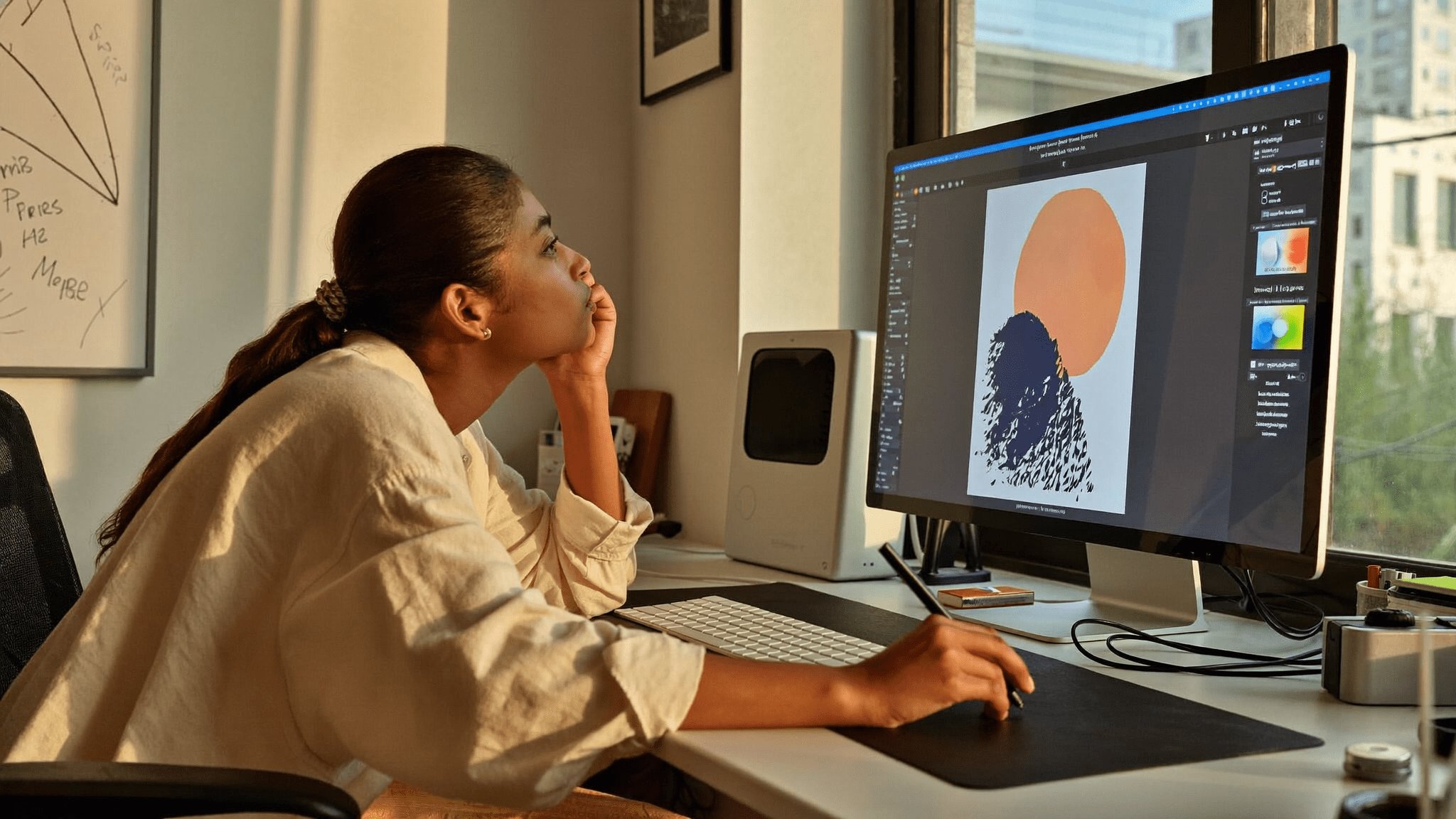
Design pod. A Mac mini hides behind the monitor stand. The designer is two hours into a 4K timeline and has not noticed any noise.
Take the lift to the 4th floor and the noise changes. The OptiPlex fans are gone. The aircon hum is the loudest thing in the room.
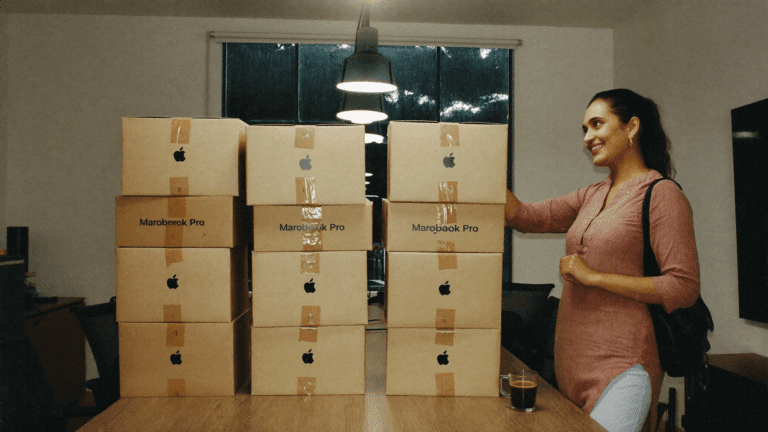
22 of our 30 Mac minis live here. Mostly M2 minis, a few M4s for the heavy 4K editors. 16 GB RAM minimum, some 24 GB. External SSDs for the design library. Studio Display or a colour-managed BenQ.
I asked our lead designer the same question I asked finance. What would you change about your box?
She did not pause. “Nothing. I forget it is there. Bas.”
In 18 months across 30 Mac mini seats we logged 7 tickets. 3 were “I dropped a Time Machine drive”. 2 were software (Adobe Premiere updates that broke a project file). 1 was a thunderbolt cable. 1 was an external monitor.
Zero hardware failures on the Mac minis themselves. Zero.
Now the cost story. A Mac mini M2 base lands around Rs 65,000 in our last quote. Add 16 GB and a 512 GB SSD and you are at Rs 95,000. The M4 base is Rs 64,900. With our upgrades, Rs 1.1 lakh.
That is roughly 2.3 times the OptiPlex unit cost. Yaar, that is a lot.
But run the per-month maths over six years and the Mac mini lands at about Rs 1,400 a month. That is two cups of cafe coffee a day. For a person whose job is making 4K timelines render without crashing, two cups of coffee is not the place to save money.
Then there is the part I cannot put on the spreadsheet. Designers are influencers. Senior designers who like their setup tell three more designers we hire next quarter. Designers who hate their setup tell three more they nearly took the offer but the rendering machines were “Dell-something, full PC jhamela”. I have lost two candidates to that exact line.
So when I look at the Mac mini floor I see two stories. The TCO story, where the gap closes a lot if you count tickets and life. And the talent story, where the gap does not close at all.
The bake-off math
I pulled this into one spreadsheet. Eighteen months. Real numbers. No vendor talking points.
| Metric | OptiPlex Micro (80 seats) | Mac mini (30 seats) |
|---|---|---|
| Unit price (typical config) | Rs 48,000 | Rs 1,10,000 |
| Tickets per 100 seats per 18 months | 51 | 23 |
| Hardware failure rate (18 months) | 6 of 80 (7.5%) | 0 of 30 (0%) |
| Year-3 trade-in / resale value | ~Rs 14,000 | ~Rs 55,000 |
| Working life before replacement | 5-6 years | 6-8 years |
| Per-seat per-month over working life | Rs 670 | Rs 1,400 |
| Designer / creative satisfaction (1-10) | 5 | 9 |
The numbers tell three things at once.
OptiPlex wins outright on unit price and per-month for back-office roles. By a lot.
Mac mini wins on ticket load and resale. By a lot.
For creative work, the Mac mini wins on the soft stuff that does not fit in a spreadsheet but does show up in next year’s hiring funnel.
What I told the CFO
I wrote three paragraphs. I sent two. The CFO replied “Fine, but explain it at the QBR.”
I went home at 9 pm that day with three drafts on my laptop. The first one said “Yes, consolidate to OptiPlex, save Rs 18 lakh next year.” The second said “Yes, consolidate to Mac mini, lose Rs 22 lakh but win the talent fight.” The third said “No, keep both, and here is why.”
I sent the third one.
Here is the short version.
The OptiPlex floor is doing its job for Rs 670 per seat per month. If I rip it out for Mac minis, I would be paying double for a class of work where the receptionist cannot even name the brand. That is not a TCO win. That is design pride dressed up as a procurement decision.
The Mac mini floor is doing its job for Rs 1,400 per seat per month. If I rip it out for OptiPlex, I would save about Rs 22 lakh next year. I would also lose 3-4 designers across the next two hiring cycles. The new senior creative we are about to court has already asked about hardware on her shortlist call. That is not a TCO win either. That is finance pride dressed up as a procurement decision.
So my answer is: keep both. Tighten the role mapping. Cap OptiPlex 5000 upgrades for finance leads only. Standardise Mac mini M2 16/512 across all design pods. Move two execs who do not edit video off Mac minis and onto OptiPlex 7000 Micros next refresh.
That moves us from Rs 38 lakh to about Rs 33 lakh across the fleet next year. Same shape. Less fat.
The CFO read it. She replied at 11:14 pm. “Fine. But explain it at the QBR. And bring numbers, not feelings.”
Pakka. That is fair.
If you are doing this exercise yourself
If you are running a mixed fleet and someone is asking the consolidation question, three things to do before you answer.
Pull tickets per 100 seats per 18 months. Not “tickets total”. The per-100 normalisation is the only number that tells you which platform is actually quieter.
Pull year-2 service spend, not just unit price. The unit price gap shrinks when you add tickets and AMC. For us, the OptiPlex-vs-Mac mini per-month gap is roughly 2.1x, not the 2.3x the unit price suggests.
Walk the floor. Talk to the people, not the machines. The receptionist who has not noticed her machine in four years is a stronger data point than any vendor pitch deck.
And resist the urge to consolidate for tidiness. Two fleets is fine if both fleets are doing the work they are sized for. Tidiness is for the procurement spreadsheet. The buyer’s job is to make the work go faster, not to make the spreadsheet shorter.
Key takeaways
- For back-office, admin, reception, branches: OptiPlex Micro at ~Rs 48K is the right tool. Per-seat per-month over 6 years lands at about Rs 670.
- For design, video, creative pods: Mac mini at ~Rs 1.1L is the right tool. Tickets drop ~55% and hardware failures drop to zero across 18 months.
- The hidden Mac mini value is the hiring funnel, not just TCO. Designers tell other designers what their machines are.
- Do not consolidate for tidiness. Consolidate only if the role can actually live on the cheaper platform.
- Walk the floor, then run the numbers. Not the other way round.
FAQ
Is the Mac mini really cheaper than OptiPlex over 5 years?
Not in our data. The Mac mini is cheaper per ticket and per hardware failure, but per-seat per-month over 6 years it still lands at about double the OptiPlex Micro (Rs 1,400 vs Rs 670). The win is in tickets, working life, and resale, not in headline TCO. If a vendor tells you otherwise, ask for their ticket numbers.
We are a 100-person firm with no design team. Should we just buy OptiPlex?
For pure admin and finance roles, yes. The OptiPlex Micro at Rs 48,000 with a 3-year ProSupport plan is hard to beat. Add one Mac mini per senior exec who actually wants one, if budget allows. Do not buy a Mac mini for a role that does not need it. That is the most expensive mistake we have seen.
What about Windows on Mac vs macOS for non-creative roles?
We tried this. We do not recommend it. Mac mini on macOS for non-creative roles works fine technically but creates a support split that is more expensive than the hardware savings. If a seat does not need macOS specifically, put OptiPlex there.
Who supports this if we buy through Sirius Star?
We are an Apple Authorized Reseller and a Dell partner. We deliver via standard courier across India. For warranty service on Mac minis we route through the OEM’s Apple authorized service network. For OptiPlex we use Dell’s own service channel. OneAssist pickup-drop service covers mobiles, tablets, and MacBooks across 19,000+ pincodes; desktops go through OEM service direct.
Does this comparison still hold in 2026, now that OptiPlex is Dell Pro and the Mac mini is M4?
Yes. The OptiPlex Micro is now sold as the Dell Pro Micro, and the Mac mini now runs the M4 chip at Rs 59,900 in India. The names and the silicon changed. The seat-cost gap did not, because it comes from support tickets and working life, not the processor.
If you are still deciding
- Full spec-by-spec OptiPlex vs Apple comparison: Dell OptiPlex vs Apple (longer, more technical)
- Our full hardware range: Hardware for business
- The lifecycle services that make either fleet last 6 years: Device Lifecycle Management
- Want us to do the same exercise for your fleet? Talk to us. WhatsApp +91 91375 93228 or care@siriusstar.in.
P.S. The receptionist’s OptiPlex is now in year five. It is still on the same desk. Last month I asked if she wanted a refresh. She said no. “It works, sir. Why fix what works.” That is the only quote I needed for this article.
The longer read for Indian buyers who want the real numbers before they commit.
Send me the field guide