Check Point firewall India: a Hyderabad hospital, a 2 AM amber alert, and the Quantum cutover that followed
I am Priya. I have spent fifteen years cleaning up after firewalls that were bought on price and forgotten on purpose. Most breaches I have walked into did not start with a genius hacker. They started with somebody waving away a small alert at the wrong hour. This is the story of a hospital that almost did the same, and the Check Point Quantum firewall rollout that followed.

02:11 AM. The alert I had filed under noise.
The first sign was boring. It usually is. An outbound connection from a radiology workstation to an IP in a country the hospital had never billed a patient from. The old firewall logged it. It did not block it. It had no current threat feed, because the subscription had lapsed eight months earlier and nobody renewed a box that still seemed to work.
I had seen the same line in the logs two days before. I had assumed it was a backup agent phoning a mirror. It was not. That is my one confession in this story. I read an amber signal as noise, and amber is exactly the colour you are supposed to stop for.
At 02:11 the workstation started reaching for the file share where the PACS images live. Scans. Patient names. Dates of birth. The crown jewels of a hospital, and under Indian law, sensitive personal data. The encryption had not started yet. We had minutes, not hours.
02:40 AM. Pull the cable, then think.
Containment is unglamorous. We isolated the radiology VLAN by hand, because the old firewall could not segment fast enough to do it for us. One junior admin, half awake, unplugging a switch uplink on my say-so. Arre, that is the actual state of network security at a lot of mid-size Indian hospitals. One tired person and a hunch.
We got lucky. The attempt was contained before a single image was encrypted. Lucky is not a strategy though. By sunrise the question from the management committee was simple. How do we make sure luck never has to do this job again?
200+ Indian businesses. 17+ years in IT. A written shortlist back within 24 working hours. No card, no contract.
09:30 AM. Why a firewall, and why this one.
The committee wanted to buy an antivirus and go back to sleep. I understand the instinct. It is the wrong instinct. Endpoint software matters, but a hospital network is flat in all the ways an attacker loves. Imaging talks to billing talks to pharmacy talks to the guest WiFi in the waiting room. You need a wall that can see traffic, understand it, and cut a segment off the moment it misbehaves.
That is the job a real next-generation firewall does. We shortlisted four serious options. Check Point Quantum, Fortinet FortiGate, Palo Alto, and SonicWall. All four can hold a line. They do not all fit the same building.
For this hospital, Check Point Quantum at the data centre with ThreatCloud AI for live threat intelligence made the cut. Quantum Spark went to the six branch clinics, small boxes that a non-engineer can live with. Harmony Endpoint went onto the clinical machines so the firewall and the endpoints share one threat picture instead of arguing in two consoles.
11:00 AM. The honest part nobody quotes you on.
Here is the trade-off I owe every buyer. Check Point is not the cheapest of the four. It rarely is. What you pay for is the unified policy and the threat prevention that has, in my experience, the lowest false-positive noise of the set. In a hospital, where a blocked legitimate scan delays a patient, low noise is not a luxury. It is the whole point.
If this had been a single-site trading firm watching every rupee, I would have said FortiGate and meant it. Fortinet gives you more raw throughput per rupee, and a smaller estate does not feel the management overhead. Palo Alto would have been my call for a cloud-heavy software company that lives in app-level policy. SonicWall, honestly, is the right answer for a small branch that just needs a clean, affordable wall and a quiet life. I wrote about one of those in our SonicWall Friday cutover story.
Check Point firewall India: the honest call against Fortinet, Palo Alto, and SonicWall
One table, no marketing. This is roughly how I sort the four when a buyer asks me to be blunt.
| Firewall | Where it wins | Where I would pass |
|---|---|---|
| Check Point Quantum | Regulated, multi-site estates that need one policy and quiet, accurate threat prevention. Hospitals, BFSI, mid-market under audit. | A single small site counting every rupee. |
| Fortinet FortiGate | Best throughput per rupee. Strong when the SD-WAN and the firewall come from one vendor. | When you want the lowest alert noise above all else. |
| Palo Alto | Cloud-native shops living in app-ID and identity policy. | A lean branch network that will never use half of it. See our Palo Alto Prisma postmortem. |
| SonicWall | Small offices and clinics that need an affordable, clean wall. | A large segmented estate with heavy compliance load. |

Weeks 2 to 4. The migration, the boring weeks that matter.
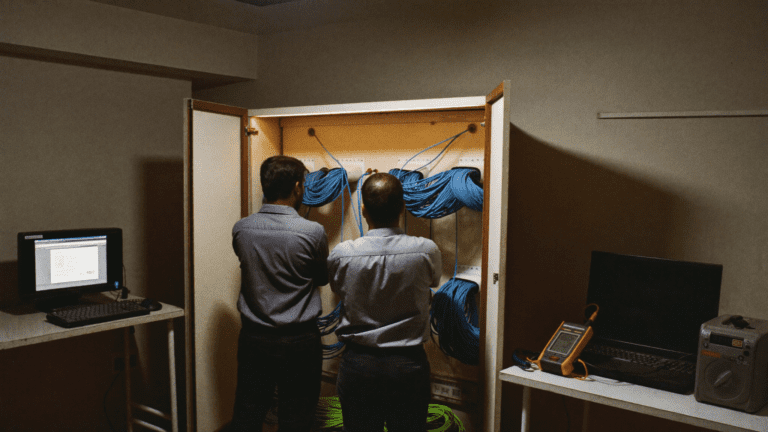
Buying is the easy day. The policy migration is where rollouts go to die. We did it the slow way on purpose. Sizing and shortlist in week one. Policy migration and staging across weeks two to four, every rule mapped from the old box and questioned before it was copied. Half of the old rules were ghosts, allow-all leftovers from a vendor who left in 2019.
Our engineering team in Vashi staged the whole config offline first, so go-live was a swap and not a science experiment. Achha, that is the bit buyers underrate. The brand on the box matters less than the hands that configure it. A Check Point badly configured is just an expensive SonicWall.
We size your estate and send a written shortlist. 200+ Indian businesses served. Response within 24 working hours.
Week 6. Go-live, and where DPDP actually sits.
Cutover was a Saturday night into Sunday. Quantum at the core, Spark at the six clinics, Harmony on the clinical endpoints, one policy across all of it. By Monday morning the radiology team did not notice a thing, which is the highest praise infrastructure ever gets.
The DPDP angle is not a sticker. Patient health records are sensitive personal data, and the Act expects a fiduciary to apply reasonable security safeguards. A segmented firewall that can prove it stopped lateral movement is part of that evidence. When the auditor asks how you contain a breach, “we pull a cable at 2 AM” is not an answer. A logged, automatic isolation is. If you want the wider compliance picture, our DPDP data-mapping day walks through it for a regulated buyer. India’s own incident-reporting rules from CERT-In and the framework on the MeitY DPDP page set the floor here.

What we learned, and what I would do differently
Key takeaways
- An end-of-support firewall is not a saving. It is a deferred breach. The lapsed threat feed was the real hole, not the hardware.
- Match the firewall to the building. Check Point Quantum earned its place in a regulated, multi-site hospital. A single small office should look hard at SonicWall or FortiGate first.
- Segmentation is the feature that mattered at 2 AM. Throughput numbers on a datasheet did not save that radiology share. The wall that could isolate fast did.
- Configuration beats brand. Staged migration in Vashi, every legacy rule questioned, was worth more than any logo.
- For sensitive data under DPDP, you need to prove containment, not just claim it. Logs are the evidence.
The thing I would change is simple and it is on me. I would treat the second sighting of an amber alert as a confirmation, not a coincidence. Security is a verb. You do it on the boring Tuesday, not the loud one.
Frequently asked questions
Is Check Point firewall India worth it for a mid-size business, or only for large enterprise?
It fits a regulated mid-market well, especially multi-site estates under audit. Quantum Spark scales the model down to small branches, so you are not forced into enterprise pricing for a clinic or a sales office. If you run a single small site with no compliance load, ask us to price FortiGate or SonicWall against it before you decide.
How long does a Check Point rollout take in India?
For an estate like this hospital, sizing took two days, policy migration and staging ran across weeks two to four, and go-live landed by week six. A single-site deployment can be faster. The migration weeks are the part you should never rush.
Does Check Point help with DPDP compliance?
It supports it. A segmented, logged firewall is part of the reasonable security safeguards the DPDP Act expects, and the logs give you breach-containment evidence. It is one control among several, not a compliance button. Pair it with endpoint and data controls.
What about support if something breaks at 2 AM?
That is the question I would ask too. Our engineering team in Vashi handles sizing, migration, and the quarterly managed retainer. You reach a person, not a queue.
One sizing call. A written shortlist by Friday. No card, no contract, no sales pressure. Reach us on WhatsApp at +91 91375 93228 during 10-7 IST.
P.S. Sudeep here. We shipped exactly this setup for a hospital group last quarter, and the finance head asked me the same thing you are probably thinking right now. Why not just buy the cheaper box? My answer was the 2 AM story above. The cheaper box is fine until the night it is not, and a hospital does not get to find out the hard way. If you want us to size your estate honestly, even if the honest answer is Fortinet, that is the call we will make.