ATEN KVM switch India: the night a Hyderabad plant stopped driving to its own server room
Last updated: 25 July 2026
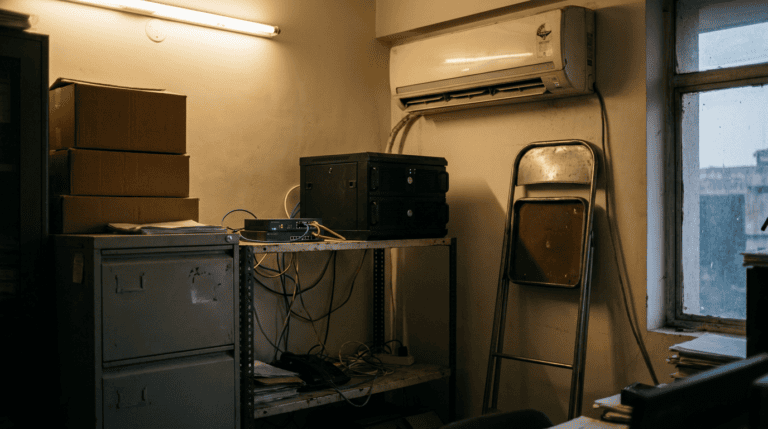
The crash cart was parked in the doorway of the server room. Monitor, keyboard, a mouse with a sticky left button, all on a trolley with one wheel taped straight so it would roll where you pushed it. It had lived in that doorway for years. Nobody walked past it. They walked around it.
That trolley is the whole problem in one object. If your only way to a sick server is to wheel a screen up to it, somebody has to be standing next to the rack. At 2 a.m. that somebody is in a car.
I am Naveen. I do networks and the boring boxes that sit under them. This is the story of a 90-server-room plant near Patancheru that stopped driving to its own racks.
The 2 a.m. drive nobody wanted
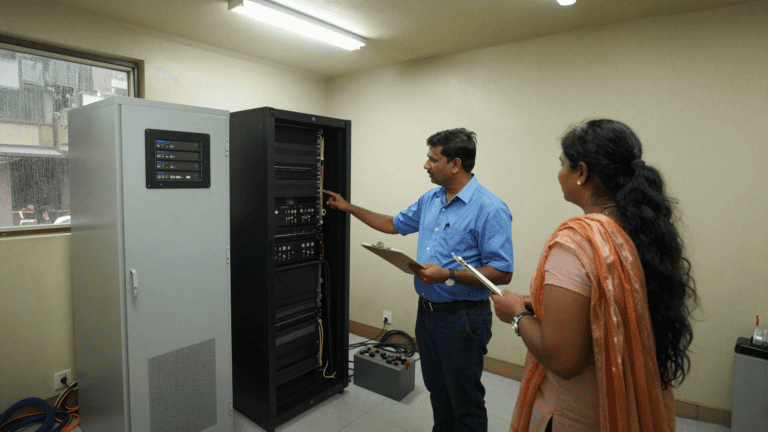
Ravi runs IT for a 240-person auto-components maker. Two units, one office floor, one plant. The plant has a small on-prem room: a couple of virtualization hosts running the ERP and the MES, a backup box, a firewall, two switches, a UPS. Normal mid-size kit.
The night it broke, one ESXi host hung. Not a clean crash. It stopped answering pings and the management page would not load. The two newest servers had iDRAC wired up. The two oldest did not, because in 2021 someone decided the licence was not worth it. Arre. Guess which host hung.
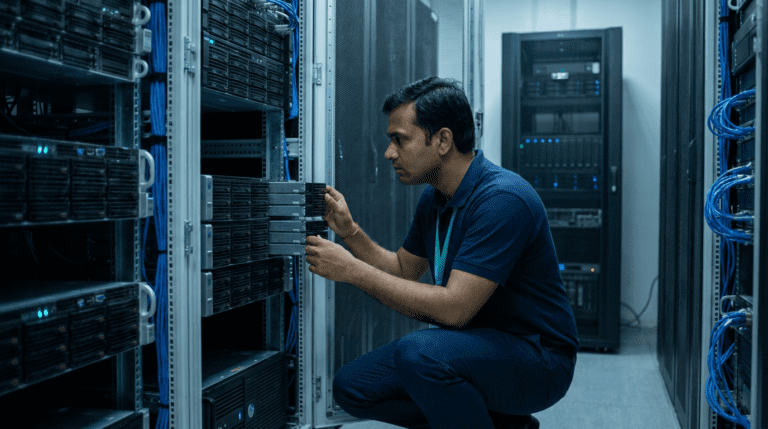
So Kiran, the on-call, drove in. Forty minutes each way through Jeedimetla traffic that is somehow busy even at night. He rolled the crash cart to the rack, watched the host sit on a frozen console, forced a reboot, watched it come back, and drove home at 4. The ERP was late for the morning shift. The plant noticed.
This was the third drive that quarter. Ravi did the sum out loud. A late ERP morning costs the plant a real number in idle line time. Add the drive, the tired sysadmin the next day, the slow restart because nobody could see the boot screen remotely. We have seen this exact pattern at four other plants, and it is never the headline outage that hurts. It is the slow groggy recovery because the one person who can fix it is on a flyover.
Talk to us about your server room
200+ businesses served. Response within 24 working hours. Reach us on WhatsApp at +91 91375 93228 during 10-7 IST.
What we actually put in
The job was simple once we named it. The team needed to reach a server below the operating system. Not RDP. Not SSH. The actual screen at power-on, the BIOS, the boot menu, the moment a host decides whether to come up at all. That is what a KVM-over-IP box gives you. It captures keyboard, video, and mouse at the hardware level and sends it over the network to whoever logs in.
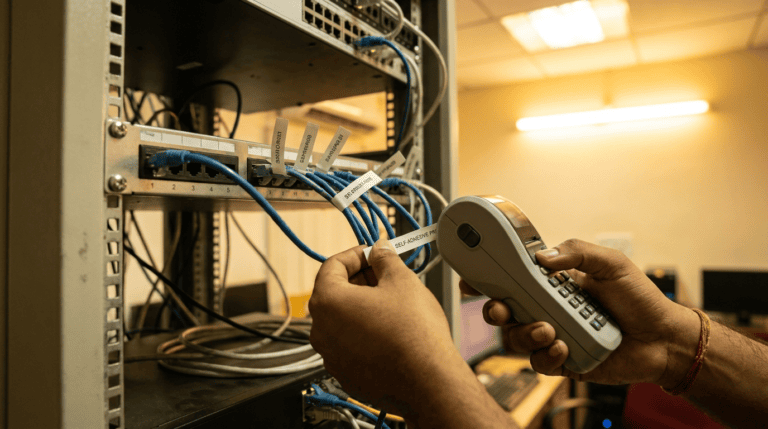
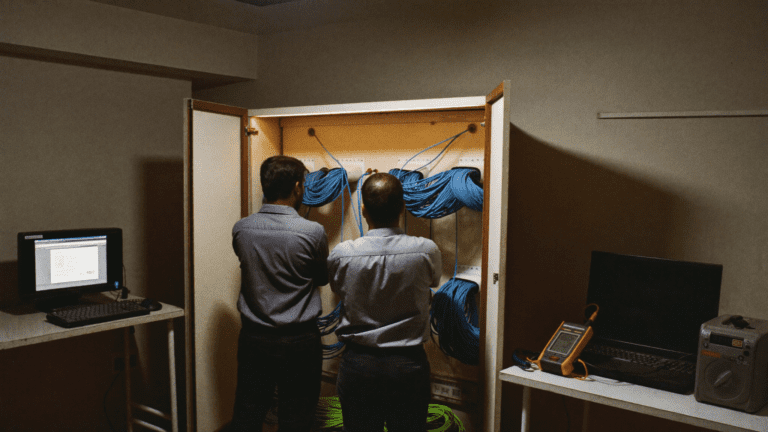
We fitted an ATEN KVM switch with IP access for the hosts that mattered, plus a serial console for the firewall and the two switches. The serial side matters more than people expect. When a firewall config goes wrong, the network is the thing that is down, so you cannot reach the firewall over the network. You reach it over a serial line that does not care about your routing table.
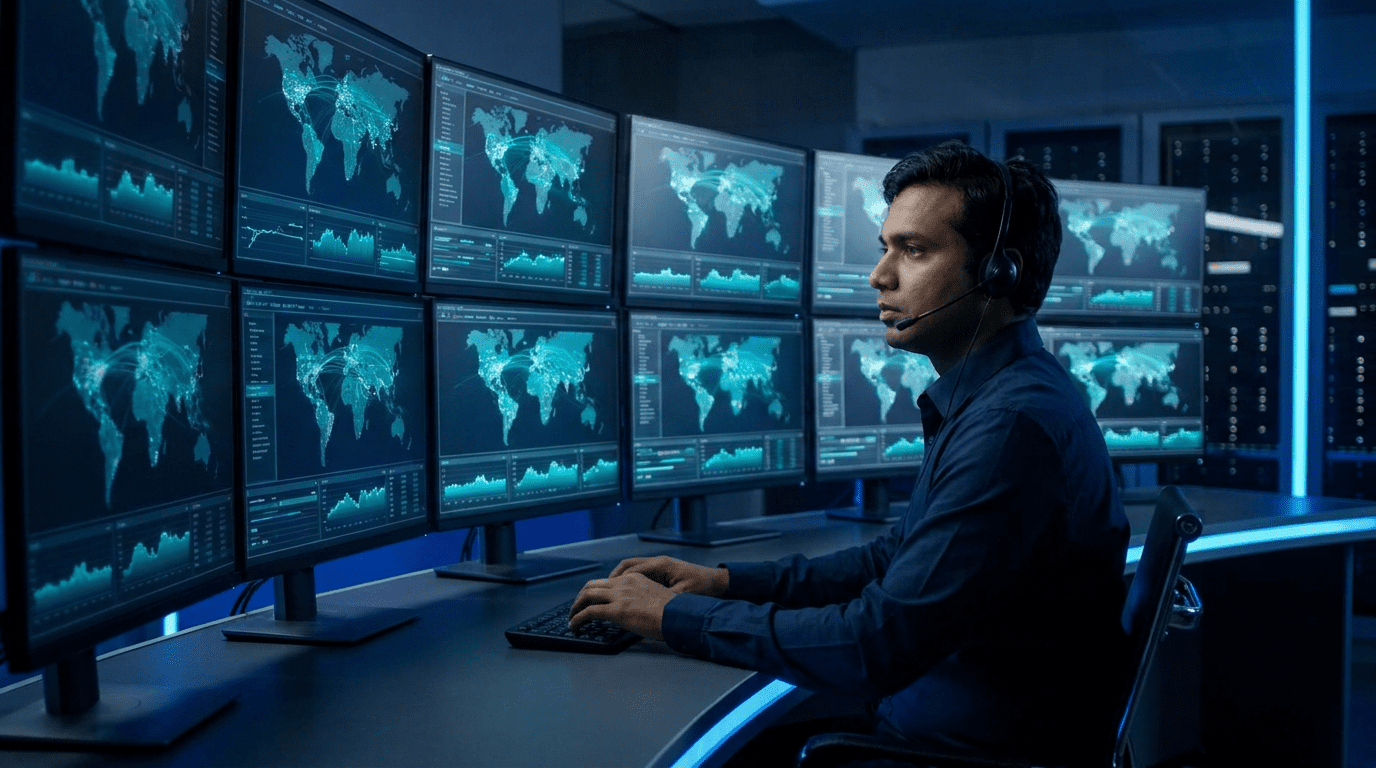
One laptop at home. Kiran logs in, picks the dead host, sees the frozen console, sends the reboot, watches it POST, confirms the datastore mounted. No car. The first time he did it from his sofa he sent me a one-line message at 1 a.m. Bas. Fixed. Sleeping.
Two real ATEN details earned their place. The access is logged, so the room finally has a record of who opened which console and when. And the unit sits on its own management path, separate from the production network, so a bad day on the LAN does not lock you out of the very tool you bought to handle bad days. For a plant whose HR and finance servers hold staff records, that login log is not a nice-to-have. It is the answer when an auditor asks who reached the box.
The aten kvm switch India math Ravi’s CFO asked for
The CFO did not want a feature list. He wanted three columns. Here is the honest version we put in front of him.
| Approach | What it costs | The catch |
|---|---|---|
| Crash cart only | Almost nothing up front | Someone has to be in the room. Night drives, slow recovery, no access log. |
| iLO / iDRAC on every host | Per-server licence, ongoing | Good for new servers. Useless for the old boxes and gives you nothing for the firewall or switches. |
| ATEN KVM-over-IP plus serial console | One-time, covers the whole room | One box to mount and cable. After that, BIOS-level reach to everything from anywhere. |
The point is not that vendor management controllers are bad. iDRAC and iLO are good. They cover the server you bought them with. They do not cover the firewall, the switches, or the host whose licence you skipped four years ago. A KVM-over-IP unit sits across all of it, old and new, server and network gear, under one login. That is the gap it fills.
This is also where I have to admit something. I first specced a 32-port matrix KVM, the kind that lets a whole team reach every port at once. Good kit. Also overkill for a room with under a dozen things worth reaching at 2 a.m. The CFO pushed back, I re-counted the ports that actually mattered, and a smaller KVM-over-IP box plus one serial console did the job for a lot less. He was right. Yaar, the SE always over-specs, and sometimes the SE is me.
Get a quote for KVM-over-IP
200+ businesses served. Response within 24 working hours.
The Sunday with no pages
Six weeks later there was a Sunday changeover. Firmware on a host, a switch reboot, the usual jhamela that used to mean someone gives up their weekend at the plant. This time it ran from a dining table. Switch went down for the reboot, came back, the firewall hiccuped and got fixed over the serial line, the host came up clean. Nobody drove anywhere.
That is the result you are actually buying. Not a gadget. A server room nobody has to physically visit on the bad nights. The cable room at that plant still has the door slightly ajar and the trolley still sits in the doorway, because old habits, but the trolley has not moved in two months. It is becoming furniture.
If you run an on-prem room and your recovery plan ends with a person in a car, that is the thing to fix first. Console access before more compute, every time. The same logic runs through how we think about multi-site links, server migrations, and firewall cutovers: the win is the quiet weekend, not the spec sheet. Storage teams reach the same place from a different door, as the ONTAP field test showed. And if your server room holds staff or customer records, the access log feeds straight into a DPDP readiness check, because under the framework, who reached a system holding personal data is a question you have to answer.
The regulatory backdrop is not abstract. The DPDP framework from MeitY treats staff and customer records as personal data with real duties around access. CERT-In sets incident-reporting timelines you cannot meet if you cannot even reach the box. And ISO 27001 control sets ask for logged, controlled privileged access, which a KVM-over-IP login record gives you on a plate. ATEN documents the access-control and logging behaviour on the ATEN product pages if you want the model-level detail.
FAQ
Is a KVM-over-IP switch the same as iLO or iDRAC?
No, and they work well together. iLO and iDRAC are built into specific servers. A KVM-over-IP switch sits outside the servers and reaches anything you cable to it, including old hosts, firewalls, and switches that have no built-in controller.
Do we need one port per server?
Not always. A KVM-over-IP switch shares ports across many devices. We size it to the things you would actually need to reach off-hours, not to every plug in the rack. That is usually a smaller, cheaper unit than the first quote suggests.
What about the firewall and switches, not just servers?
That is the serial console part. Network gear is reached over a serial line that keeps working even when the network is the thing that is down. We pair the KVM-over-IP unit with a serial console so one login covers servers and network kit both.
Is remote console access a DPDP risk?
Handled right, it is the opposite. The access is logged and runs on a separate management path with its own credentials. That login record is exactly what an auditor wants to see for privileged access to systems holding personal data.
Book a discovery call
200+ businesses served. Response within 24 working hours. Reach us on WhatsApp at +91 91375 93228 during 10-7 IST.
P.S. Sudeep here. We fitted a similar setup for a Coimbatore manufacturer last month, and the IT head asked the same thing you are probably thinking: do we really need this if we already have iDRAC on the new servers? The answer was the firewall and the two old hosts, every time. First call is a working call. Label everything twice.
The longer read for Indian buyers who want the real numbers before they commit.
Send me the field guide