Honeywell CT45 deployment India: a Bhiwandi 3PL fulfillment center’s 36-hour swap
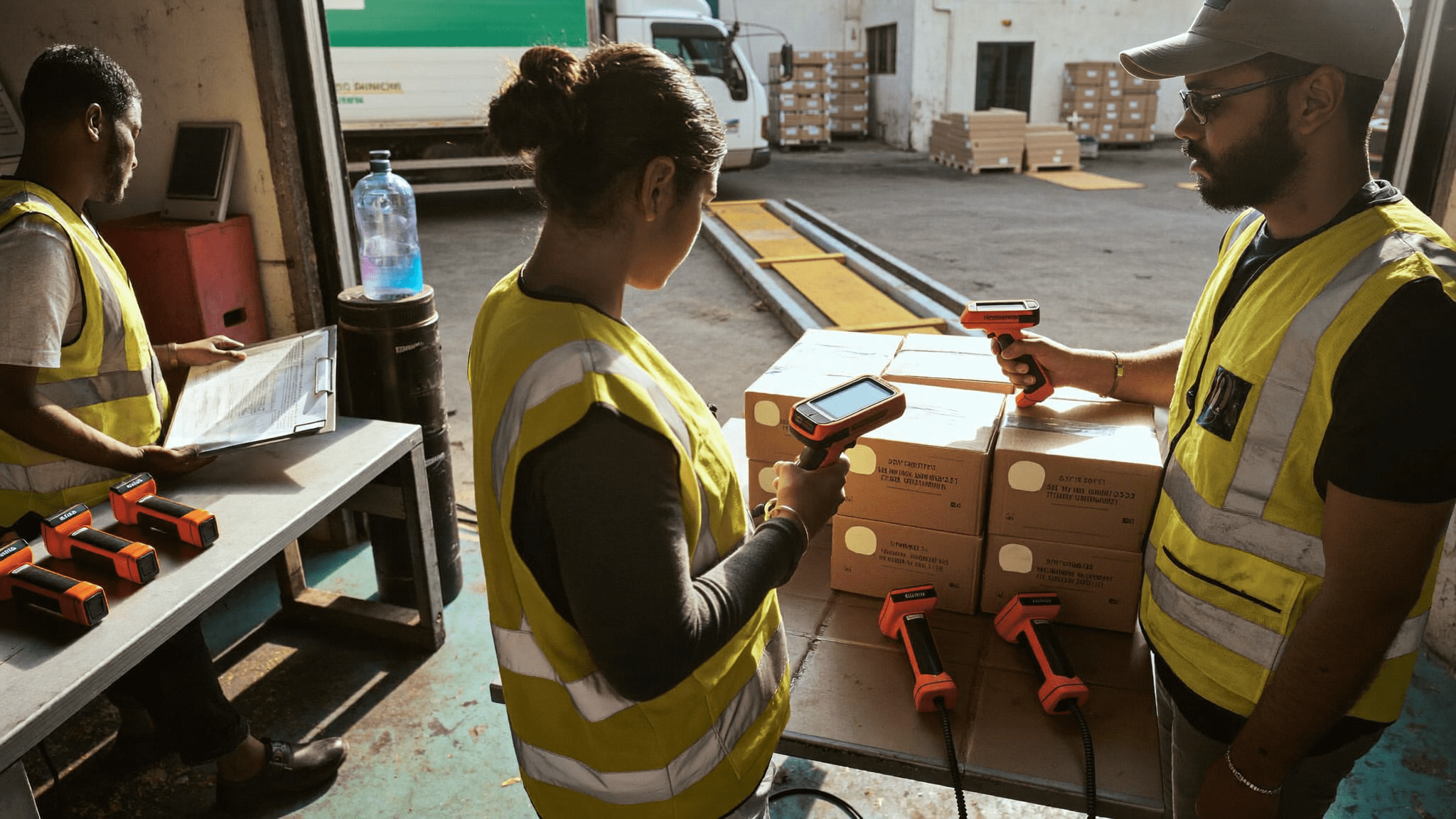
TL;DR: 22 Honeywell CT45 XP rugged handhelds replaced a tired generic Android picklist fleet at a 60-person Bhiwandi 3PL fulfillment center. Friday-to-Saturday 36-hour swap, six weeks before festive peak. SOTI MobiControl for fleet management, Mobility Edge for OS uniformity, a single-app kiosk profile per shift. Per-seat all-in INR 64,800 for the device, the SOTI seat, three-year on-site swap, a hot-swap battery, and a charging cabinet for 24 handhelds.
06:14 IST. Vinod’s one-line WhatsApp was the start.
Three weeks before festive peak, the contract was at risk. Twenty-two generic Android handhelds were dropping picks on the dispatch dock. Vinod, the ops head at a 60-person Bhiwandi 3PL fulfillment center, sent a WhatsApp Wednesday evening. “Arjun, kuchh karo.” The contract said 99.4 percent pick accuracy by peak week, or the take-rate went up 8 percent, or the account walked. I drove down Thursday morning. The Bhiwandi truck queue at the toll did not behave.
The amber alert nobody wanted to say out loud
The handhelds were the visible problem. The picklist app was the hidden one. Built by a freelancer in 2022 and not touched since. SIMs had gone down on three units the previous Tuesday and nobody noticed for two hours because Suraj, the floor lead, had to walk to each unit to check.
I walked the floor with him at 07:30. Two handhelds had cracked screens. Three had lost the rubber grip. One had a SIM tray taped down with electrical tape. Bhoot, yaar. The pickers had built a manual reconciliation step at the wave station to catch scans the handhelds missed. Four minutes per wave. Six waves per shift. Two shifts. That was 48 minutes a day of human capacity going into a hole the handhelds had dug.
Get my free 4-hour quote 200+ businesses across India trust Sirius Star. Response within 24 working hours.
Why we picked CT45 XP over the obvious upgrade
The obvious upgrade was another generic Android with a rugged case. INR 22,000 per unit, six-month warranty, a prayer that the next year would be quieter. Achha, but no. A rugged-case-on-consumer-Android handheld costs you the floor lead’s time when a battery swap takes a screw. It costs you the picker’s confidence when one unit boots six seconds slower than the next.
The Honeywell rugged handheld and POS scanner family answers a 3PL question consumer Android does not. Mobility Edge is Honeywell’s commitment that one OS image carries the device across five-plus Android versions. The CT45 XP scan engine reads damaged GS1-128 barcodes that the old fleet returned as no-read three or four times per wave. The hot-swap battery keeps a handheld in the picker’s hand for a 12-hour shift without a docking trip. The drop spec is 1.5 metres to concrete with an IP65 rating. I have watched a CT45 XP take a bounce off a wave-station ramp at our Coimbatore site and keep scanning. That is the receipts test.
The Honeywell CT45 product page is worth reading once. Pair it with what the Indore Zebra rollout taught us about firmware variants. Field SKUs in India have regional differences the global spec sheet does not call out.
The 36-hour swap, Friday 06:00 to Saturday 18:00
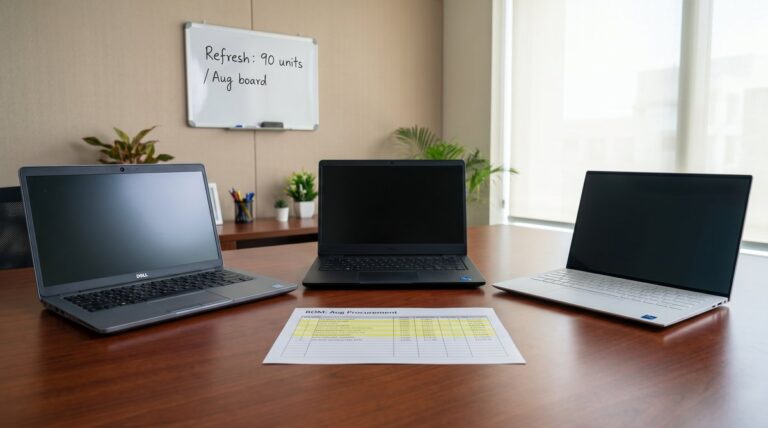
We staged 22 CT45 XP units on the conference table at 06:00. Suraj had a printed shift roster. Vinod was on the phone with the client account manager. Day 1: enrol 22 units in SOTI MobiControl, push the picklist app, validate against three test waves on the inbound dock, swap shift-by-shift. Day 2: full Saturday wave cycle on the new fleet, train Suraj on the SOTI console, hand back the old units for ITAD.
Two things bit us on Day 1. First, dispatch dock micro-blackouts at shift change. The Maharashtra grid has a four-minute load-balance cycle at 14:00 and 22:00 on summer Fridays. Our cradle bay was on the same leg. The chargers reset and three CT45 XP screens showed an amber “charge stopped” overlay until the cycle finished. We moved the cradle bay to the UPS-backed circuit. Our APC Smart-UPS write-up covers the runtime math we used to pick the leg. The picker’s confidence is the thing that drops when an amber overlay appears mid-pick.
Second, one unit out of 22 arrived as a non-India SKU. The OS image had a regional default that flagged the SIM as unsupported. Forty minutes to re-flash on the floor using a USB-C cable and the Honeywell EZConfig tool. Our MDM for business India what it actually costs write-up has the wider field-rollout lesson. Order one spare unit for every twenty in the wave. Always re-validate region SKU before the SOTI enrol step.
SOTI MobiControl made Suraj a quiet hero
SOTI MobiControl gives a floor lead what the old fleet did not. A live map of which handheld is on the floor, on a cradle, or missing. A one-click app push that lands the picklist update on 22 units in ninety seconds. A kiosk profile that locks the device to the picklist app during the shift. Suraj read the console at 11:00 Friday. By 14:30 he was pushing a firmware patch to a stuck unit while I was on a call with Vinod.
The SOTI seat is INR 4,200 per device per year on a three-year commit. Honeywell ships the device with Mobility Edge pre-configured for SOTI enrolment. The SOTI MobiControl product page spells out the device profile and kiosk-mode features. A Mobility Edge OS update lands centrally. The SOTI console shows the rollout in progress. The floor lead approves the wave that pauses for the patch. The pickers do not see the patch happen. Bhiwandi landed right because Suraj was in the loop, not bypassed by it.
The vulnerability beat: I did not plan the battery rotation
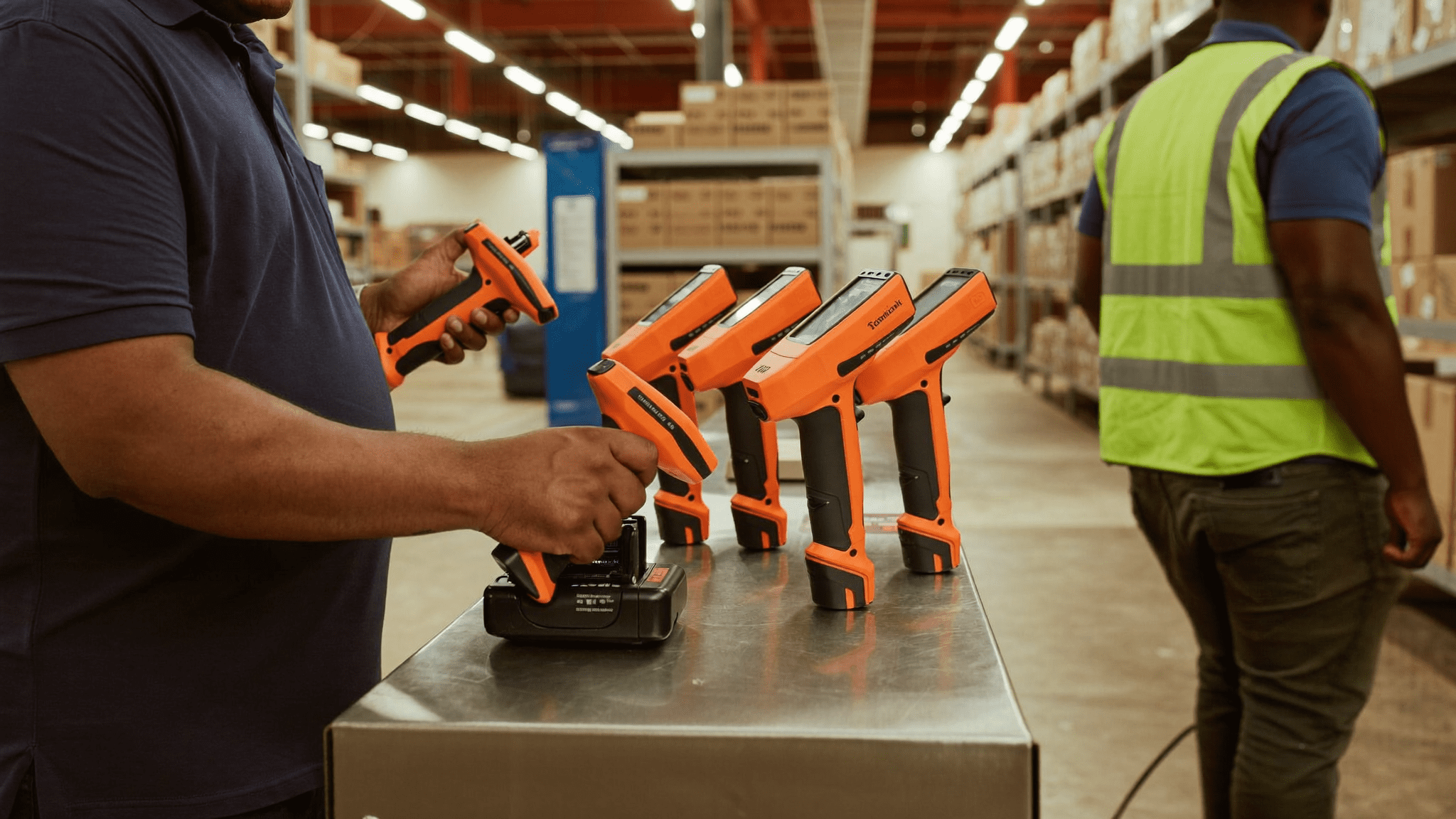
Here is the part I would change. I had specced 22 CT45 XP units and a 24-bay charging cabinet. I had not specced the battery rotation. The CT45 XP supports a warm-swap battery in under five seconds. The picker pulls the spare from a chest-pouch, snaps it in, and the device stays alive across the swap because the internal cache holds power for thirty seconds. To make it work on a 3PL floor, you need six spare batteries per twenty handhelds and a charging cradle for the spares at the wave station, not at the cradle bay.
Suraj walked me through shift change at 14:00 on a peak Friday. The 06:00 shift hands handhelds to the 14:00 shift on the wave-station counter. Four minutes. If batteries are below 20 percent, the 14:00 shift starts on the back foot. With warm-swap, the 14:00 shift hot-swaps a fresh battery at handover. Twenty-two warm-swaps. Two minutes total. The wave starts on a full charge. We added six spare batteries and a four-bay wave-station charger Saturday morning. INR 9,600 for batteries and INR 18,500 for the charger.
Talk to a 3PL handheld specialist Free 4-hour quote. No card, no contract, no sales call. 200+ Indian businesses trust Sirius Star.
What honeywell ct45 deployment india actually looks like on a busy dock
The Saturday-evening wave was the test. The Friday cutover had given Suraj 28 hours with the new fleet. The 17:30 peak wave ran 412 cartons across the dispatch dock in 41 minutes. The old fleet’s best was 412 cartons in 56 minutes. The reconciliation step was retired by lunch. Suraj sent a video at 18:14 of the dispatch dock clear with twelve minutes of buffer before the truck cut-off. He wrote “bas, hua.” That message is the receipt I send a CFO.
A scan is only as good as the label it reads. Those carton codes come off an industrial label printer, and a failed barcode stops the whole pallet at the dock. That build decision sits in our guide to Printronix barcode printers in India.
Procurement math:
| Item | Generic Android baseline | Honeywell CT45 XP + SOTI | Note |
|---|---|---|---|
| Device sticker | INR 22,000 | INR 48,000 | Sticker, year zero |
| MDM seat (3yr commit) | INR 1,800 / yr | INR 4,200 / yr | SOTI vs stock Android MDM |
| Hot-swap battery | not supported | included, 6 spares per 20 | 4 min/shift saved at handover |
| Drop spec to concrete | case-dependent | 1.5 m IP65, repeated | Drop spec validated on dock |
| OS support window | 2 Android versions | 5+ Android versions, Mobility Edge | Refresh cycle stretches |
| 3-year all-in | INR 38,000 | INR 64,800 | Per seat, all-in |
CT45 XP costs INR 26,800 more per seat across three years. The wave time recovered and the festive contract held are the returns to weigh. The client account manager signed off Tuesday. So far, no amber overlays.
Key takeaways
- For a 3PL fulfillment floor at 22 to 60 handhelds, the all-in three-year cost gap between consumer Android in a rugged case and Honeywell CT45 XP plus SOTI MobiControl is roughly INR 26,800 per seat.
- Mobility Edge plus SOTI MobiControl is one product in practice. The console-led rollout, the warm-swap battery, and the Honeywell scan engine for damaged barcodes earn the gap.
- Plan the battery rotation and the wave-station charger, not just the cradle bay. The picker’s confidence decides whether festive peak holds.
- Validate India region SKU at the SOTI enrol step. Order one spare unit per 20 in the wave. Reflash on the floor with EZConfig if the regional default flags a SIM as unsupported.
- The DPDP file your legal head is building wants a fleet management trail. SOTI MobiControl gives you an enrolment log, a profile-push log, and a per-device app-version trail that survives an auditor’s question.
FAQ
Is the CT45 XP right for an Indian 3PL doing 200 to 500 cartons per shift?
For 200 to 500 cartons per shift, the CT45 XP scan engine, the 1.5 m drop spec, and the warm-swap battery earn the gap to consumer Android. Below 100 cartons per shift, the cost case is harder to defend.
Does SOTI MobiControl ship pre-integrated with Mobility Edge?
Yes. The CT45 XP ships SOTI-ready on the India SKU. Enrolment is a QR-code scan at the cradle dock. The full fleet enrols in under ninety minutes.
What does the DPDP file need from a handheld fleet on a fulfillment floor?
The fleet management trail is the auditor’s question. Enrolment log, profile-push log, app-version log, and an ITAD wipe certificate for the retired fleet. SOTI gives you the first three. The DPDP reference at MeitY covers the wider shape. The CERT-In incident reporting guidance covers the six-hour clock if a device goes missing.
How long does the swap take on a 22-handheld floor?
Friday 06:00 to Saturday 18:00 is the realistic window. Plan a 36-hour swap with shift-by-shift handover. The two things that bite are dispatch dock micro-blackouts at shift change and India region SKU mismatch on one unit out of twenty.
Start a 3PL handheld bake-off this week Free 4-hour quote. 17+ years in IT business. 200+ Indian businesses trust Sirius Star.
P.S. Arjun here. Future Arjun, if you are reading this: do the wave-station charger before the cradle bay, not after. The 14:00 shift will not say anything, which is the highest compliment a 3PL floor can give a deployment lead.
The longer read for Indian buyers who want the real numbers before they commit.
Send me the field guide