Schneider Galaxy vs Vertiv Liebert UPS India: Hyderabad call
TL;DR: Hyderabad SaaS doubling its Madhapur edge rack pod from 8 to 32 racks. 140 kW critical load on dual streams. The old 60 kVA Smart UPS was tapping out. The room narrowed to two: Schneider Galaxy VS 200 kVA with lithium-ion modules, and Vertiv Liebert APM2 200 kVA with VRLA strings. APC Symmetra PX was ruled out on Day Zero because Schneider is steering customers to Galaxy VS for new installs. Bhavna (IT Head) wanted Galaxy VS for the Li-ion footprint and 99% ECOnversion at typical 60% load.

He said “we will match anyone in the market.” That was the line that made me re-read the contract. The shortlist was Schneider Galaxy vs Vertiv Liebert UPS India, two enterprise-class modular UPS pairs on a Hyderabad rack pod expansion. Pages 11 through 14 of each proposal told the real story.
I am Anjali. Bhavna had asked me to keep her CFO honest while she ran the Schneider Galaxy VS vs Vertiv Liebert APM2 shortlist. Vikas, the CFO, had said yes to the upgrade four weeks earlier. Not to the line items. Both vendors had quoted within INR 70,000 of each other on the 200 kVA module count, and both named compliance to ISO 27001. The difference was not in the box.
Day zero: the whiteboard at Madhapur
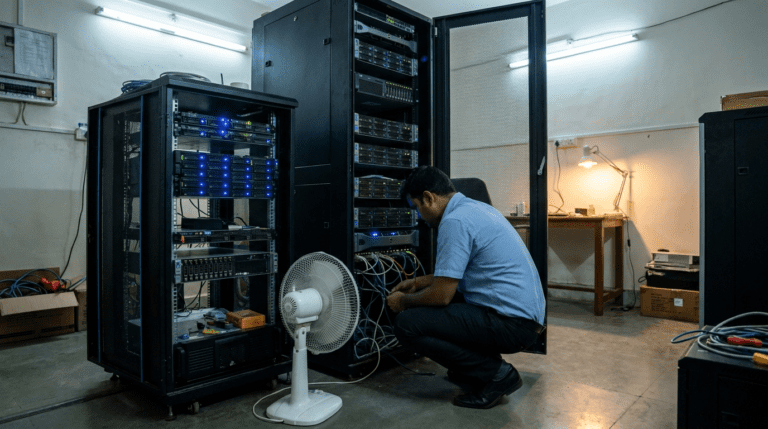
The numbers were already on the wall. 140 kW critical load. 8 racks live, 24 more coming over 18 months. Dual-stream A and B. Tier-III intent, not certification. The old 60 kVA APC Smart UPS pair from the 2021 build was at 78% on the A stream in the last quarterly load test and had tripped the bypass once in March on a brown-out the DG did not catch fast enough. Ramana, Facilities head, had been quiet about that until the CFO meeting. Then he said it plainly: “We need enterprise-class power, not office-class. Bas.”
That was the meeting where Vikas signed off the upgrade. Not the vendor.
The Day Zero shortlist had three names. APC Symmetra PX 250, Schneider Galaxy VS 200, Vertiv Liebert APM2 200. Symmetra came off in week one. Schneider’s own team recommended Galaxy VS for the new pod. Symmetra PX is on a sunset glide path, and the channel SE said so plainly. “Buy Symmetra if you are extending an existing Symmetra estate. You are not.” Two names left.
Bhavna’s case for Schneider Galaxy VS 200 kVA
Bhavna had two arguments. First, efficiency at her real load curve. A stream at 78% today, steady state near 62% by month 18. Both UPSs hit 96 to 97% double conversion at that point. Galaxy VS in ECOnversion would hold 99% on a clean Madhapur grid for 9 to 10 months. APM2 offered ECO too, but Ramana’s team was not comfortable running ECO 24/7 on a feed that occasionally saw 4% THD spikes from neighbouring tenants. Paper they would not capture in year one.
Second, Li-ion footprint. Galaxy VS supports lithium-ion module cabinets from the same factory. Bhavna wanted 10 minutes backup on 140 kW. VRLA on APM2 = 8 strings, ~3.8 sq m of floor, five-year battery refresh. Li-ion on Galaxy VS = ~1.6 sq m, 10-year calendar life, thermal monitoring integrated into EcoStruxure IT Expert. Capex ran INR 6.8 lakh higher. TCO over seven years was lower by INR 11.4 lakh once you priced the VRLA mid-life refresh and the floor space at Madhapur lease rates. Vikas nodded once.
Ramana’s case for Vertiv Liebert APM2 200 kVA
Ramana did not argue the math. He argued the day after.
“On the day this thing alarms at 02:14 IST,” he said, “who is showing up in Madhapur and at what hour.” He pulled out a single sheet. Vertiv’s direct service centre in Hyderabad. Six engineers on the roster with hands on Liebert APM2 modules. A 4-hour on-site SLA in writing for Tier-1 zones. A LIFE Services contract that pre-loaded firmware patches before shipping. He had run two Vertiv estates at a Chennai logistics company. His trust was earned, not vendor-pitched.

Schneider’s tier-III service for Galaxy VS in Hyderabad was real but the engineer pool was smaller. The proposal quoted a 6-hour SLA and named Bengaluru as the depot for hot-swap modules. Bengaluru is 575 km by road. Ramana’s line: “Pakka, the box does not fail in the brochure. It fails on a Saturday morning when the depot is closed.”
He had a point. So did Bhavna. We needed a third frame.
Schneider Galaxy vs Vertiv Liebert UPS India: the side-by-side that decided it
I asked them both to stop selling for ten minutes and put the comparison on the wall as one table.
| Line item (200 kVA, dual-stream) | Schneider Galaxy VS 200 + Li-ion | Vertiv Liebert APM2 200 + VRLA |
|---|---|---|
| Capex (single module pair, taxes in) | INR 25.3 lakh | INR 18.5 lakh |
| 7-year TCO incl. battery refresh + floor space | INR 41.2 lakh | INR 52.6 lakh |
| Double conversion efficiency at 62% load | 96.8% | 96.5% |
| Battery floor footprint at 10 min backup | 1.6 sq m | 3.8 sq m |
| On-site SLA in writing for Hyderabad Tier-1 | 6 hours (parts depot Bengaluru) | 4 hours (parts depot Hyderabad) |
| Local engineer roster (direct vendor) | 3 named, 1 lead | 6 named, 2 leads |
| Monitoring + asset platform | EcoStruxure IT Expert (subscription) | LIFE Services + Liebert IntelliSlot |
The table did two useful things. TCO gap visible (Galaxy VS wins by INR 11.4 lakh over seven years), and service-day risk visible (APM2 wins by 2 hours on the SLA and 575 km on the parts depot). The CFO had a question for each.
We have seen this arithmetic on three other Indian rack-pod expansions. Capex is rarely where the wrong decision gets made. The service-day line is.
Vikas’s questions and the three clauses
Vikas asked Bhavna first. “If the Galaxy VS SLA is 6 hours and parts are in Bengaluru, what is the credible mean-time-to-repair on a Saturday at 02:14?” Bhavna had asked Schneider already. 7 to 9 hours end-to-end in the realistic case. She had it in email.
Vikas asked Ramana next. “If you take Galaxy VS, what does the Li-ion footprint save you on Madhapur lease rates over seven years?” Ramana did it live. INR 8.4 lakh on the 2.2 sq m differential. He did not soften it.
Then Vikas asked me. “If you were signing this contract today, what would you do?”
Buy the Galaxy VS for the 7-year TCO, the Li-ion footprint, and EcoStruxure IT Expert telemetry that talks cleanly to the rest of the monitoring estate. But do not sign the standard Schneider service contract. Make three clauses non-negotiable.
Clause one: parts depot relocation. If Bengaluru stays the source for hot-swap modules and battery cabinets, re-write the SLA to “engineer dispatched within 4 hours, parts on site within 8”. If Schneider moves module stock to the Hyderabad warehouse they already operate for low-voltage products, the 6-hour SLA stays. Truth in writing.
Clause two: firmware and EcoStruxure version lock. Bhavna’s monitoring team had been burned by a forced telemetry-format change on a different vendor in 2024. Lock the EcoStruxure IT Expert agent at the version certified for her SNMP and Zabbix collectors, patches gated to her change window.
Clause three: Li-ion warranty teeth. Schneider’s standard Li-ion warranty is 10 years calendar with capacity guarantees stepped at 5 and 7 years. Made explicit: any module below the 5-year floor in years 1-5, replacement at no charge, no proration. On the addendum, not the website.
Ramana asked the last question. “What about the SLA we are losing? 6 hours instead of 4.” I said the part nobody likes to hear. An SLA is a number in a contract. Recovery at 02:14 IST is whoever picks up the phone, with which spare. The 4-hour SLA on APM2 is real because Vertiv has 6 engineers in Hyderabad. Galaxy VS recovery becomes real when Schneider names engineers, not when they write SLA numbers.
What I would put in the RFP today
If I were re-writing this RFP from scratch in 2026, I would add one line in section 12. “Named engineer roster, on-site, within 50 km of installation address, with hands-on Galaxy VS training in the last 18 months, refreshed quarterly for the contract term.” That clause changes who Schneider puts on the project. It changes who picks up the phone at 02:14. It turns a service SLA into a relationship the local team is incentivised to keep.
I will admit one thing. My first draft on the flight back to Mumbai had Liebert APM2 winning. I had been on the wrong side of a Schneider service ticket in 2023 and the memory was loud. Vikas overrode my draft. He was right to. The TCO is too big to walk past. I should have walked in more open. That was the mistake.
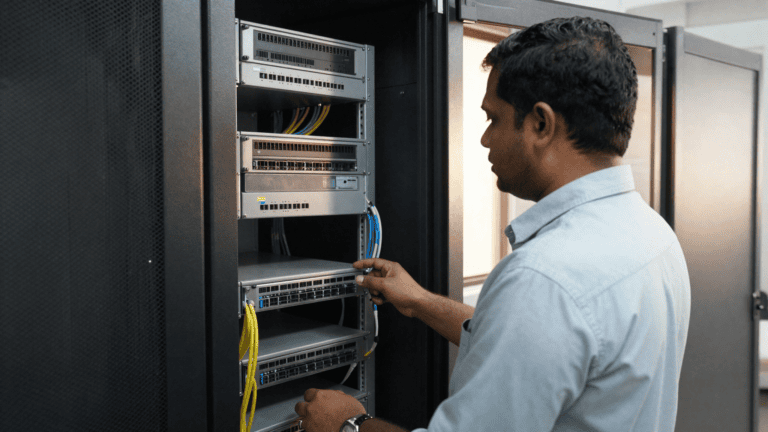
Bhavna signed the Schneider PO 11 days later. The Galaxy VS 200 kVA pair commissioned in 23 days. Li-ion modules landed three days after the cabinets, FAT clean on the first attempt. Ramana walked the Schneider lead engineer through the rack pod on commissioning day. He texted me that evening: the engineer’s name was in his phone, and Hyderabad depot had two Galaxy VS hot-swap modules on the shelf. The relocation clause was already paying for itself.
Key takeaways
Three things decide a 100 to 300 kVA rack pod comparison in India. One, the load curve you will run. ECOnversion claims rarely survive a tenant-floor neighbour. Two, floor-space economics under Li-ion. The 2 sq m saved at Madhapur rates was a third of the capex differential. Three, the named engineer roster on the local pin code, not the SLA number in the contract.
Frequently asked questions
Is Schneider Galaxy VS right when I have a Symmetra PX estate?
For live Symmetra PX racks, extending the same line wins on spare-part commonality. For greenfield racks, Schneider’s account team will steer you to Galaxy VS.
Why did we rule out APC Smart UPS for this expansion?
Smart UPS sits at the office and the small POP. At 140 kW critical load on dual streams, you need enterprise-class modular UPS with hot-swap modules, capacity-on-demand sizing, and a service roster that travels.
How does the 4-hour vs 6-hour SLA work in practice?
Only as well as the depot, the on-roster engineer, and the spare-part stock at the pin code on the day of the call. A contract SLA is a starting point. Named engineers and depot clauses make it real.
Is Li-ion safe at an Indian edge facility?
Yes, when sized and ventilated to vendor specs. Galaxy VS Li-ion cabinets carry thermal monitoring through EcoStruxure IT Expert. We made that telemetry mandatory on the addendum.
For BFSI rack-pod expansions, the RBI Master Direction on Outsourcing of IT Services sets the uptime + DR expectations behind UPS sizing. If you want a buyer-side advisor in the room, email me through the Schneider UPS India page and ask for “Anjali on the UPS shortlist.” Parallel write-ups: NetApp Mumbai BFSI and Belden Pune pharma weekend.
P.S. Sudeep here. We helped Bhavna’s team write the three clauses that ended up in their Schneider addendum. If you are sizing a 100 to 300 kVA pod in Hyderabad, Mumbai, Bengaluru or NCR, reply on WhatsApp with load + rack count. Audit slots free until end-of-month. 200+ Indian businesses. Response within 24 working hours.
The longer read for Indian buyers who want the real numbers before they commit.
Send me the field guide