RBI inspection prep: power resilience for BFSI branches
RBI inspection prep: power resilience for BFSI branches
Last updated: 29 June 2026
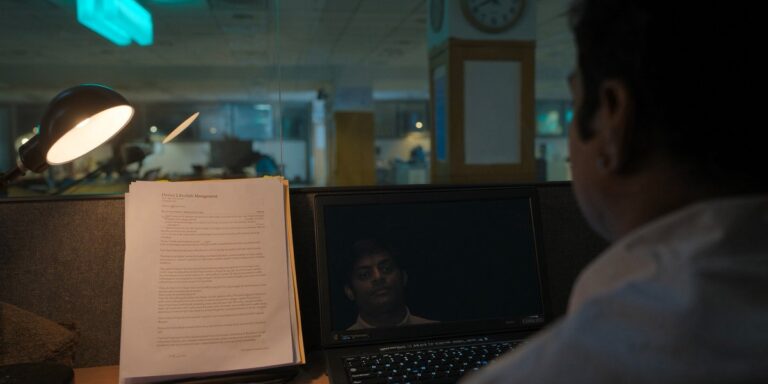
Anand ran IT and admin for a multi-state cooperative bank working out of Pune, 22 branches across two states. The RBI letter had landed three weeks earlier. Inspection, dates fixed, the usual list of records to keep ready. He had a prep spreadsheet going on a Sunday and most of it read the way you would expect. Patch status. Reconciliation. The cyber gaps the auditor flagged last year. He slid the laptop across and asked me to look. “Anything missing?” Arre, one thing was, and it sat in a steel cabinet in the corner of every branch.
The power backup. Not one line of his prep touched it. Nobody thinks about the UPS until it drops the line, and a cooperative bank IT head has forty fires closer to his desk. But an inspector walking a branch does, because availability of branch systems is half the point of the framework. This is the story of making the quietest box in the branch ready for the one visitor who would test it.
What the inspector was really asking
People hear RBI inspection and picture a cyber audit. Firewalls, logs, who has admin rights. That part is real. A branch inspection also asks a plainer question. If the power goes now, what stays up, for how long, and can you prove it. That sits inside the operational resilience expectations the central bank publishes, framed plainly by the Reserve Bank of India. The inspector needs to see that a cut does not take core banking, the ATM and the camera recorder down together, and that you tested it.
Anand’s branches ran on a single 5 kVA line-interactive UPS each, fitted when the branches opened. Six years on, nobody had tested a battery. The light was green, so everyone assumed the box was fine. A green light tells you the unit is on. It tells you nothing about how long the battery holds a real load. That gap fails an inspector and a customer at the counter in the same moment.
So we did the one thing the green light cannot. We measured.
How power resilience for BFSI branches actually gets checked
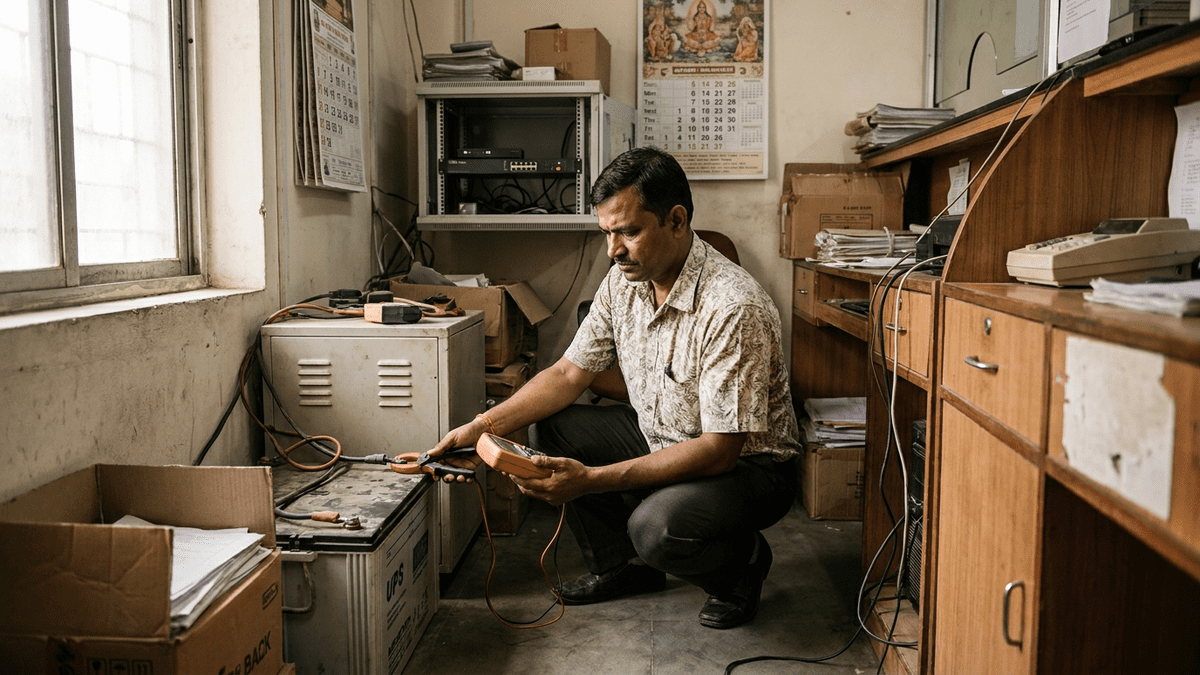
You do not certify branch backup off a nameplate. You size it off a meter and a stopwatch. We clamped a power meter on the UPS feed at the main Pune branch and left it a full working week, counters open, ATM live. The real critical load came in steady at about 3.4 kW, peaking near 4.1 kW when the server-nook air conditioner and the ATM cash dispenser drew together. That matters, not the sum of every sticker, which always reads high.
Then the stopwatch. We pulled mains on the old 5 kVA unit at full load and timed it. Four minutes before it went to bypass. The diesel set took about 18 seconds to pick up the building, which sounds fine until the genset coughs on the first start, which it does more often than anyone admits. Four minutes is not a runway. It is a held breath.
The inspector wants three things. Backup that carries the real critical load, not a guessed one. Runtime to ride a cut and hand cleanly to the genset, or to shut core down safely if the genset does not come. And a record, with a tested runtime figure on paper. The first two are engineering. The third is the one branches forget, and the one that turns a working setup into a passing one.
17+ years in IT, 200+ Indian businesses. Reply within 8 working hours.
The number we put in front of the bank
Anand did not need a lecture. He needed a sheet he could carry into a board sub-committee and defend. So we wrote the old setup and the fix side by side, per branch, and let the columns argue.
| Branch backup, 3.4 kW measured load | Existing 5 kVA line-interactive, 6 yrs old | Right-sized 6 kVA online double-conversion |
|---|---|---|
| Tested runtime at real load | ~4 minutes, battery degraded | ~25 minutes, sized to need |
| Protection on a brownout or sag | Switches to battery, transfer gap | Always on inverter, no transfer gap |
| Maintenance and runtime record | None on file | Logged, dated, inspection-ready |
| Upfront per branch (unit + battery) | Already sunk, ageing | ~INR 1.6 lakh |
| When the genset is slow to start | Drops the line | Holds, or shuts core down safely |
Read the top row and the bottom row together. The old box was not protecting the branch. It advertised protection while holding four minutes of charge. We did not pick online because it was bigger. The APC by Schneider Electric online double-conversion design runs the load through its inverter all the time, so a sag never reaches the counter, and we sized its battery to a runtime the inspector could read.
Where I argued against the bigger unit
I came into the first branch ready to push online double-conversion everywhere, because it is the right call for a bank counter. The smaller branches made me slow down. One large unit across all 22 sites looks tidy on a purchase order. It is a trap.
Two branches were single-counter extension offices near 1.2 kW. A 6 kVA unit there would run at a fifth of its band, wasting power for years and parking a battery bank far bigger than the load could use. We sized those two to a 3 kVA online unit, same online protection, smaller bank. The standard was the protection type, not the box size. A bank that buys one kVA number for every branch repeats the mistake the vendor made with my other client who nearly overbought a UPS, just at scale.
Talk to us about backup across your branch network
Sized off a meter at each branch, not one number for all.
The paperwork that turns working into passing
The hardware was the easy half. The half that wins an inspection is the folder. For each branch we built a one-page record the manager keeps in the drawer with the cash register key. It carries the measured load in kW, the unit rating, the tested runtime and the date we pulled mains, the battery install and next replacement date, and a quarterly check line the branch initials.
That folder is the difference between an inspector nodding and an inspector writing. The control set for keeping critical services available maps cleanly to ISO 22301 business continuity management, and a sized, maintained online UPS is one of the simplest controls a branch can show. Twenty-five minutes of runtime covers the genset start window with margin, and if the genset never starts, it gives the branch time to bring core banking down in order. Ride the cut or shut down clean. That is the thinking the inspection is built around.
Inspection day, and the line the manager said
The inspector reached the Pune main branch on the second morning. He asked the branch manager what happens to the ATM and the counter if the power goes. The manager did not reach for me or for Anand. He opened the drawer, took out the one-page folder, and said the line I have kept since. “It holds for twenty-five minutes, sir, and here is the day we tested it.” The inspector read the sheet, asked when the battery was last checked, saw the dated line, and moved on. No observation. No follow-up.
Anand told me later the power section was the one part of the visit he had worried about, and it took the least of the inspector’s time. That is the aim. The best branch UPS is the one nobody has a reason to name, sized to the real load and backed by a record that answers the question before it is asked. Three weeks in early 2026, and the quietest box in the branch passed.
For the money side over the life of the box, our five-year online UPS battery TCO story walks the cost a sticker hides. The full range we fit for branches sits on our APC online UPS India page, with the wider practice on the IT hardware solutions hub.
Key takeaways
- RBI branch inspections check power resilience as part of operational continuity, not just cyber. The inspector wants to know what stays up on a cut, for how long, and whether you can prove it.
- Size branch backup off a metered critical load over a real working week. A small branch often sits near 3 to 4 kW, not the sum of every nameplate.
- Test runtime with a stopwatch by pulling mains at full load. An ageing line-interactive unit can read green and still hold only four minutes.
- Set runtime to cover the genset start window with margin, around 20 to 30 minutes, so the branch can ride a cut or shut core down cleanly.
- The record wins the inspection. A one-page folder with measured load, tested runtime, battery dates and a quarterly check turns a working setup into a passing one.
FAQ
What does an RBI inspection check about branch power backup?
It checks operational resilience: whether a power cut would take critical branch systems offline and for how long. The inspector wants backup sized to the real load, a runtime that bridges to the diesel set or allows a safe shutdown, and a record with a tested runtime figure on paper.
How much UPS runtime should a bank branch have?
Enough to cover the genset start window with margin and to bring core systems down cleanly if the genset fails. For most small branches that lands around 20 to 30 minutes at the real critical load. Four minutes from a degraded battery is not enough, even with a green light showing.
Why choose an online UPS over a line-interactive one for a branch?
An online double-conversion UPS runs the load through its inverter all the time, so a sag or flicker never reaches the counter and there is no transfer gap. For a counter where a dropped transaction is a real cost, that constant protection earns its price.
Get a quote on inspection-ready branch UPS backup
P.S. Riya here. I almost let Anand keep that line off his prep sheet, because the green light made every branch look fine. The meter and the stopwatch told a different story in ten minutes. If you have an inspection coming and a row of UPS cabinets you have never tested, send me the branch count and the kit on a typical rack. I will tell you what a runtime test will likely show before the inspector does. Reach us on WhatsApp at +91 91375 93228 between 10 and 7 IST.
Inspection coming and unsure your branch backup will hold?
Get my free branch power resilience review
Sirius Star Enterprise Technologies. 200+ Indian businesses. No card, no contract, no sales call to start.