
The 300 seats nobody was using: an Avaya licence audit
Last updated: 30 June 2026
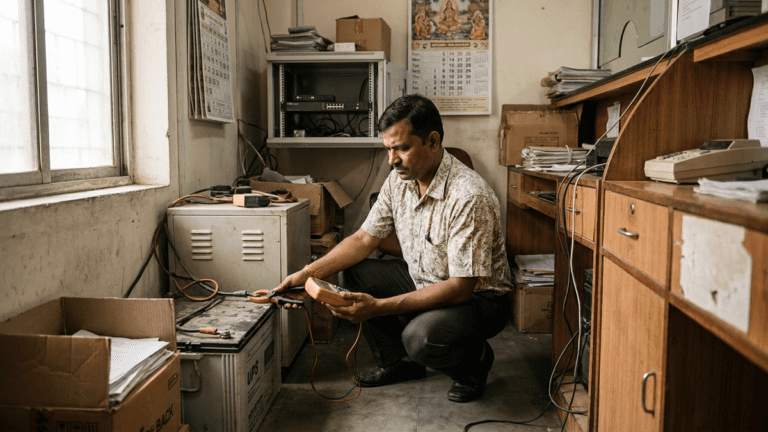
He said, “we are fully licensed, we checked.” That was the line that made me ask to see the entitlement report.
The room went a little quiet. The IT head had checked, in the sense that nobody had received an overage notice. The finance controller had checked, in the sense that the renewal invoice matched last year’s. Neither of those is the same as knowing what you actually use. So I asked for two files: the Avaya entitlement summary, and the last ninety days of login activity from the contact centre platform.
This was a 1,200-seat business process outsourcer in Pune. Voice-heavy. Three campaigns, two of them seasonal. The kind of place where headcount breathes in and out with the festival calendar.
The meeting that started with a confident sentence
The IT head was not wrong to feel safe. They had grown fast, bought licences in blocks, and renewed on autopilot for three years. No auditor had knocked. The Avaya support renewal landed every March, finance paid it, and the calls kept connecting.
But a renewal invoice that matches last year only tells you one thing. It tells you nobody removed anything. It says nothing about whether you needed all of it in the first place.
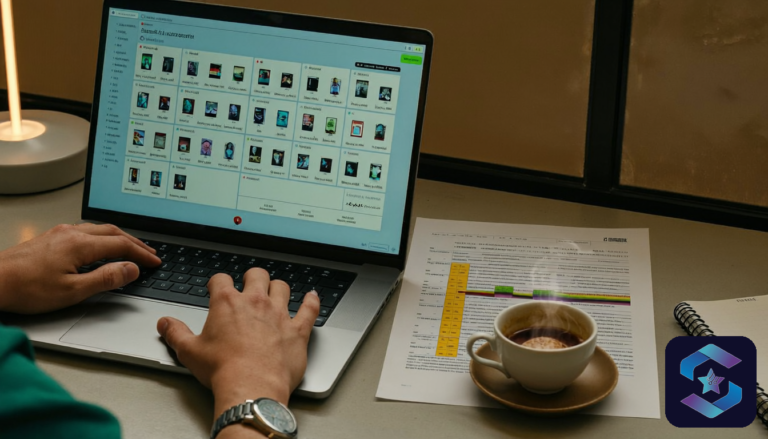
When the login export came back, the gap was obvious. Roughly 1,200 named agent licences on paper. Active named logins in the trailing year, a little under 900. That left around 300 seats that no human had touched in twelve months. Bas, the room stopped arguing with me after that slide.
What an avaya licence audit actually counts
An avaya licence audit is a reconciliation. You line up three columns and look at where they disagree. What you are entitled to, what is provisioned, and what is genuinely in use. Most firms only ever look at the first two, because those are the columns the invoice shows you.
Avaya licensing has shifted over the years toward subscription models under the Avaya Experience Platform and Aura. The mechanics change with each contract, but the audit logic does not. You count named users against real logins. You count concurrent or port entitlements against peak simultaneous usage, not against headcount. And you check whether maintenance and support are being paid on seats that were retired two ramps ago.
The standard worth knowing here is ISO/IEC 19770 for software asset management. You do not need a certification to use the idea. You need one reliable record of what you own and one honest record of what you run.
Named versus concurrent: where the 300 went
The 300 seats were almost all named licences. That detail matters, because named and concurrent licences fail in opposite directions, and the fix is different for each.
A named licence is tied to a person. Hire an agent, assign a seat. The trouble starts when the agent leaves and the seat does not. Nobody in operations thinks of a departed employee as a line item that keeps billing. So it sits there, paid for, year after year. Multiply that by a 30 percent attrition campaign over three years and 300 is not a shocking number. It is arithmetic.
| Licence type | Tied to | How waste accumulates | What the audit checks |
|---|---|---|---|
| Named user | A specific person | Agents leave, seats are never de-provisioned | Named entitlements vs trailing-12-month logins |
| Concurrent / port | Simultaneous sessions | Bought for headcount, not for real peak load | Entitlement vs measured peak simultaneous usage |
| Support / maintenance | The whole estate | Paid on retired and shelved seats | Active seats vs seats under support contract |
Concurrent licensing has the opposite story. You can run 1,200 agents on far fewer concurrent licences, because they never all log in at the same instant. Shift patterns and split campaigns mean your true peak runs lower than your headcount. We have seen contact centres over-buy concurrent licences against a headcount number when their measured peak was a third smaller.
200+ Indian businesses. Response within 8 hours.
The true-up meeting, and the number that moved
Here is the part nobody tells you. The true-up meeting is not the vendor’s meeting. It feels like it, because the account manager schedules it and brings the slides. But the buyer who walks in with a clean login export controls that room.
Without the audit, the conversation is about adding seats. With it, the conversation is about right-sizing. The Pune team did not cancel 300 seats in one stroke, because some were genuinely held for the next seasonal ramp. What they did was move the idle named licences into a planned pool and drop support on the truly dead ones. Then they renegotiated the renewal against real usage rather than a paper count.
I will not put a precise rupee figure on someone else’s contract, because Avaya pricing varies by contract term and by bundle. But when a third of your named seats are idle and you are paying annual support on every one of them, the recurring number is not small. It funds a real chunk of next year’s IT budget.
If you are weighing the platform itself rather than the licence count, that is a different exercise. Our Avaya phone systems and contact centre page covers the deployment side, and for teams comparing voice platforms, the Alcatel-Lucent Enterprise route is worth a look. Both sit under our IT hardware and infrastructure practice.
200+ Indian businesses. Response within 8 hours.
What I would put in the contract now
I have walked into one of these assuming the vendor was wrong about an overage. That time the vendor was right, my export was missing a campaign, and I had to correct myself in front of the CFO. Pakka lesson: pull the data twice before you make the confident statement, the same statement that started this whole story.
So the clause I would add to any contact centre licensing contract in 2026 is short. A quarterly true-up review with a named-licence reconciliation, and the right to re-pool idle named seats without penalty before renewal. One line. It changes who holds the numbers.
The DPDP angle deserves its own line too. Idle seats are not just a cost. They are storage holding customer voice data with no owner watching them. If you are looking at this from a compliance lens, our DPDP compliance package maps where that data sits. And if licence hygiene as a discipline is new to your team, the studio licence review we wrote up runs the same playbook on a smaller estate. We have applied the same before-the-auditor discipline to a firewall rule cleanup ahead of a PCI DSS audit, and the cost lens shows up again in our server consolidation cost write-up.
Key takeaways
- Match named entitlements against trailing-12-month logins, not against headcount or last year’s invoice.
- Run the audit before the true-up. The buyer with the login export controls the meeting.
- Re-pool idle named seats and drop support on dead ones rather than cancelling in panic.
- Treat unmanaged seats as a DPDP exposure, because call recordings are personal data.
You can read the regulator’s own framing of personal-data obligations on the MeitY site, and India’s incident-reporting rules through CERT-In. For the platform’s licensing models, Avaya publishes its current subscription structure.
See Avaya options at Sirius Star
200+ Indian businesses. Response within 8 hours. Reach us on WhatsApp at +91 91375 93228, 10-7 IST.
P.S. Sudeep here. We ran this exact reconciliation for a services firm last month, and the IT head said the same confident sentence the Pune team did. The entitlement report disagreed with him too. If you have not matched your Avaya seats to real logins in a year, that gap is almost certainly there. It is just waiting for someone to pull the file.
FAQ
What is an Avaya licence audit?
It is a reconciliation of what you are entitled to, what is provisioned, and what is actually in use across your Avaya contact centre or unified communications estate. The goal is to find seats you pay for but do not use before your annual true-up.
Why do named licences waste the most money?
A named licence is tied to a specific person. When agents leave, the seat is rarely de-provisioned, so it keeps billing. In high-attrition contact centres this quietly adds up to hundreds of idle seats over a few years.
Is a licence audit the same as a DPDP review?
No, but they overlap. Idle seats often still hol