
Server consolidation cost in India: the refresh quote that made a CFO stop signing
Last updated: 27 July 2026
He said one line, and it stopped the meeting. “We are paying Rs 68 lakh to replace a problem we built ourselves.”
The CFO was reading a quote to refresh fourteen rack servers. Fourteen old boxes out, fourteen newer boxes in. Same room. Same two racks. Same fourteen support contracts landing in the same fortnight every March, the week the auditors arrive. He was right to stop. I have sat in that chair, on the buyer’s side, and signed the version of this I later regretted. So when Senthil, the IT head, asked me to check the numbers, I said yes before he finished.
This was early 2026, a 600-person auto-components manufacturer in Hosur that lives or dies on the ERP at 6 am. For them, the server consolidation cost in India had become a real decision, not a vendor slide. Nobody planned fourteen servers. They planned one, then a box for the ledger, then four virtualization hosts across three budget years, then a backup target, then a file server somebody swore was temporary in 2019.
The fourteen-server problem nobody actually planned
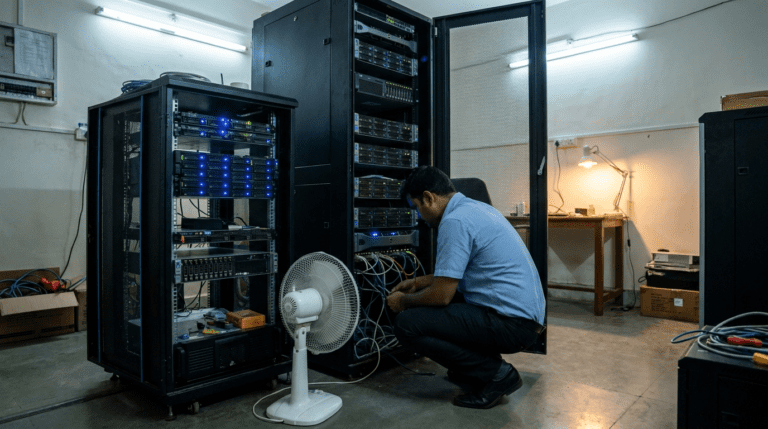
Walk into that room and you can read the company’s history in the rack rails. The oldest one, the box running the ERP, went in seven years ago. Around it sat a sediment of later decisions: two domain controllers, a SQL host, four hypervisor nodes carrying about thirty virtual machines, a backup appliance, and a pair of application servers nobody has touched since go-live.
Average age, six and a half years. One rack ran hot enough that Senthil had propped the door open with a fire extinguisher and aimed a pedestal fan at it. Achha, not ideal, but it worked. The refresh was overdue. Three boxes were out of warranty and two models had quietly hit end-of-service. The trigger was real. I argued with the shape of the answer.
Like-for-like felt safe. Buy fourteen, rack fourteen, carry on. The problem with safe is that it copies the old mistake forward at a newer price. The room that was hard to power in 2019 would be hard to power in 2031, just with a fresh AMC sticker.
Free, no card, no sales call. Or look at the Cisco UCS server options first. 200+ Indian businesses served. Response within 24 working hours.
What the refresh quote counted, and what it quietly skipped
The Rs 68 lakh covered hardware and five years of support. Clean line items. Senthil’s vendor had done honest work. The trouble was the boundary of the spreadsheet. It counted what the room costs to buy. It said nothing about what the room costs to run.
So I asked the one question buyers forget. “What is the power bill for this rack, and who patches all of it?” Senthil did not have the number. Few IT heads do. The power bill lands on facilities and the admin hours hide inside salaries. Pull both into the open and the math changes character.
Fourteen servers plus their cooling pulled close to 8 kW of continuous draw. At Tamil Nadu commercial tariffs, that room was burning roughly Rs 7 lakh a year just to stay on, before a single new box arrived. Patching and firmware across the fleet ate about two days of Senthil’s week. None of that sat in the Rs 68 lakh. All of it would repeat for five more years.
Server consolidation cost in India, counted the way a CFO counts
Here is the reframe that got the CFO to pick his pen back up. Stop pricing servers. Price the room over five years. Capex, power, cooling, rack space, support and people. Count all six, and consolidation stops being an IT preference and becomes a budget argument.
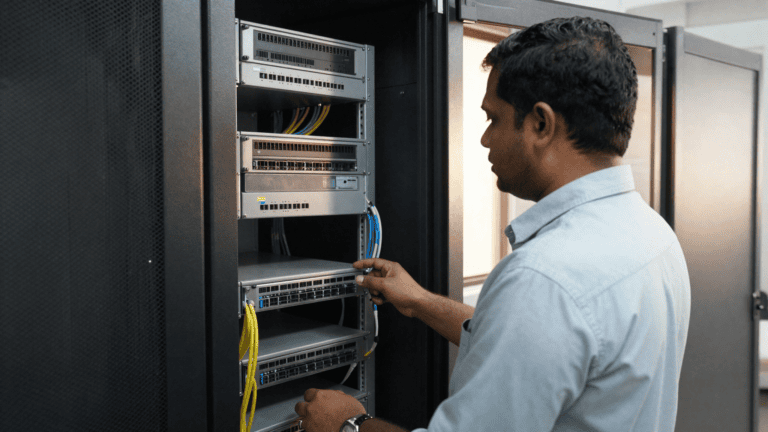
The proposal we built used a Cisco UCS X-Series chassis. One X9508 frame, six X210c compute nodes carrying the entire virtual estate, two fabric interconnects, and Cisco Intersight managing the lot from a single plane. We kept two small rack servers at the edge for things that should never share a chassis, like the backup target and a standby controller. Box count went from fourteen to eight. The fourteen separate management consoles became one.
So, fewer things to power and far fewer to patch on a Sunday. The capex was not lower, which surprised the CFO. A consolidated UCS build came in about Rs 4 lakh higher on day one than buying fourteen rack boxes. The win was never the sticker. It showed up every month after, on the bill nobody had been reading.
That stake is not decoration. This room holds employee records and customer purchase orders, which is personal data the moment a regulator looks. Under the DPDP framework, a breach you cannot explain is a breach you cannot defend. Eight managed nodes with one audit trail in Intersight is a story you can tell an auditor, and it lines up with the access and logging controls in ISO 27001. The CERT-In log retention rules are easier to meet across eight nodes than across fourteen patch states you cannot reconcile. If the data side worries you more than the power side, start with a DPDP readiness check first.
The five-year number, on one page
We built the comparison the way the finance team would, then let them argue with it. The figures below are indicative. Your load and tariff will move them. The shape, though, holds across almost every server room of this size I have costed.
| Five-year cost | Refresh: 14 rack servers | Consolidate: Cisco UCS X-Series |
|---|---|---|
| Hardware + 5-year support | Rs 68.0 lakh | Rs 72.0 lakh |
| Power and cooling (5 yr) | Rs 33.0 lakh | Rs 20.0 lakh |
| Rack and space (5 yr) | Rs 2.5 lakh | Rs 1.0 lakh |
| Admin and patching (5 yr) | Rs 13.0 lakh | Rs 6.0 lakh |
| Five-year total | Rs 116.5 lakh | Rs 99.0 lakh |
About Rs 18 lakh over five years, and the consolidated option started Rs 4 lakh more expensive. Sit with that. Every rupee of the saving came out of power, cooling and people, the lines the original quote never showed. Bas, that was the whole argument. The CFO did not need a lecture on the X-Series. He needed the room priced like a five-year liability, which is what it is.
We will build this table for your estate, free. See the Cisco UCS range or compare a straight ProLiant rack refresh. Reach us on WhatsApp at +91 91375 93228, 10 to 7 IST.
Where consolidation bites back, and how to stop it
I have seen this go wrong, because I once lived the messy version myself. On the buyer side, I pushed a consolidation too far and put production and its disaster-recovery copy in the same chassis. A fabric fault took both down on the same morning. I should have argued for separation and did not, because we had already announced the project. That was my mistake, and it is the one I check for first now.
So the trade-offs you have to respect. A chassis concentrates risk, which means redundancy stops being optional: dual fabric interconnects, N+1 power, and compute nodes spread so one failure cannot take the whole estate. Keep disaster recovery out of the box. The two edge rack servers we kept were not a compromise, they were the point. For backup and replication, a separate target paired with Veeam or shared storage like NetApp matters more than the compute brand.
One more honest caveat. If your workloads are unpredictable and growing fast, the on-premise question is open at all, and a cloud or hybrid path may beat any box. For a manufacturer with a steady ERP and a real preference for owning the metal, consolidation on-site won. For a startup doubling every quarter, I would have pointed them at AWS instead.
What I would write into the RFP now
Senthil ran the pilot for six weeks. Thirty VMs moved to the X-Series nodes, the two edge servers carried backup and a standby controller, and the fan finally came off the rack door. His one line at the end is the only customer quote I will use. “The room got quiet, and the March panic stopped.”
If I were writing this RFP again, I would put one clause in section twelve, and it would have nothing to do with brand. Compute and the management plane from one vendor, support from one phone number, and a five-year cost line that includes power and admin hours. Make every bidder fill that line. The vendor who refuses to price the room is telling you something. Pakka.
Free five-year TCO read on your server room. No card, no contract, no sales call. Start with the Cisco UCS server options, or read how we costed a Pune ERP server refresh. 200+ Indian businesses served. Response within 24 working hours.
Key takeaways
- Price the server room over five years, not the servers on day one. Power, cooling, support and admin all count, not just capex.
- Consolidation capex can be higher than a like-for-like refresh. The saving lives in OpEx, mostly power and people.
- A Cisco UCS X-Series build with Intersight collapses many boxes and consoles into one managed plane, which also helps the DPDP audit story.
- Concentration is a risk. Demand dual fabric, N+1 power and disaster recovery kept out of the chassis.
FAQ
Is server consolidation cost in India lower than a straight refresh?
Not always on capex. A consolidated Cisco UCS build can cost more on day one. The five-year number usually lands lower because the power and admin lines drop. Count all six cost lines first.
How many rack servers justify moving to a UCS X-Series chassis?
There is no fixed number, but once you run several virtualization hosts and chase patches across a dozen boxes, a single managed chassis with Intersight starts to pay for itself in power and time.
Does consolidation create a single point of failure?
It can, if you design it lazily. Dual fabric interconnects, N+1 power and keeping disaster recovery on separate hardware remove that risk. Never put production and its recovery copy in the same chassis.
What about DPDP and data security in a consolidated server room?
Fewer managed nodes with one audit trail make patching and log review easier to defend. The DPDP penalty ceiling is Rs 250 crore, so a breach you cannot explain is the real exposure.
Should I just move to the cloud instead?
For unpredictable, fast-growing workloads, cloud or hybrid may beat any box. For a steady on-premise estate with a hard daily SLA and a preference for owning the hardware, on-site consolidation often wins. The honest answer depends on your workload pattern.
P.S. Sudeep here. We costed a server room exactly like this for a manufacturer last quarter, and the CFO asked the same question yours probably is right now: why is the consolidated option more expensive to buy? Because the buying was never where the money went. Send us your rack list and we will price the whole room, free, before you sign anything.
The longer read for Indian buyers who want the real numbers before they commit.
Send me the field guide