When to migrate off old Avaya Aura
Last updated: 27 July 2026
He said, “it still works, why would we touch it.” That was the line that made me ask when he had last checked the support date on his own platform.
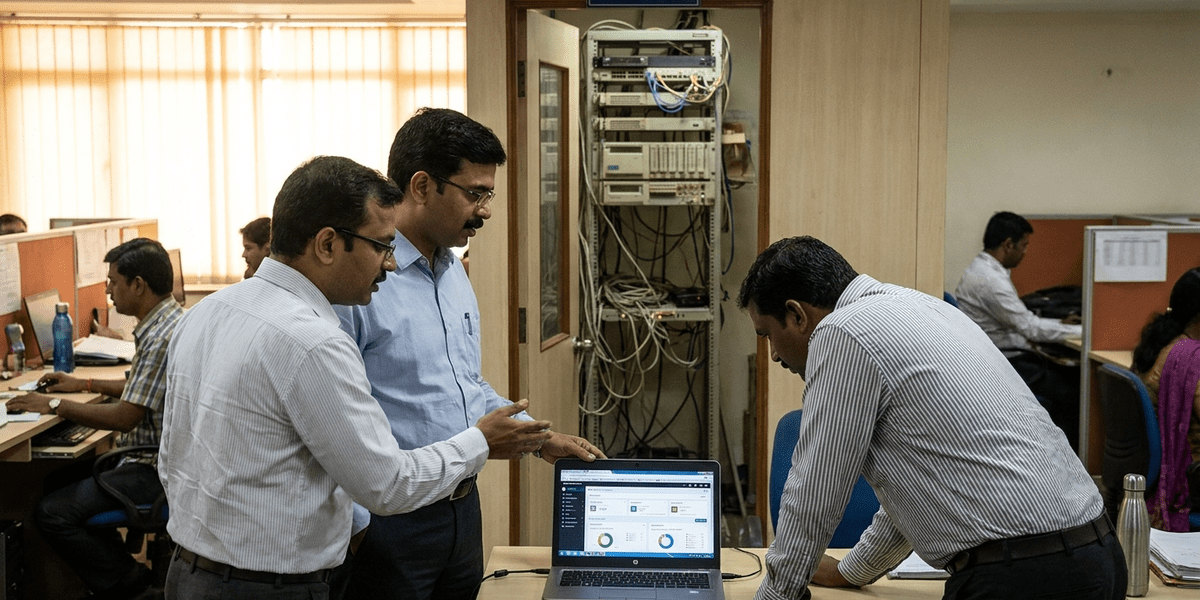
The room had a fair point on the table. This was a 400-seat contact centre at a mid-size general insurer in Chennai. Policy servicing, claims intake, renewals. The Avaya Aura build had been running for years, several releases behind the current one, on a pair of servers that were bought before the last office move. Calls connected. Agents logged in. The morning report landed at 8 every day. By every measure the IT head used, the system was fine.
The meeting where “it still works” met the support calendar
He was not wrong about the present tense. The trouble is that a voice platform has two states people confuse for one. There is “works today” and there is “supported next year.” Those are different facts, and only one of them shows up when you make a test call.
Avaya publishes end-of-manufacturer-support dates for each Aura release. Once a release crosses that line, security fixes stop arriving. You are then running the system your whole business talks to customers through on software nobody is obliged to patch. The build in that Chennai room was close to its date. Nobody in the building had written that date down anywhere a finance person would see it.
So the real question was not about today. It was about the gap between the day support ends and the day the team is actually ready to move. That gap is where the risk lives. You can read the platform’s own lifecycle and subscription structure on Avaya, and it is worth pulling those dates before any renewal conversation. The discipline of holding one honest record of what you actually run sits behind ISO/IEC 19770 for software asset management, and it applies to a voice platform as much as to a laptop fleet.
When to migrate off old Avaya Aura
Here is the framework I gave the insurer, the same one I use for any aging voice platform. You are not deciding on a version number. You are watching for the point where several pressures start pushing the same way at once. When enough of these are true, the migration has already chosen itself.
| Signal | What it looks like | Why it pushes you to move |
|---|---|---|
| Support date | Your Aura release is past or near end of manufacturer support | No more security patches on a system carrying customer voice data |
| Hardware under it | Servers and gateways are out of warranty, spares getting scarce | A hardware failure has no fast, supported fix path |
| DPDP duties | You cannot enforce retention, access control or deletion on recordings | Recordings are personal data, and an old build often cannot meet the duty |
| Business asks | Remote agents at scale, omnichannel, cloud reporting the old build cannot do | Workarounds cost more over time than the move would |
| Skills | Every change needs one specialist who is harder to find each year | You are one resignation away from nobody who knows the dial plan |
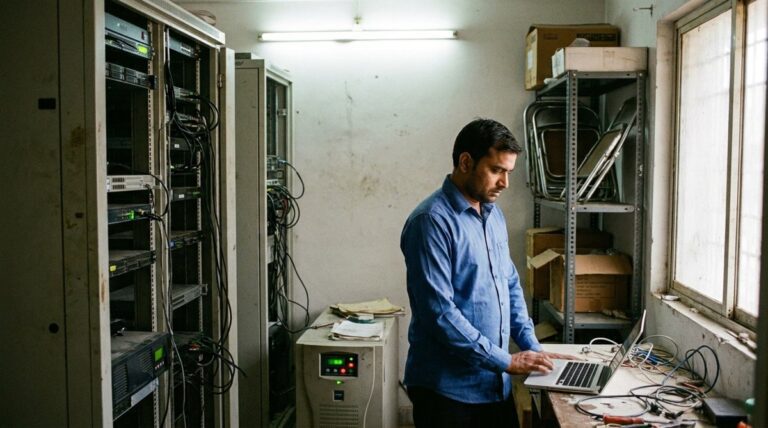
That last row is the one finance always underrates. Spares for a gateway this age now live mostly on auction sites and in the memory of one engineer who left in 2021. When the knowledge walks out, the platform is unsupported in a way no contract describes.
When to wait, because the IT head was half right
The other half of honest advice is this. Do not migrate just because a release number looks old. A version that is a few years behind but stable, patched to its last available level, and sitting on warrantied hardware can be the right thing to keep for now.
Wait when the estate is steady, the incident rate is low, you invested in it recently, and there is no business need knocking. Wait, above all, when your team has no room this quarter to run a careful cutover. We have seen teams rush a contact centre move to hit a budget date, then spend the next three months firefighting dropped calls and broken IVR routing while customers waited on hold. That is a worse outcome than one more year on a known platform.
Bas, the point is simple. The decision is about the support date and your readiness, not about the version label. Pick the move-by date with cold eyes, then protect the runway to it.
200+ Indian businesses. Response within 24 working hours.
Migrating without a big-bang weekend
When the date does arrive, the migration itself is where most of the fear sits, and most of it is avoidable. You do not flip a 400-seat contact centre on a Saturday night and hope. You run the new platform beside the old one. You pilot a single low-risk campaign first, claims status calls rather than fresh sales. You port numbers in stages. You keep the old build as a fallback until the new one has earned its place across a full month-end and a full peak.
This is the same discipline we used when moving a server room into AWS without a big-bang weekend, and again on a tenant-to-tenant migration after an acquisition. The pattern holds for voice. Whether you move to Avaya Experience Platform, stay on a newer Aura, or weigh another vendor such as Cisco for the contact centre, the cutover method matters more than the destination logo. Our Avaya phone systems and contact centre page covers the deployment side, and it sits under our wider IT hardware and infrastructure practice.
200+ Indian businesses. Response within 24 working hours.
What I would write into the decision now
I have miscalled one of these. A few years back I told a client to hold a similar platform for one more year. The manufacturer then moved the end-of-support date earlier than expected, and we lost our patch window with no migration plan ready. That was my mistake, and it taught me to stop treating those dates as fixed and far away.
So the clause I would put in front of any board running old voice infrastructure in 2026 is short. Write the end-of-support date and the hardware warranty date on the same page as the annual renewal, and review that page every quarter. The day those two dates and your DPDP recording duty start to converge is your migrate-by date. You decide it once, in a calm room, instead of in the week the platform finally breaks. The licence-count discipline from our Avaya licence audit write-up belongs on that same page.
Key takeaways
- Separate “works today” from “supported next year.” Only the second one belongs in a budget conversation.
- Migrate when the support date, the hardware warranty, and your DPDP recording duty start pulling the same way.
- Do not move on a version number alone. A stable, patched, warrantied build can earn another year.
- Run the cutover in parallel with a pilot campaign and a fallback. Never a single big-bang weekend.
For the rules behind the recording duty, the regulator frames personal-data obligations on the MeitY site, and India’s incident-reporting timelines run through CERT-In.
See Avaya options at Sirius Star
200+ Indian businesses. Response within 24 working hours. Reach us on WhatsApp at +91 91375 93228, 10-7 IST.
P.S. Sudeep here. We sat in a room just like this one last month, with a team sure their old platform was fine because it had never gone down. It had also never been tested by a failure with no support behind it. If you do not know the end-of-support date on your Aura release, that is the first file to pull. The decision gets a lot calmer once the date is on the table.
FAQ
When should I migrate off old Avaya Aura?
Migrate when your release is past or near end of manufacturer support, the servers under it are out of warranty, or you cannot meet DPDP duties on call recordings. When two or more of those are true at once, the move has effectively chosen itself.
Is it safe to keep running an old Aura release?
For a while, yes, if it is patched to its last available level and on warrantied hardware. The risk rises sharply once the release crosses its end-of-support date, because security fixes stop and a failure has no supported repair path.
How do I migrate a contact centre without downtime?
Run the new platform in parallel with the old one, pilot a single low-risk campaign, port numbers in stages, and keep the old build as a fallback until the new one has handled a full peak and a month-end.
Does an old voice platform create a DPDP problem?
It can. Call recordings are personal data, and older builds often cannot enforce retention limits, access control, or deletion on request. That turns a cost question into a compliance one.
The longer read for Indian buyers who want the real numbers before they commit.
Send me the field guide