
Ubiquiti UniFi for hotels: how a three-property Udaipur group fixed guest Wi-Fi for good
Last updated: 25 July 2026
The router was on the window ledge. Behind the reception desk, balanced on the sill, next to a brass Ganesha and a stack of check-in cards. A consumer router, the kind you buy for a flat, doing the work of a 40-room property. Its antenna was bent, propped up with a folded bill.
That was site one. The owner runs three boutique hotels in and around Udaipur. Forty rooms, twenty-two rooms, a heritage place with twelve. I came up on a Thursday because the reviews had started saying the same thing. Slow Wi-Fi. Drops near the pool. For a property charging what these charge, that is not a small complaint.
He thought he had a Wi-Fi problem. He had a network problem. The Wi-Fi was just where it showed.
Three sites, three brands, zero visibility
Each hotel had been wired by whoever was cheapest at the time. Site one ran the window-ledge router plus two range extenders nailed to a corridor wall. Site two had a small business gateway nobody had logged into since 2022. Site three ran a mesh kit meant for a home, stretched across three floors of thick old stone walls.
No two sites ran the same gear. The owner could not see any of them. If a guest complained at the heritage property, his manager would walk to the cupboard, find the router, and switch it off and on. Power cycle and pray.
And here is the part that made me put my chai down. At all three properties the guest Wi-Fi, the billing desk, the property management system, and the CCTV recorder were on one flat network. Same subnet. A guest laptop in room 204 was, in network terms, sitting in the same room as the machine that holds card details and passport scans.
Arre. That is not a Wi-Fi problem. That is a problem you do not want an auditor to find first.
Get a UniFi site survey200+ Indian businesses set up with us. First response within 24 working hours. Reach us on WhatsApp at +91 91375 93228 during 10 to 7 IST.
Why Ubiquiti UniFi made sense here
I did not walk in loyal to a brand. I walked in with a budget and a multi-site headache. The owner wanted one thing above all. He wanted to see all three hotels without driving to them.
That is the exact thing Ubiquiti UniFi does well. One console, called Site Manager, shows every property in one list. Each hotel gets a UniFi Cloud Gateway that runs the network locally, so if his internet at the heritage place goes down, the other two do not care. The access points, the switches, the gateway, all of it managed from the same screen. He can sit at site one and watch a guest connect at site three.
The gear is also priced for a hotel, not for a bank. A UniFi U6 access point covers a guest floor without theatrics. For a property this size, you need coverage that holds and a console that tells the truth.
We have seen owners get talked into three times the kit they need because a vendor engineer over-specs to be safe. I almost did it myself here, and I will come back to that.
The cable room told the real story
Every honest network story is set in a cable room. So was this one.
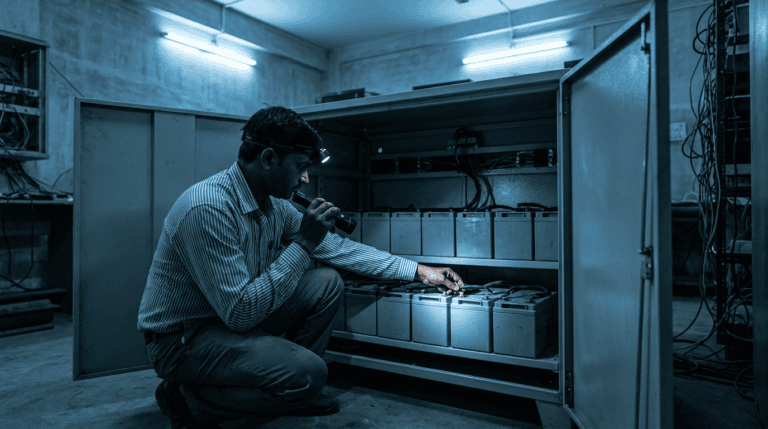
At site two, the cabinet was a cupboard under the back stairs. I opened it and the smell hit first. Hot plastic. A small switch, fanless, warm enough that I would not have left a hand on it. Patch cables in four colours, none of them meaning anything. One bright pink cable ran from the switch to nowhere I could find. We do not buy pink cables. Somebody had, once, and it had been carrying the front-desk billing traffic for three years.
The structured cabling underneath was actually fine. The mess was everything bolted on top of it since. The cable is rarely the problem. The cable was, this time, not the problem.
We kept the good cabling, ripped out the rest, and mounted a proper UniFi switch and gateway in each cabinet. If you want the cabling done right from the start, that is a separate piece of work we take seriously. Here the bones were sound. We just gave them a brain.
What Ubiquiti UniFi for hotels actually changed
The rollout took two weekends, one site at a time, done at night so no guest noticed. Here is what shifted, in plain terms.
We split each property into separate VLANs. Guest traffic on its own. Billing and the property management system on their own. Staff apart from both. Cameras on a fourth, talking only to the recorder. A guest phone now lives in a sealed lane. It reaches the internet and nothing else. It cannot see the machine with the passport scans. That single change is the one I cared about most, and the one the owner understood last, because it does not show up as a speed bar.
Guest Wi-Fi got a captive portal. Guests enter a name and room number, accept the terms, and they are on. The owner gets a record of who connected and when. No more open network anyone in the car park could join.
And the console did its job. Two weeks in, a U6 at site three started dropping clients overnight. The owner saw it on his phone before a single guest complained. He called me, I logged in from Udaipur city without driving up, and the access point had simply lost power on a flaky socket. We moved it to a PoE switch port. Fixed in ten minutes. No drive. No cupboard. No prayer.
| What he had before | What UniFi gave him | Why it matters to a hotel |
|---|---|---|
| Three brands, three logins, none used | One Site Manager console, all three properties | See and fix any site without driving to it |
| Guest Wi-Fi on the same network as billing | Separate VLANs for guest, billing, staff, cameras | A guest device cannot reach card or passport data |
| Open guest network, no record | Captive portal with name and room | You know who was on the network and when |
| Power cycle and hope | Alerts before guests complain | Fix the AP before the review gets written |
We have done this for offices, clinics, and multi-property groups across India. No card, no contract to start.
Where I was wrong, and the CFO was right
I had spec’d the bigger UniFi switches for two of the sites. More ports, more headroom. They were also more than a twenty-two-room hotel will ever use, and the owner’s finance person said so in one sentence. “Naveen, what are we plugging into all those ports?” Nothing. The answer was nothing. I had over-spec’d to feel safe.
We dropped down a tier on two of the three sites. Saved close to Rs 90,000. The network did not notice. The right size is usually smaller than the engineer’s first instinct.
Final spend across all three hotels landed near Rs 8.4 lakh, gateways, access points, switches, and the install. He had a quote from another brand at over Rs 25 lakh for the same three sites. That brand makes fine gear. For a hotel group that wanted coverage and one console, it was the wrong shape of money. Bas.
What this means if you run more than one site
If you run a single small office, a lot of brands will do. The moment you have two or more locations and one person responsible for all of them, the question stops being about access points. It becomes about whether you can see everything from one place and fix most of it without travelling.
That is the whole case for UniFi at this size. The data separation matters too, and under the DPDP framework keeping guest devices away from personal data is no longer optional. A flat network is a finding waiting to happen.
If you want to think about the wider network, not just the Wi-Fi, our networking practice covers switching, gateways, and the boring parts that decide whether any of it stays up. And if data separation is the part keeping you awake, start with a DPDP readiness check. For the office Wi-Fi version of this same story, we wrote up a Pune clinic weekend cutover too.
The owner messaged me last month. New reviews. Nobody mentions the Wi-Fi anymore. That is the win. When the network goes quiet in the reviews, it means it is finally working.
Get my free network surveyTell us how many sites and how many rooms or desks. We will come back with a real plan, not a brochure. Response within 24 working hours.
Key takeaways
- Multi-site groups need one console more than they need bigger access points. UniFi Site Manager gives you that.
- Separate guest traffic from billing and cameras with VLANs. On a flat network, a guest phone can reach your DPDP exposure.
- Keep good cabling, replace the gear bolted on top of it.
- The right switch is usually one tier smaller than the first quote.
FAQ
Is Ubiquiti UniFi good enough for a hotel, or do I need a bigger brand?
For most offices and small to mid hotel groups, UniFi covers it well. You get cloud management, guest portals, and VLAN separation without enterprise pricing. A 500-room luxury chain with a full IT team may want something heavier. A boutique group does not.
Can I manage all my locations from one screen?
Yes. UniFi Site Manager lists every property you own. Each site runs its own Cloud Gateway locally, so one site losing internet does not affect the others, but you watch and fix all of them from one login.
How does separating the network help with DPDP?
A hotel holds passports, card data, and CCTV footage, all personal data under the DPDP Act. Putting guest Wi-Fi on its own VLAN means a guest device cannot reach the machines holding that data. It closes one of the most common gaps an auditor looks for. See the CERT-In guidance and ISO 27001 for the wider control set.
What does a multi-site UniFi rollout cost?
It depends on rooms, floors, and how much cabling survives. The Udaipur group above came to roughly Rs 8.4 lakh across three properties. We size it after a survey, not before. Ubiquiti gear is priced so you do not pay for ports you will never use.
P.S. Sudeep here. Naveen sized this one honestly, including the bit where he talked the owner out of the switches he had first quoted. We did a similar three-site setup for a clinic chain last month, and the owner asked the same first question this one did: can I see all of it from my desk. Yes. That is usually the whole point. First call is a working call, not a pitch.
The longer read for Indian buyers who want the real numbers before they commit.
Send me the field guide