
Videonetics India at a 320-seat Hyderabad auto plant: the Tuesday the ANPR caught a truck
TL;DR: A Hyderabad auto parts plant runs 78 cameras across four zones. Mixed brands. Mixed years. Videonetics India sits on top as the AI VMS. The cameras are Axis, Hikvision, Bosch, Uniview. The platform talks to all of them over ONVIF. One Tuesday afternoon, the ANPR flagged a vendor truck re-entering the loading bay after its slot ended. Face recognition matched the driver to a revoked vendor ID. Pre-Videonetics, this would have been four hours of DVR grep. With analytics live, it was four minutes.
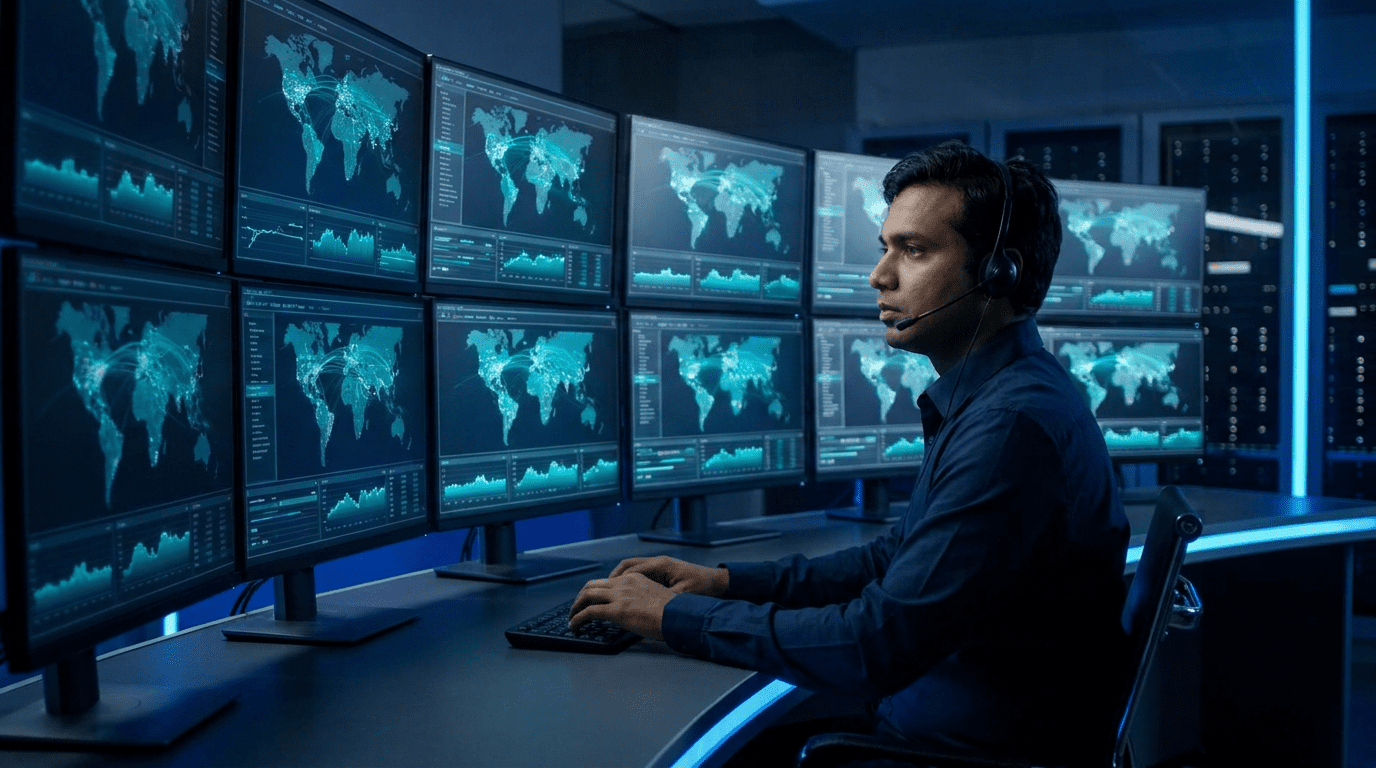
The SOC room at the Hyderabad plant sits on the second floor, opposite the canteen lift. Three monitors. One desk. A thanda Bisleri bottle Rajat refuses to throw out because, he says, the cap still seals. The Videonetics India console runs on the middle screen. I have seen this exact setup at three plants now. Watchman with opinions, security manager with a clipboard, IT head who thinks the cameras are an IT problem until something goes wrong.
On 11 February this year, something went wrong.
14:08 IST. The first alert.
Rajat is the day-shift SOC operator. He watches 78 cameras through one Videonetics India console. Four zones: main gate, paint shop, machining bay, loading dock. The console pings him at 14:08.
An ANPR alert. Vehicle TS09 4-digit-plate entering the loading bay. Outside its scheduled slot.
He clicks the alert. Three things load at once. The live feed of the loading bay. A still of the plate the platform matched. The booking record from the gate management module. Booking says the truck was meant to arrive Wednesday morning, 09:30. This is Tuesday afternoon, 14:08.
Arre. Off by 19 hours.
The driver climbs out. The platform tags his face. Cross-references with the visitor log. Hits a flag. The face is on the revoked-vendor list. Same person, different vehicle three months ago, asked to leave the premises after a shop-floor incident involving a missing toolbox.
Rajat pings Naresh on Teams. Naresh is the Plant Security Manager. He keeps a printed photo of his daughter on his desk and a kachori from the canteen most afternoons.
14:14 IST. The walkthrough.
Naresh is in the SOC room by 14:14. Pooja, IT Head, follows two minutes later. She is the one who pushed for Videonetics India eight months ago. She had walked the floor, counted cameras, found Axis next to Hikvision next to Bosch next to a Uniview camera somebody added because it was on sale at a distributor. Yaar, no two cameras talked to each other before this.
The three of them watch the playback together. Videonetics plays it at 4x. Then 1x. Then frame by frame near the dispatch dock.
The driver loiters. Eleven minutes near a pallet of finished housings. He picks one up. He puts it back. He walks the length of the bay. He does not load his truck. He stands near the dock door for a stretch where he is just looking around. Then he climbs into the cab and drives off through the side exit, where the bollard is still half-broken from last monsoon.
Naresh says one thing. “We would never have seen this on the old DVR.”
Pooja knows. So do I. Before this platform went live, this was a 4-hour job. Pull the time window. Decide which DVR. Hope the recording still exists at 30-day retention. Grep through. Squint at compressed footage. Maybe spot something, maybe not. With Videonetics, the alert came to Rajat. The trail came with it.
What the platform actually did
Videonetics India ships its Unified Video Computing Platform. The bits that worked on the Hyderabad floor that Tuesday:
- Intelligent VMS. One console for all 78 cameras. Mixed brands. Live feed, playback, bookmark, export.
- Video Analytics. Loitering, intrusion, abandoned object, perimeter breach. Per camera, per zone, per time window. The loitering flag is what Naresh and Pooja replayed at 4x.
- ANPR. Plate read at the bay entry. Cross-referenced with the gate-management booking record. The mismatch between booking time and actual entry is what woke the alert.
- Face Recognition. Driver matched to the revoked-vendor list at 14:08:42, in the same alert payload as the plate read.
Four data points. One alert. One operator. Four minutes from ping to playback.
The mixed-brand bit nobody puts on the brochure
This plant has 12 Hikvision cameras, 32 Axis, 18 Uniview and 16 Bosch. Pakka mixed estate. Different generations, different firmware, different management consoles if you tried to do it brand-by-brand.
Videonetics India sits on top as the VMS. ONVIF-compliant means it talks to anything that follows the standard. The platform does not care which brand the camera is. Pooja told the board the camera you already own is the camera you keep. The platform replaces five OEM consoles with one.
I have seen estates where the IT head replaced 60 cameras at INR 12,000 each to “standardise” on one brand. INR 7.2 lakh of capex for the same picture quality. Bas, that is not the answer. The answer is the layer above the cameras, not new cameras.
How this compares to what plants usually do
| Approach | What you get | What you miss |
|---|---|---|
| Raw NVR playback only | Recordings, 30-day retention | No alerts. You only look when something is already wrong. |
| Camera-OEM bundled software | Works for that OEM’s cameras | Mixed estates need 3-4 consoles. Cross-brand analytics do not exist. |
| Global VMS, generic add-on analytics | Unified view across brands | India context is bolt-on. ANPR for Indian plates and face for Indian datasets are usually extra modules with extra licensing. |
| Videonetics India + your existing cameras | One console, ANPR+face+loitering built in, ONVIF-agnostic, India-built engineering | You still need to size the server. The platform is software; the GPU and storage are your call. |
The thing I came in wrong about
When we sized the original deployment for this plant, I assumed they would need a beefy GPU server for face recognition on all 78 feeds at once. I argued for the bigger SKU. The Videonetics architect on the call pushed back. He said most plants do not need face recognition on every feed continuously. They need it on the 6 to 8 ingress and egress points. The other 70 cameras do general analytics. The GPU spec dropped by a third.
I came in convinced bigger was safer. The architect was right. INR 4.8 lakh of unnecessary server hardware nearly went into the BOM because I had not asked which cameras actually need face recognition running.
That is the conversation hardware practice has with software practice every other Tuesday. Software wins more often than hardware likes to admit.
What I would tell a friend planning Videonetics India in a plant
Three things, in this order.
Start with the cameras you have. Do an ONVIF audit. Anything ONVIF Profile S or T compatible will talk to the platform. Anything older than 2014 is probably proprietary. Replace those, keep the rest. You will save lakhs that the brochure plan never mentions.
Decide where face recognition runs. The ingress and egress points. The dispatch dock. Maybe the cash office. Not every camera. The GPU bill drops. The match quality goes up because you are running fewer feeds with cleaner light at the entry points.
Plan the revoked-vendor list early. The face match only works if somebody is maintaining the watchlist. HR and security need a Tuesday meeting every fortnight to keep it current. The Tuesday after the Hyderabad incident, Naresh added 14 more names. That is the kind of housekeeping nobody puts in the SOW but is the difference between an alert that fires and an alert that catches.
The cost of a Videonetics India deployment on a 320-seat plant runs around INR 18 to 26 lakh including platform licences, GPU server sizing, integration with the existing gate-management module, and a 60-day handover. Indicative. Sirius Star sizes it against your actual camera count and risk register, no two plants land at the same number.
Where this platform fits in the wider stack
The cameras themselves stay. We pair Videonetics with whatever you have. Axis network cameras, Hikvision, Bosch, Uniview, even older Pelco estates. For access control on the perimeter, Mantra Aadhaar readers at the gate and Invixium touchless face/fingerprint at the data centre door tie back to the same audit trail.
Storage holds the footage. NetApp for the bigger plants, Scality for long retention. The server stack runs on HPE ProLiant or Supermicro with the GPU spec sized to your face-recognition footprint, not the whole feed list. The footage retention and the data-handling are part of your DPDP compliance posture; the platform supports the audit, it does not replace the policy.
The product page for the platform itself sits at Videonetics India. The wider hardware practice handles the rest.
Riya’s takeaways
Frequently asked
How many cameras can one Videonetics India console handle?
The platform scales to thousands per deployment when sized properly. For a 320-seat plant with 78 cameras, one well-spec’d server runs the workload comfortably. The bottleneck is GPU, not camera count, and only on the feeds where face recognition is active.
Does it work with our older Hikvision and Pelco cameras?
If the cameras are ONVIF Profile S or T, yes. Most plants find 80 to 90 percent of the existing fleet is compatible. The 10 to 20 percent that is not gets replaced. The Sirius Star team does the ONVIF audit before sizing.
What about DPDP and the footage as personal data?
Footage of identifiable faces is personal data under the DPDP framework. The platform keeps the audit trail (who viewed what footage, when, why) and the retention controls (how long, where stored, who can export). Your DPO writes the policy, the platform supports it. We pair the deployment with the Secure Data Guard programme for the policy and consent side.
Where does Sirius Star come into this?
We are a Videonetics partner in India. We do the ONVIF audit, the server sizing, the GPU spec, the integration with your existing gate-management or access-control stack, the user training for the SOC team, and ongoing support. Response within 24 working hours under the standard AMC. Pan-India coverage including the 19,000+ pincode footprint via the OneAssist warranty network on supported hardware.
Talk to the Sirius Star hardware practice
Sources: Videonetics product documentation, MeitY DPDP framework, CERT-In incident reporting guidance, ISO/IEC 27001:2022.
The longer read for Indian buyers who want the real numbers before they commit.
Send me the field guideP.S. Riya here. The thing I keep coming back to from that Tuesday in Hyderabad is the watchman at the side gate. He told me afterwards he had noticed that truck twice before, on two different Tuesdays, and had assumed somebody had cleared it. He had not flagged it because nobody asks him to flag what he assumes is cleared. The platform did. That is the gap a good VMS closes.
Get my free Videonetics India sizing