Zero touch switch replacement: the morning a Madurai campus stayed online for exams
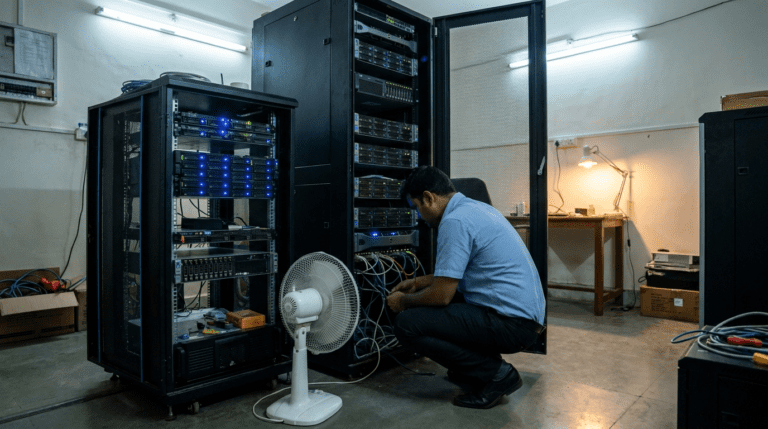
The patch cable in the library rack was bright orange. We do not buy orange cables. That was the first thing I saw when I opened the IDF door, and it told me someone had been in there over the weekend.
This was a 3,200-student engineering college in Madurai. Five blocks, one small data room, and a campus network that had to carry online exams twice a year. I am Naveen. I look after networks for Sirius Star, and I had built this one eighteen months earlier.
The call came at 7:40 in the morning. Online semester exams started at 9. The switch in the library block had gone dark.
The morning a dead switch nearly stopped 600 exams
The library block ran one Allied Telesis x230-10GP at the edge. Eight ports of gigabit power-over-ethernet, two fibre uplinks. Small unit. It fed the 40 exam PCs in the reading hall, two wireless access points, and four cameras.
When that one switch died, all of it went with it. The PCs lost their network. The cameras went blind. And 600 students were due to sit a timed online paper in that hall in eighty minutes.
The warden on site was a lab assistant named Suresh. Good man. Knows his way around a PC. Has never touched a switch CLI in his life, and there is no reason he should.
Arre, this is the part most campuses get wrong. They buy good equipment and then assume a network engineer will always be on site when it fails. On a Saturday exam morning in Madurai, I was 400 kilometres away in Chennai.
What zero touch switch replacement actually does
Here is the idea, in plain terms. Allied Telesis switches can run together under AMF, the Autonomous Management Framework. AMF treats the whole campus network as one managed unit instead of forty separate boxes.
One part of AMF keeps a current backup of every switch. The config, the firmware version, the port settings, all of it. The backups live on a master node, which on this campus was the x530 core switch in the data room.
So when the library x230 died, its full identity was already saved. The job on site was not to configure anything. The job was to put an identical spare in the rack and turn it on.
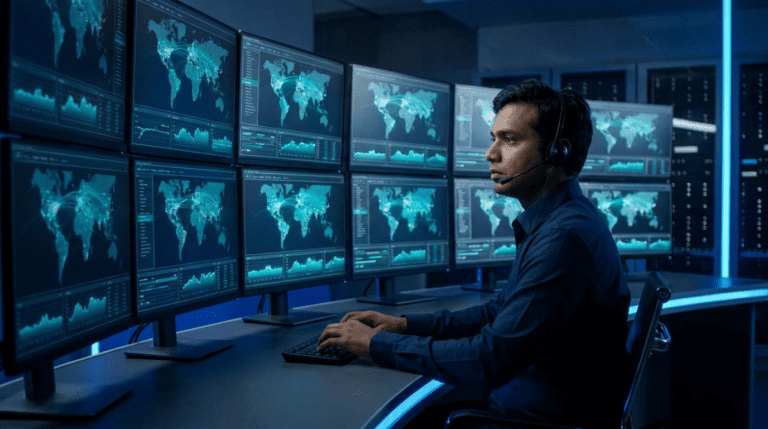
That is zero touch switch replacement. The spare boots, AMF sees a new device in that slot, and it pushes the saved config and firmware down automatically. The replacement comes up as the switch that died, same settings, same name. It then shows up in Vista Manager EX, the single screen we use to watch the whole network.
No CLI. No engineer. No two-hour drive.
Get a free campus network audit from Sirius Star. 200+ businesses served, Response within 24 working hours.
The swap, minute by minute
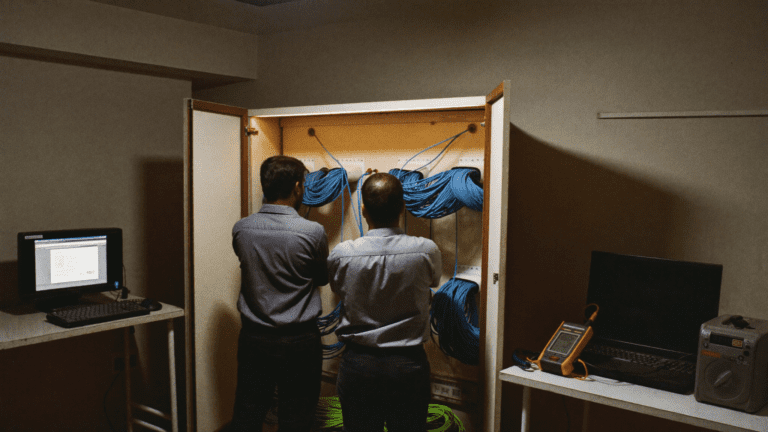
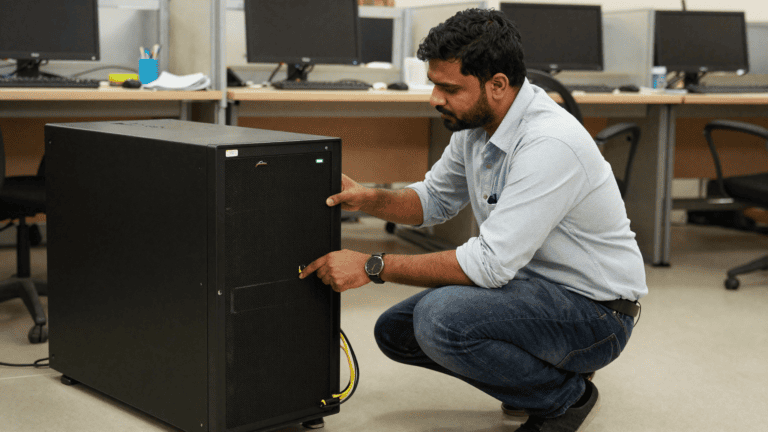
I called Suresh and stayed on the phone. He had a one-page card taped inside the IDF door. We put that card there during the build for exactly this morning.
7:48. He pulled the spare x230 off the shelf. We keep one spare switch in that data room at all times. It costs us one switch. It buys back a morning like this.
7:52. Power off the dead unit. Unplug each cable. The cables were already labelled, so every wire went back into the same port number on the new switch.
7:58. Spare racked, uplink fibre in, power on. Then we waited.
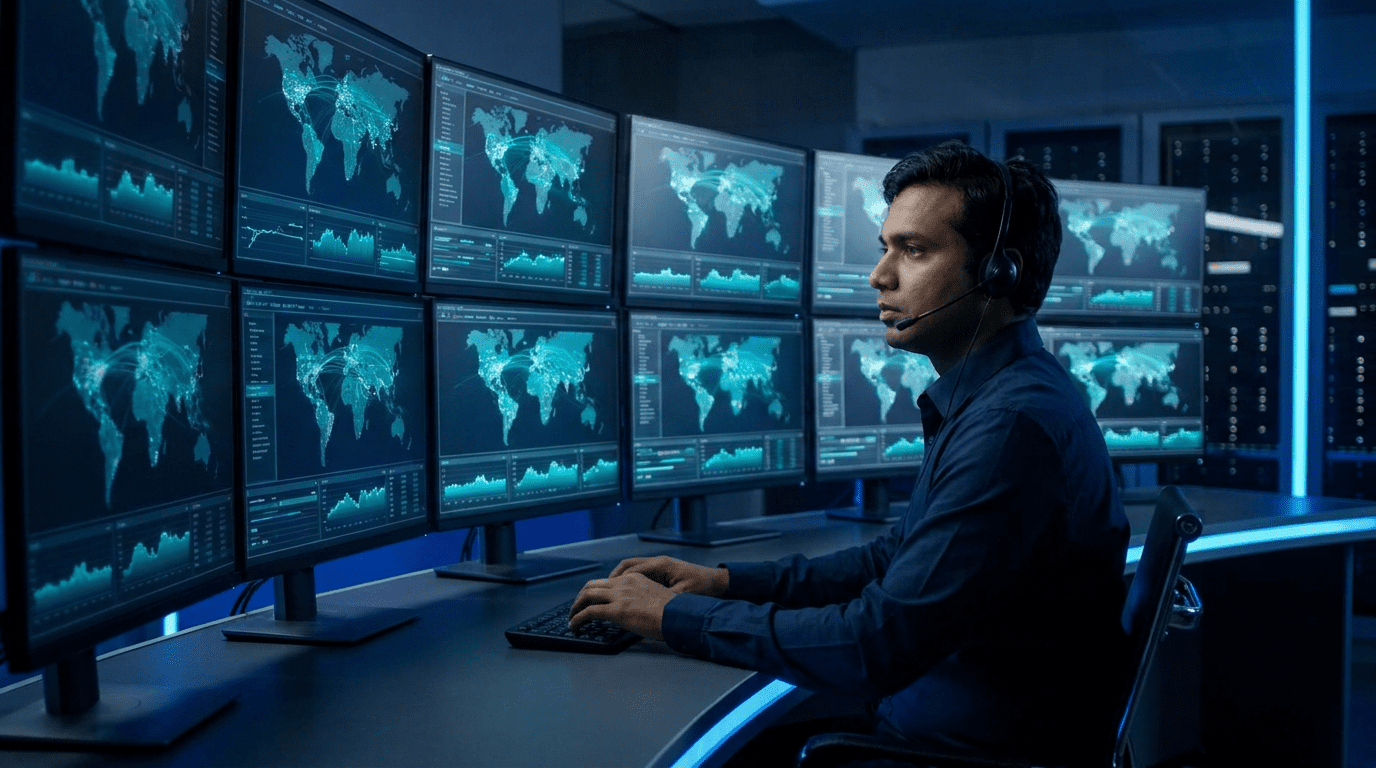
8:04. AMF found it. The core switch recognised the slot, pushed the backup, and the new x230 came up wearing the dead one’s config. On my laptop in Chennai, Vista Manager EX showed the library node turn from red to green.
The cameras came back. The access points came back. The exam PCs got their network. Yaar, the whole thing took about sixteen minutes from my first call, and most of that was Suresh being careful.
Students walked in at 8:50. The paper started at 9. Nobody in that hall knew anything had happened.
Where I over-built, and where it paid off
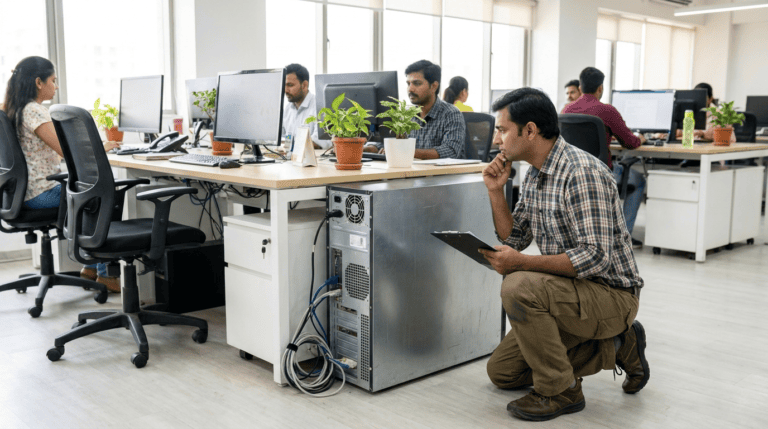
I will own a mistake here. When I designed this campus, I put a full x530 stack in the admin block. Two switches stacked, lots of multi-gigabit ports. The admin block has thirty staff and a printer. A single x530 would have done the job with room to spare.
The college accountant questioned that line in the quote. He was right. I had over-built the admin block, and I told him so later.
But the same family of switches, running one common operating system in AlliedWare Plus, is what made the rest possible. The x530 core held the backups. The x230 edge units took them. The whole estate spoke the same language, so AMF could move a config from the core to a spare without anyone translating. The honest version is this: I spent too much in one block, and the platform paid me back in another.
Allied Telesis against the usual campus options
Most campuses I walk into are choosing between three paths. Here is how they compare for the swap-a-dead-switch-on-exam-day test.
| What matters on exam day | Allied Telesis via Sirius | Premium brand (Cisco Catalyst / Meraki) | Lowest-bid unmanaged |
|---|---|---|---|
| Auto-rebuild a dead switch | Yes, AMF zero-touch recovery | Possible, often a paid cloud tier | No, full manual rebuild |
| Who can do the swap | A lab assistant with a card | Usually a trained engineer | A trained engineer, on site |
| One screen for the campus | Vista Manager EX, included | Cloud dashboard, subscription | None |
| Spare-on-the-shelf model | Designed for it | Workable, costlier units | You are the spare |
| Cost stance for SMB and education | Mid, India service network | Premium | Cheap upfront, dear in downtime |
I am not going to tell you Allied Telesis wins every site. If you run a global estate with a 24×7 network team and a cloud-first policy, the premium brands earn their price. For a campus that needs the network to disappear into the background and stay there, the Allied Telesis model fits better and costs less.
Segment the network before exam week, not after
One more thing the AMF backbone made easy. Students, staff, cameras, and building systems each sit on their own segment. A student device cannot see the camera feeds. The camera network cannot reach the staff records.
This is not a nice-to-have any more. Under the DPDP Act, student data and camera footage are personal data, and the penalty ceiling is severe. Keeping those flows apart is part of how a college shows it took care. We map the segments to the campus risk picture and document them, the way the Ministry of Electronics and IT and CERT-In expect, and we line the records up against ISO 27001 so an auditor has something to read.
If you want the network and the compliance story handled together, our DPDP compliance package sits next to the networking work, and a quick DPDP readiness assessment tells you where the gaps are.
Book a campus network review. Free 24-hour audit, no card, no contract.
FAQ
What is zero touch switch replacement?
It is a way to replace a failed network switch without configuring anything by hand. On an Allied Telesis AMF network, the config and firmware of every switch are backed up centrally. When a switch dies, you rack an identical spare and power it on, and the network pushes the saved settings to it automatically.
Do we need a network engineer on site to use it?
No. That is the point. The person on site racks the spare, plugs the cables back into the same ports, and turns it on. A lab assistant or admin staffer can do it from a one-page card. The engineer can watch remotely in Vista Manager EX.
Does Allied Telesis AMF work with our cameras and access points?
AMF manages Allied Telesis switches, firewalls, and wireless together, and it also supports a range of third-party devices including IP cameras and phones. The cameras and access points that hang off a recovered switch come back with it.
Is Allied Telesis right for a small campus, or only large ones?
It suits small and mid-size campuses well, which is where we place it most often. A large global estate with its own 24×7 team may prefer a premium cloud-first brand, and we will tell you so if that is your situation. For an SMB or a single-campus college, the spare-on-shelf model is hard to beat on value.
Talk to the Sirius networking team about your campus. We have done this for 200+ Indian businesses, with Response within 24 working hours.
For more on campus networking, see how we handled campus Wi-Fi for a Chennai engineering firm, our networking solutions practice, and a server-room night with KVM-over-IP. Brand detail lives on Allied Telesis.
P.S. Naveen here. Keep one spare switch on the shelf, and label it twice. We shipped a setup like this for a Coimbatore campus last term, and the IT head asked the same question you probably are right now: what happens when a switch dies and I am not there. Now he knows. The switch fixes itself, and he gets his Sunday back.
The longer read for Indian buyers who want the real numbers before they commit.
Send me the field guide