Cisco UCS X-Series vs rack servers: what actually decides it
Last updated: 25 July 2026
By Riya Kapoor, Hardware Practice Lead
Three boxes, a laminated card, and a fourth server nobody had budgeted
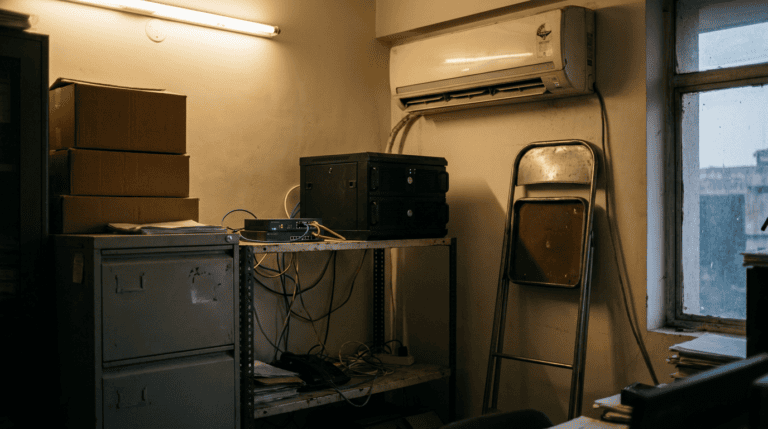
The server room at a 140-person auto-ancillary machining unit outside Nashik is smaller than most people’s storeroom. Two Dell PowerEdge rack servers sit on the bottom shelf, humming next to an older whitebox tower someone bought in 2019 and never quite retired. Above them, taped to the rack rail, is a laminated card in Suresh’s handwriting: server names, IP addresses, and a UPS runtime chart he updates by hand every quarter.
Suresh runs IT for the plant, alone, alongside two help-desk juniors who mostly fix printers. When the company’s ERP vendor said the new MES rollout for the shop floor would need a fourth server by September, another integrator had already been in and out with a proposal: skip the fourth rack box, jump straight to a Cisco UCS X-Series chassis. “Future-ready,” the deck said. “One platform for the next ten years.”
Suresh called us in 2026 because the quote had a number on it he could not defend to his plant head without understanding what he was actually buying.
Cisco UCS X-Series vs rack servers, on paper
Before touching the budget, I laid out what each option actually is, because the previous pitch had blurred the two together.
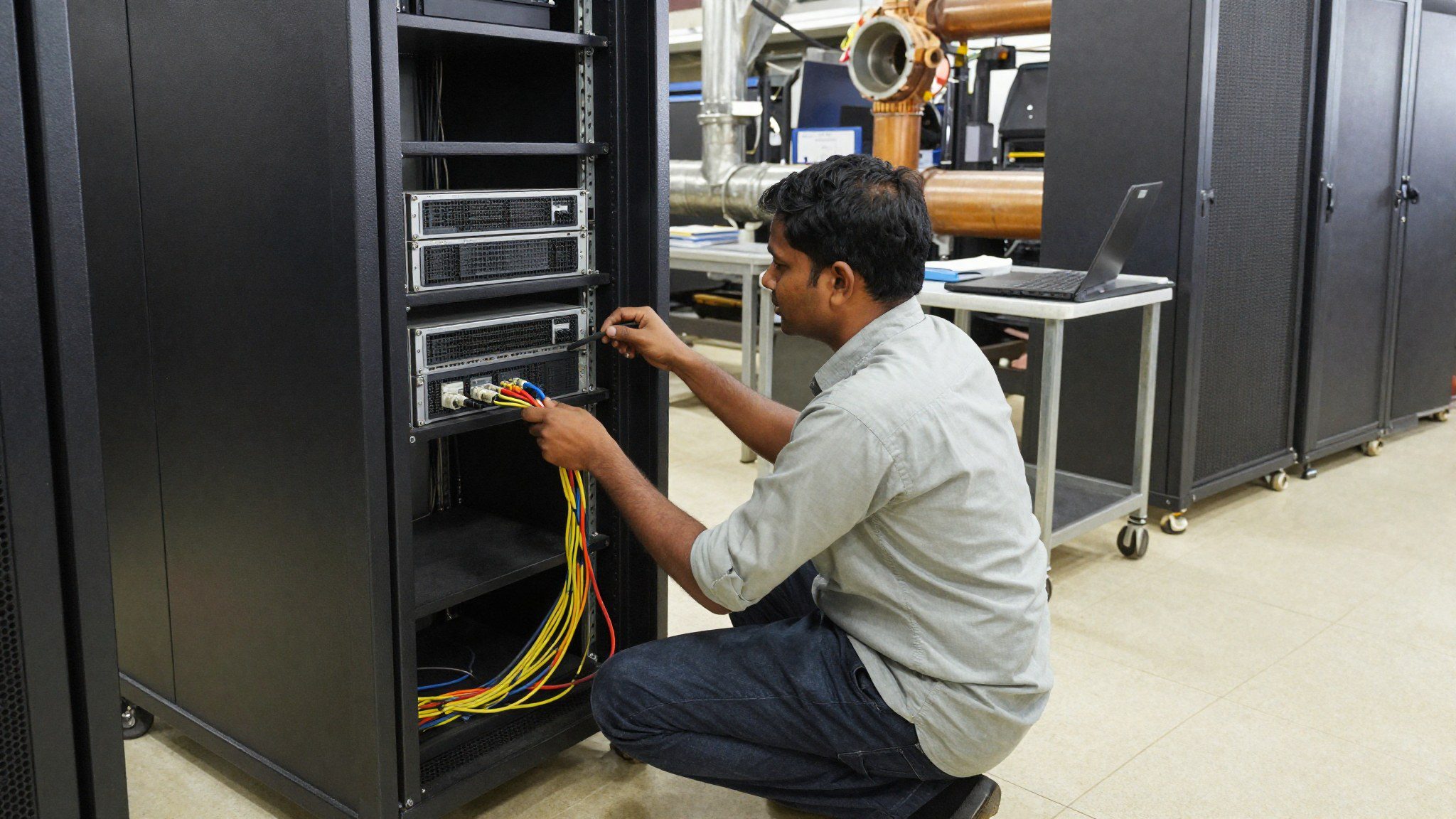
A UCS C-Series rack server, the C220 M8 or C240 M8, is a standalone 19-inch box. It runs on its own, needs no separate fabric hardware, and starts near Rs 3 lakh in a working configuration for this plant’s workload. A UCS X-Series system is different in kind, not just size: the X9508 chassis holds up to eight X210c M8 compute nodes, wired through a pair of fabric interconnects that carry both compute and network traffic on one fabric. Buy the chassis and interconnects loaded with even a couple of nodes, and the bill runs into the Rs 20 lakh and up band before support and Intersight licensing.
Here is the part the earlier proposal skipped: both platforms run on Cisco Intersight Managed Mode. A rack server and a chassis node both get provisioned from the same server-profile template, so “unified management” is not actually a reason to pick one over the other. You get it either way.
| Question | UCS C-Series rack | UCS X-Series chassis |
|---|---|---|
| Entry cost | Near Rs 3 lakh per box | Rs 20 lakh and up, loaded |
| Grows by | Buying another standalone box | Slotting a new node into free chassis bays |
| Needs Fabric Interconnect | No, runs standalone | Yes, always |
| Best fit | 1 to 4 servers, one room, steady headcount | Growing past 5 to 6 nodes with a small IT team |
| Intersight profiles | Yes | Yes |
On paper, it reads like a straightforward upgrade path. In a 140-person plant with one IT admin, it is a Rs 17 lakh question that nobody had actually run the numbers on.
Get my Cisco UCS quote in 24 working hours
Free 30-minute review first. 200+ Indian businesses trust Sirius Star.
The math Suresh had not been shown
Two more C220 M8 rack servers, sized for the ERP and the new MES database, land around Rs 6.5 to 7 lakh together, working configuration, support included. That covers the plant through the next 18 to 24 months on its current growth curve.
The X9508 chassis, even minimally loaded with two X210c M8 nodes, was quoted north of Rs 24 lakh once Intersight licensing and fabric interconnects were added in. For that money the plant would be buying five to six empty chassis bays it had no near-term plan to fill, on the promise that growth would eventually justify them.
That promise might be true in three years. It was not true in September. A small IT team benefits most from chassis economics when it is provisioning five, six, seven nodes off the same template and cutting real hours of manual box-by-box setup. At three or four servers total, the manual setup was never the bottleneck, arre. Suresh builds a server maybe once a year.
The bias I walked in with
I have seen this pitch before: sell the platform, not the box. I will be honest about where I started. When Suresh described the situation on the phone, my first instinct was the same as the earlier vendor’s: recommend the platform, not the box. X-Series is the newer architecture, the one Cisco is clearly investing in, the one that looks better in a proposal deck five years from now. I half expected to walk out having sold the bigger ticket.
The plant floor argued otherwise. Suresh’s server room has exactly enough rack space for two more 1U boxes and nothing resembling a growth plan past that, pakka. The MES rollout adds one workload, not five. His two juniors fix printers, not fabric domains. Recommending an eight-bay chassis into that room would have been selling architecture to a business that needed a box.
So the honest call went the other way: two more C220 M8s now, on the same Intersight server-profile standard as the existing PowerEdge boxes will eventually move to when they’re refreshed. And a written trigger, sitting in the same file as Suresh’s laminated card: the day total UCS-class node count crosses six, price the X9508 chassis at the next refresh cycle, not before.
Get my Cisco UCS quote in 24 working hours
Free 30-minute review first. 200+ Indian businesses trust Sirius Star.
What happens to the old whitebox, and why it matters more than the new servers
The 2019 whitebox tower being retired had five years of ERP and payroll data on its drive, none of it wiped to any standard. Under the DPDP Act, that is personal data walking out the door on a disk nobody has a plan for, and the penalty ceiling for a serious data breach runs to Rs 250 crore, jhamela nobody in a 140-person plant wants to be the reason for.
Retiring a server is not just an unplug-and-forget job. Every drive coming out of that room, old whitebox included, goes through certified data destruction that meets ISO 27001 handling standards before it leaves the building, with a wipe certificate filed alongside the asset register. Any incident involving that data would also fall under CERT-In’s six-hour reporting window. It is a five-minute conversation that most refresh projects skip entirely, because everyone is looking at the new box, not the old one.
What actually got recommended, yaar
Two C220 M8 rack servers, sized to the ERP and MES workloads, provisioned through Intersight server profiles so a rebuild comes up identical every time. Certified wipe-and-destroy on the retired whitebox, with paperwork. And the X9508 trigger written down for whoever runs this review in eighteen months, because “future-ready” is a real thing, just not a September thing for a plant with two more servers to add and a rack with two free slots.
Suresh’s plant head signed off in one meeting. The quote made sense because it matched the room, not because it matched a slide.
Key takeaways
- Cisco UCS C-Series rack servers and X-Series chassis both run on the same Intersight Managed Mode, so “unified management” is not a reason to pick the pricier platform.
- The real trigger for X-Series is node count and growth pace, generally past five to six servers, not brand preference.
- A C220 M8 rack server starts near Rs 3 lakh; an X9508 chassis loaded with nodes starts near Rs 20 lakh before licensing.
- Retiring old servers without certified data wipes is a DPDP exposure most refresh projects overlook.
Frequently asked questions
Is Cisco UCS X-Series more expensive than rack servers?
Yes, substantially, at the entry point. A single C220 M8 rack server starts near Rs 3 lakh in a working configuration. An X9508 chassis with fabric interconnects and even a couple of compute nodes typically starts around Rs 20 lakh before Intersight licensing, because you are buying chassis and fabric capacity upfront, not just one server.
Do rack servers and X-Series both use Cisco Intersight?
Yes. Both the C-Series rack line and the X-Series modular system run on Intersight Managed Mode, using the same server-profile approach. A rebuild on either platform comes up to the same standard.
When does the X-Series chassis actually pay off?
Generally once an estate is provisioning five to six or more compute nodes on a repeatable basis. Below that, the manual work a chassis saves is smaller than the extra you paid to get the empty bays.
What happens to data on a server being retired?
It should go through certified data destruction with a wipe certificate before the box leaves the building. Under the DPDP Act, unwiped drives carrying personal or business data are a real exposure, with breach penalties running as high as Rs 250 crore.
Can I mix C-Series rack servers with an X-Series chassis later?
Yes. Both run under the same Intersight domain, so a plant can start on rack servers and add an X-Series chassis later without re-platforming what it already owns.
Sizing your own Cisco UCS estate against three rack servers already in the room? this Hosur manufacturer ran the consolidation numbers the other direction, and the choice between Xeon Gold and Silver inside the box matters just as much as the chassis question. If HPE is also on your shortlist, here is how that first-server decision played out in Rajkot. And before any drive leaves the building, make sure the backup behind it is actually restorable, not just green on a dashboard.
We size the mix for free in a 30-minute review, no platform pitched before the room is measured.
Get my Cisco UCS quote in 24 working hours
Free 30-minute review first. 200+ Indian businesses trust Sirius Star.
Retiring old drives as part of this refresh? Our DPDP Compliance Package covers certified wipe-and-destroy with the paperwork an auditor will actually ask for.
P.S. Riya here. Suresh still has the laminated card taped to the rack. He added a line for the two new C220s last week. Bas, that is the whole job, really: matching the box to the room instead of the room to the slide deck.
The longer read for Indian buyers who want the real numbers before they commit.
Send me the field guide